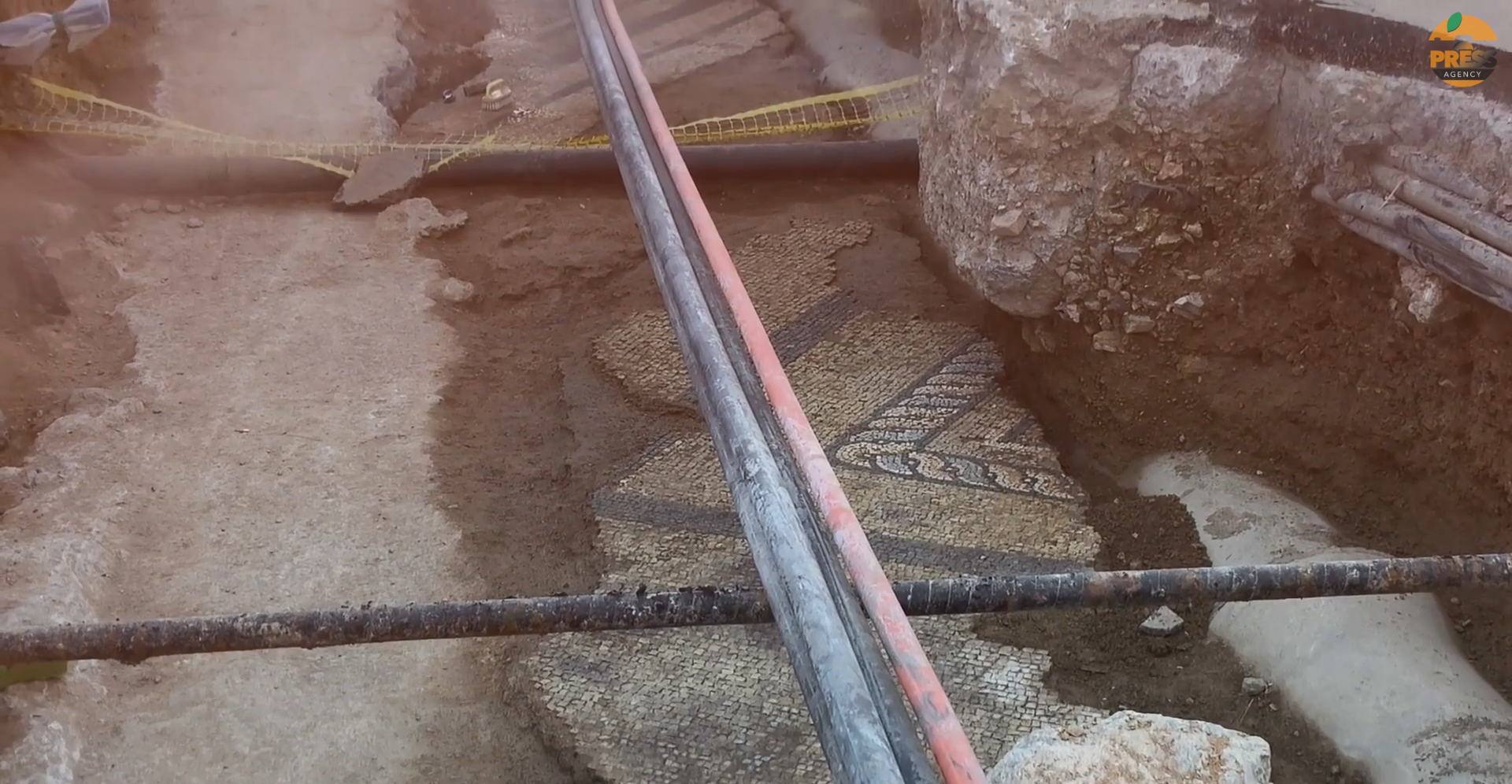
Just a few feet below the steady flow of pedestrians crossing Euripidou Street in central Athens, workers have stumbled upon a piece of the ancient world.
A planned streetscape renovation turned into something far more significant when a large ancient mosaic emerged from beneath the roadway; much of it, remarkably, still intact after centuries underground.
The find has captured the imagination of passersby. Many have stopped at the site — located between the Aiolou pedestrian street and Athinas Street, two of central Athens’ busiest arteries — straining to catch a glimpse of the archaeological treasure. The mosaic has since been covered with a protective white sheet, and the area has been cordoned off with temporary fencing.
Shopkeepers from neighboring businesses, who have had a front-row view of the discovery, say that cleaning of the mosaic was completed in the hours following its exposure. Authorities are now expected to schedule its transfer to a secure location for further study and preservation.
Not everyone, however, is celebrating without reservation. One local shop owner quipped that he wouldn’t mind “lending a hand” to speed things along — a joke that also carried an undercurrent of frustration over the prolonged construction, which began before the Tsiknopempti festivities on Feb. 12.
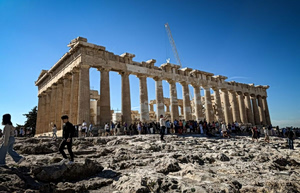
Still, the discovery is a striking reminder of how much ancient history remains buried beneath the modern Greek capital. Athens, continuously inhabited for thousands of years, regularly yields archaeological surprises during construction and renovation projects in and around its historic center. As locals are fond of saying: lift any paving stone in this city, and centuries of history are waiting just below.