The Greek Central Archaeological Council, the state body that decides whether antiquities can be lent out or relocated, has advised against letting three Athens museums lend material for a Frankfurt exhibition that would also feature Parthenon fragments held by the British Museum.
The council’s opinion effectively blocks participation by the Acropolis Museum, the National Archaeological Museum and the Archaeological Museum of Piraeus in the show, which was requested by organizers in Germany. The objection is not about the scholarly merit of the project. It is about what agreeing to appear alongside British Museum holdings would imply.
What the Frankfurt exhibition is about
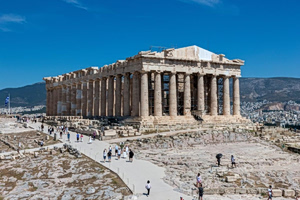
The exhibition, titled “The Birth of the Gods,” is set to run from November 18, 2026, to July 25, 2027, at the Liebieghaus Skulpturensammlung, a museum of ancient sculpture in Frankfurt. Its centerpiece is an attempt to reconstruct the Parthenon’s east pediment using archaeological research and modern technology, focusing on the depiction of the birth of the goddess Athena and its links to the creation myth recounted by the ancient Greek poet Hesiod.
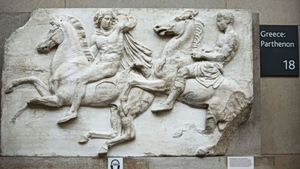
The British Museum was to contribute two fragments of the Parthenon’s sculptural decoration along with 10 copies.
Why Athens says no
For decades, the Greek government’s position has been that the Parthenon sculptures are not a set of individual exhibits that can be lent out and shown wherever a museum wants, but pieces of a single artistic and architectural whole that belongs back on the Acropolis in Athens. The rationale behind the Archaeological Council’s decision is that agreeing to send pieces to Frankfurt would treat the marbles as ordinary loanable objects and, by extension, validate the British Museum’s claim to the pieces it holds. An exhibition in a third country presenting Acropolis Museum and British Museum pieces side by side would also suggest that the two institutions hold equal, comparable shares of the same collection, opening the door to a temporary loan as an acceptable middle ground. That is the framing Greece wants to avoid.
A dispute that goes back two centuries
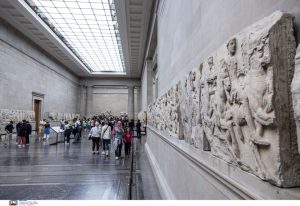
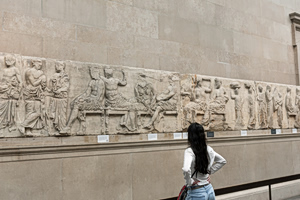
The disagreement is not new. The British Museum holds a large portion of the Parthenon’s original sculptural decoration, including 15 metopes, 17 figures from the pediments and sections of the frieze. Greece maintains that the sculptures were forcibly removed from the Parthenon in the early 19th century on the orders of Lord Elgin, then Britain’s ambassador to the Ottoman Empire, and that they should be returned to Athens and reunited with the rest of the monument’s surviving decoration, much of which is displayed in the Acropolis Museum with sightlines to the temple itself.
The British Museum has not engaged with recommendations from UNESCO’s Intergovernmental Committee, which has called for dialogue between Athens and London, and it remains unmoved from its standing position.
London’s growing interest in loan deals
The Frankfurt case comes as the British Museum is pushing the idea of loans more openly as a possible way forward on the Parthenon dispute. The museum’s director, Nicholas Cullinan, pointed in recent remarks to the Financial Times to Britain’s agreement with France to borrow the Bayeux Tapestry, an 11th century embroidered chronicle of the Norman conquest of England, for display in London from September 10, 2026, to July 11, 2027, calling it a possible model for a future arrangement on the Parthenon sculptures. British officials see loan agreements as a way for museums and governments to cooperate without touching the underlying question of who owns what.
Britain’s new prime minister, Andy Burnham, has also shifted positions on the issue since taking office, pointing to the British Museum to find a solution after previously backing an unconditional return of the sculptures to Greece.
Greece’s position remains the opposite of London’s. Athens is not asking for a temporary transfer of the sculptures, nor for any agreement that would require it to recognize British ownership. It is asking for the Parthenon Marbles to be reunited with the rest of the monument’s decoration in Athens.