 Μake us preferred on Google
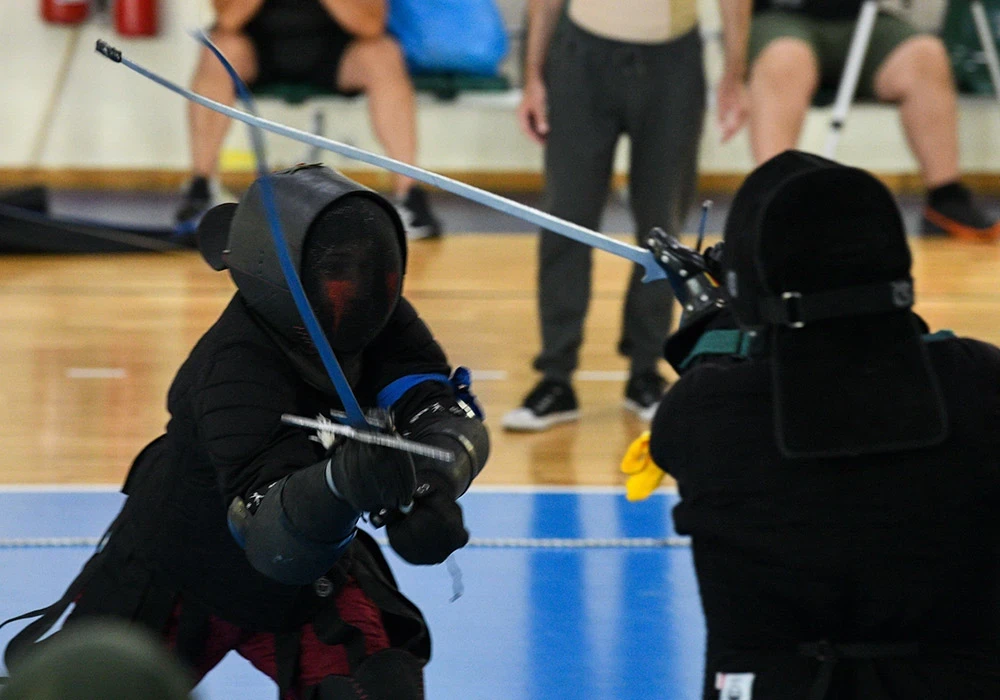
Earlier this month, at the Peristeri cultural center, the Fantasy Festival marked itself as the ultimate destination for both unapologetic nerds and newcomers, wishing to experience a kaleidoscope of niche interests and activities from comic books, trading card games, collector miniatures, table-top roleplaying games like DnD, and many others. Yet between the comic stalls and the card-game tables, one wing of the cultural center rang with the song of steel. In small practice “arenas”, fencers from Athens’ historical fencing schools traded blows with longswords and rapiers, attracting many keen eyes.
It is definitely a strange sight in 2026, but one that was far more commonplace just a few centuries back. During medieval times the sword was the signature weapon of choice of knights, the armored warrior aristocrats who fought primarily on horseback.
Nowadays, popular culture sees the sword as the legendary symbol of chivalry and honor, with figures such as Sir William Marshal, 1st Earl of Pembroke (1146 – 1219), and Bertrand du Guesclin (1320-1380), seen in hindsight as paragons of knightly conduct.
For these defining figures of the Middle Ages, the sword was more than a weapon, it was a part of their identity. Sir William Marshal’s tomb effigy has a sword carved next to his side.
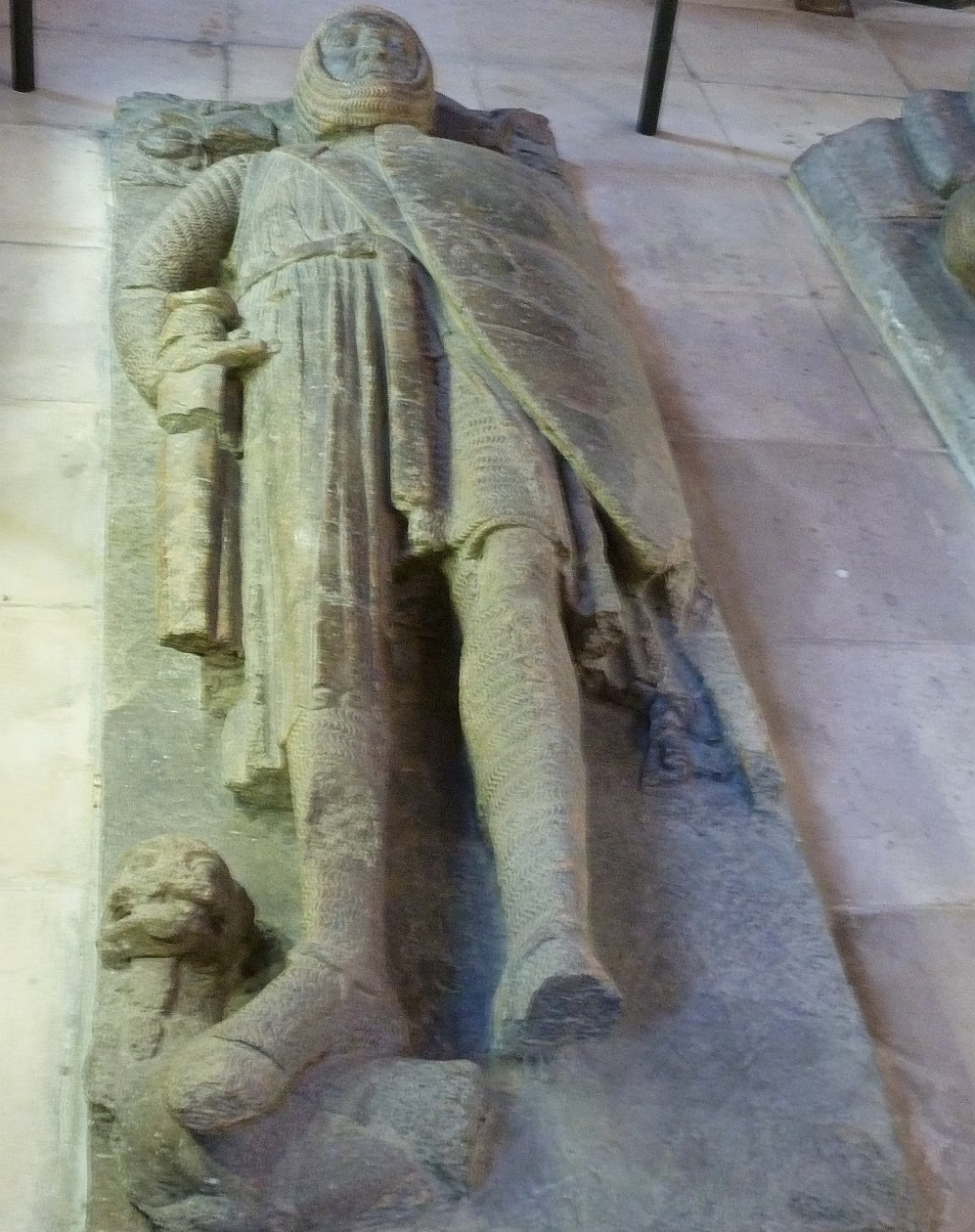
Temple Church – William Marshal, 1st Earl of Pembroke. Source: Rob Farrow in Geograph Britain and Ireland, via Wikimedia Commons
A notable statue of Bertrand du Guesclin depicts him wielding an unsheathed sword, fully armored on horseback, in a determined and commanding pose.
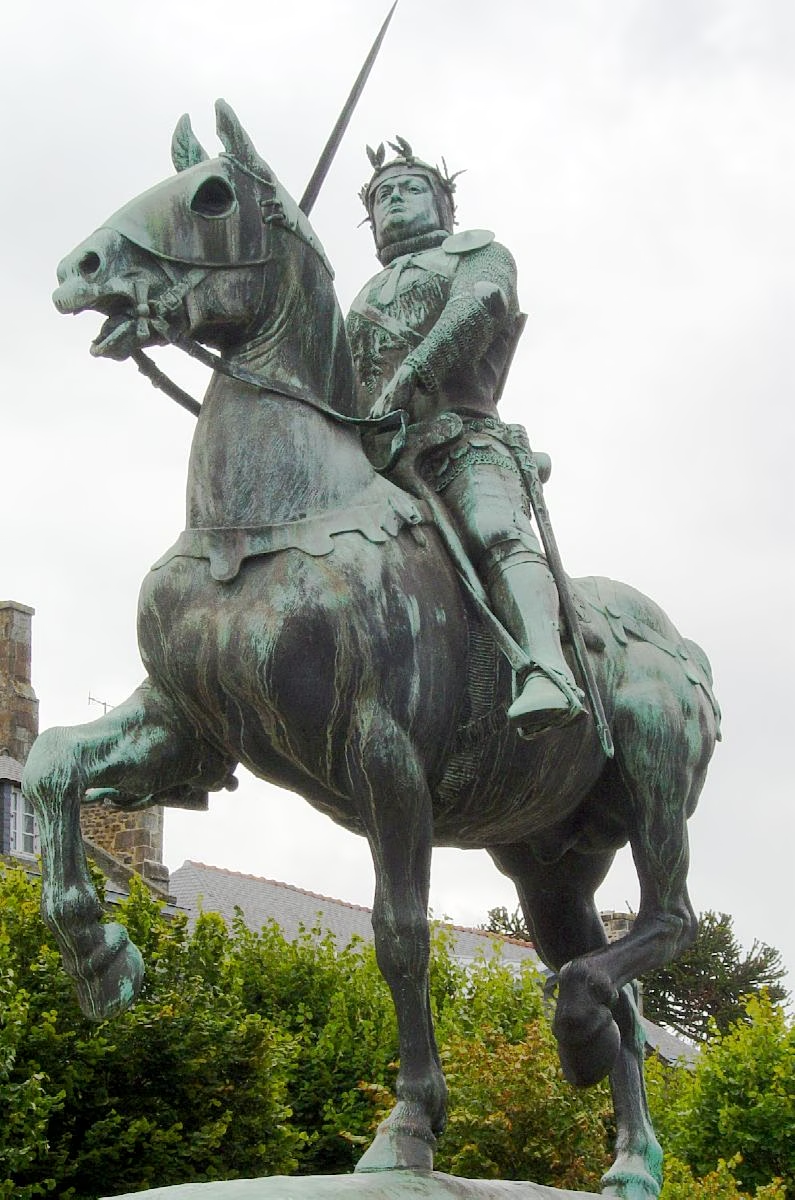
Statue of Bertrand du Guesclin, in Dinan, France. Source: Photo taken by Luna04 in 2004, via Wikimedia Commons
From Battlefield to Practice Hall
In the popular perception of our modern days, the sword either evokes a spark of the “olden days”, a sort of distant and often dark vision of the past, or it is associated with characters from fantasy genres like J.R.R. Tolkien’s Lord of the Rings and/or G.R.R. Martin’s A Song of Ice and Fire.
Whatever the draw, historical fencing is booming in Greece, and Athens alone now has four schools.
To help get an idea of the role of historical fencing in modern culture, particularly in Greece, To Vima International Edition spoke with George Zacharopoulos, instructor of historical fencing at CORIOLANOS Sports Club and co-instructor at the historical fencing department of Athens Fencing Club.
Could you tell us, what does historical fencing mean to you, and how did you originally get to start in the sport?
My initial practical experience with swords was in Olympic fencing, but I had always loved swords, ever since I was a little kid. During my time with sport fencing, I always wondered how we ended up with this form of weapon and this type of fighting, so I started digging into the history behind it and I discovered historical fencing, also called Historical European Martial Arts or HEMA, around 2004.
It was a huge movement that started around the 1980s and was the revival of the old European art of fencing, which is essentially the grandfather of modern fencing.
It felt incredible when I discovered it because it combined two of my loves: fencing and a love for history. Particularly, a mix of the cultural concept of history of why and how they used swords as well as other weapons back then, with the love and enjoyment of fighting with a sword, the fencing.
However, in Greece it was pretty unknown back then. So actually, it was us and other people that started this whole movement and community in Greece around 2004-2005.
If someone were to ask you, what does historical fencing offer as a form of exercise and as a pastime that other sports or other interests might not offer, what would you say to them?
There are two concepts in historical fencing: one is the martial art and the other is the sporty side. One can follow the martial art, which is the more traditional one, or the more sporty side, to go to tournaments and compete, or both.
What it offers you ask? It doesn’t just offer a shallow skill for winning tournaments, it also offers a lot of different skills because there are a lot of weapons, there are a lot of movements that you need and also knowing the history behind it so it offers you besides the athletic component, it offers you what I call “psychokinetic activity”. It engages the body, the mind, and the soul at the same time. So it’s not strictly sport, it’s not strictly martial art, it’s all of this combined. A person can approach it as either a pure sport, a martial art or both, since they are both branches of the same tree.
What would you say to someone who wants to start but is hesitant?
If you want to do something that offers you a combination of exercise, love of swords and a broader sense of history, culture, and civilization, this is it. It connects you with your roots in a way, since you get to understand how things happened in the past.
This is the thing with historical fencing. It’s not just shallow rules of fencing or fighting, it has a lot of aspects so it can offer you a lot of things and you can always choose how deeply you want to commit.
Are there different clubs and do they participate in tournaments?
Yes, actually, there are four clubs in Athens that do this historical fencing.
They are:
- Athens Fencing Club
- Pegasus – Athens Historical Fencing Club
- CORIOLANOS Sports Club
- Academy of Historical European Martial Arts ‘Leontes’
There is also a club in Thessaloniki, called Xifomachos.
Concerning the second part of your question, since February 1, 2026, we have formed the Historical Fencing Ratings Greece (HFRG) platform, which is a system that ranks Greek historical gencers compete in rated tournaments. For the first time in the previous season we also organized the official Greek Championship in Historical Fencing for the Longsword and Rapier categories.
Seasons run like school years, so last year’s was September 2025 to July 2026 and the same goes for the current season of 2026-2027, the second year that historical fencing is actually a rated sport.
In these schools and tournaments, can you train with different types of swords?
Yes, in the main categories that we had last year it was long sword and rapier. This year it will be also long sword, rapier, sword and buckler and saber. So there will be four categories. Also, due to recent innovations in the quality of protective equipment, as well as the kind of swords used, historical fencing is generally a safe activity.
Coming back to the tournaments, people can compete in all categories if they want. It’s open as long as they are registered in an organized and legal club that does historical fencing.
What about the distribution of men and women in the sport?
In our discipline the percentage of women is still low, it’s about 3 to 7, or 2 to 8, which is something that we are trying to change. You see the sword, the weapon, is kind of an equalizer. It’s not like wrestling or boxing or kickboxing, for example, where weight plays a big role. In our discipline, women can participate in mixed categories, meaning men and women fighting in the same tournament. So, I would love to see more women getting engaged with it.
There’s an interesting historical detail here. In one of the first treatises of historical fencing that we study, the Walpurgis Fechtbuch (MS I.33), dated to the early 14th century, which teaches fighting with sword and buckler, four of the panels depict a fight between a man and a woman! A rarity that is nevertheless present in a foundational manual.
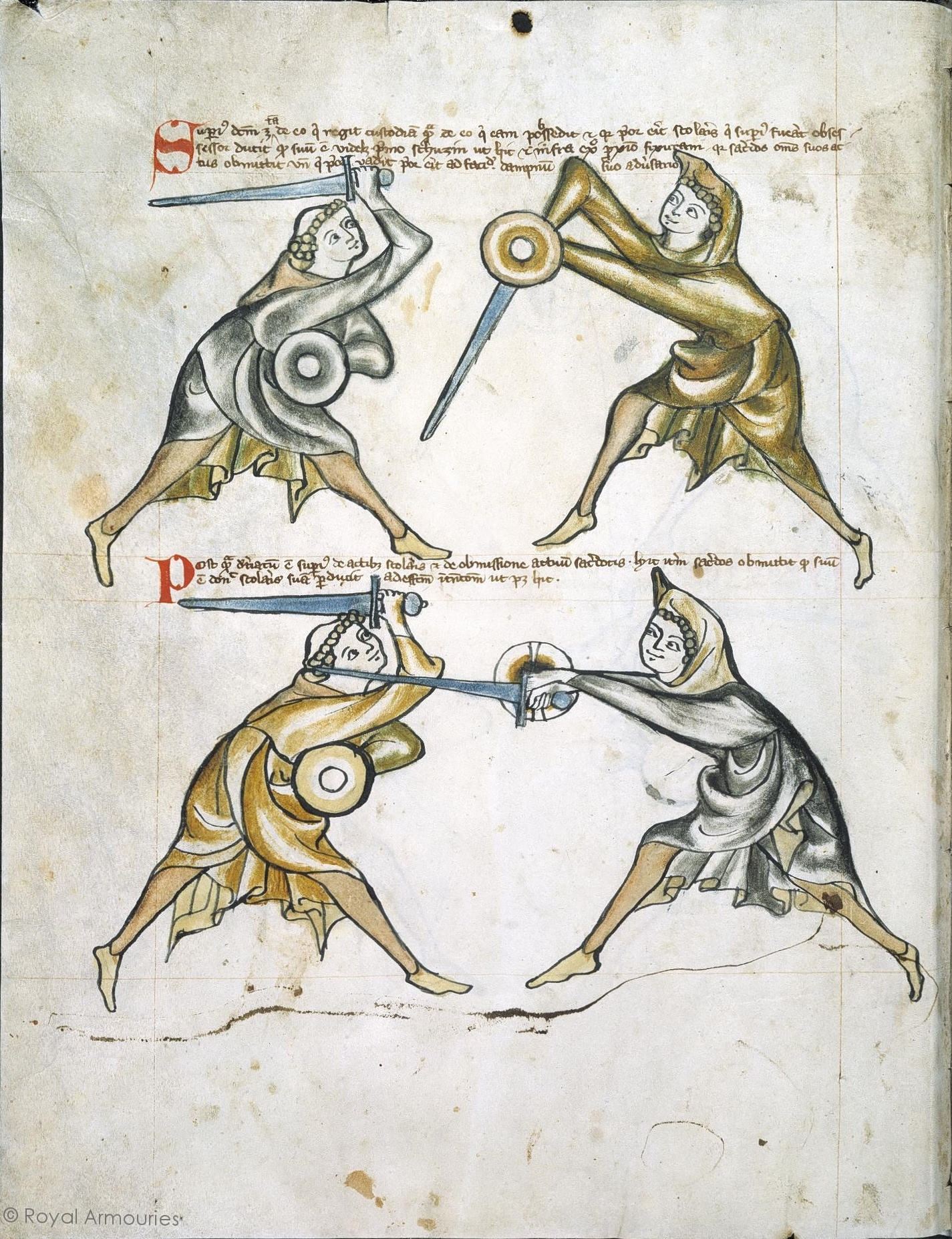
Fol. 31v of Royal Armouries MS I.33, a medieval treatise on fighting with sword and small shield (buckler), presumably made in the beginning of the 14th century in Franconia. Source: Tower Manuscript I.33; collections.royalarmouries.org, via Wikimedia Commons
So I urge women to come and join the clubs, because the feeling and the vibe of the clubs is more teamwork and less competitive than other sports even if you choose the sporty side.
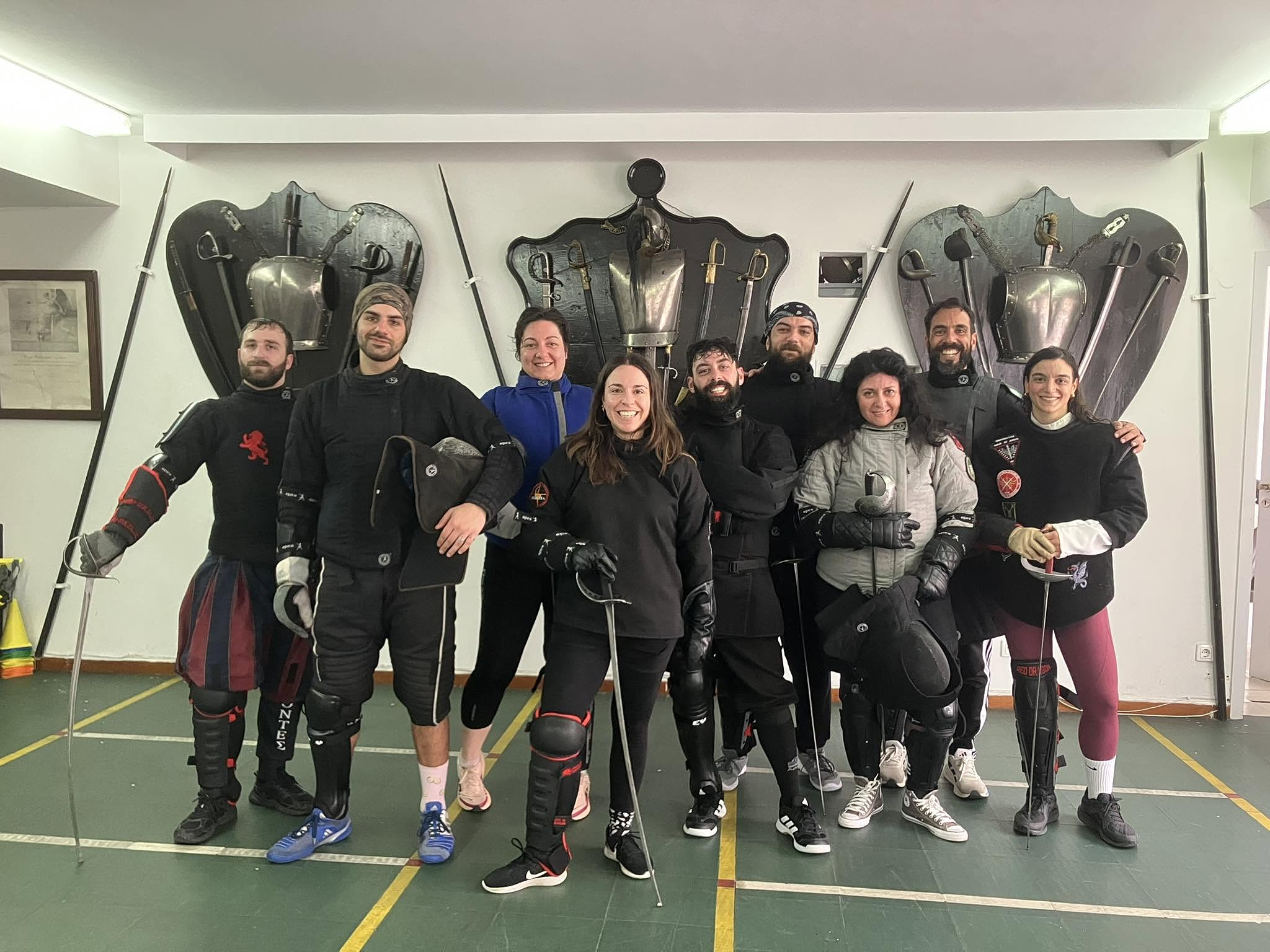
Saber Training at the Athens Fencing Club. Photo courtesy of
Is there anything else you would like to add concerning anything that we talked about or anything beyond this?
I think people should come and try historical fencing, which is a rising activity all over the world, especially in Europe and the USA. People who are fascinated with swords and fighting with them, and who also like history will find the perfect environment. They will get a lot out of it, physically, mentally and as I mentioned before, hopefully, psychokinetically.