
 Μake us preferred on Google
 Splendid and imposing, she stands alone with her long hair loose, dressed in an ethereal gown fit for a goddess. The small statue of Aphrodite -or perhaps- Hecate, has been carefully carved out of white marble, and it dates to the Roman or Hellenic era. She was discovered decades ago in the waters of Gaza, off Blakhiya, caught in the nets of a local fisherman who gave the priceless relic to a Palestinian collector. Like many of her compatriots she has been in exile for decades. For 17 years she was stuck in a crate in Geneva’s Freeport. In a way she was lucky. She survived and now is one of the highlights of “Treasures Saved from Gaza: 5,000 Years of History”, an exhibition at the Institut du Monde Arabe (IMA).

The salvaged statue of Aphrodite or Hecate (Photo/ Caroline Léna Becker)
A Race to Save Gaza’s heritage
Thousands of other historical treasures from Gaza’s 5.000-year-old history have not been so fortunate and have been pulverised in the relentless bombardment of the embattled enclave by the IDF. Only last week, Gaza’s top archeologist Fadel al-Oto, was told by the Israeli army that they were about to strike a tower in Gaza city where thousands of ancient artefacts were stored. Fadel, who told his story to the BBC, tried desperately from Switzerland where he now resides, to coordinate the evacuation of the priceless treasures.
According to reports, after “international experts pressed Israel to give an extra day for the evacuation”, Palestinian volunteers and aid workers under the guidance of Fadel managed to remove six lorryloads of artefacts to another less precarious location. Amongst the rescued relics are many rare finds including mosaics, centuries-old skeletons as well as ceramics. On Sunday, September 14, the Israeli military targeted the 17-story building with missiles. It collapsed in a pile of rubble, destroying all the treasures that were left behind.
Counting the Losses
This is not the first time that the IDF has targeted a building of cultural significance. UNESCO, the United Nations Educational, Scientific and Cultural Organization, has verified as of August 2025, “damage to 110 sites since October 7 2023 – 13 religious sites, 77 buildings of historical and/or artistic interest, 3 depositories of movable cultural property, 9 monuments, 1 museum and 7 archaeological sites”. Palestinian experts, working alongside British archaeologists have estimated that more than two-thirds of the enclave’s cultural and archaeological sites have been damaged—many beyond repair—during the last 23 months.
The IDF has insisted that cultural monuments were only ever struck if used by Hamas for military purposes. In its statements it claims that it “does not seek to cause excessive damage to civilian infrastructure and conducts strikes solely based on military necessity. In accordance with international law, careful consideration is given to the presence of sensitive sites”. Both Israel and Palestine are signatories to the 1954 Hague Convention that “aims to protect cultural heritage in times of peace as well as during armed conflict”.
Iconic Landmarks Reduced to Rubble
Among the most striking losses is Qasr al-Basha, also known as Pasha Palace. The 800-year-old landmark in Gaza City once welcomed visitors with its golden limestone walls, shaded gardens, and vaulted halls filled with priceless historical relics. Napoleon Bonaparte stayed there once. Today, almost nothing remains as it was bombed and bulldogged. Museum director, Hamouda al-Dahda, who also lost his 12-year-old daughter in an airstrike nearby told the Guardian that the palace was like a small paradise on Earth. Now, there is no life here at all” . The IDF has told BBC correspondent Yolande Knell that “it has no information about the targeting of the site”.
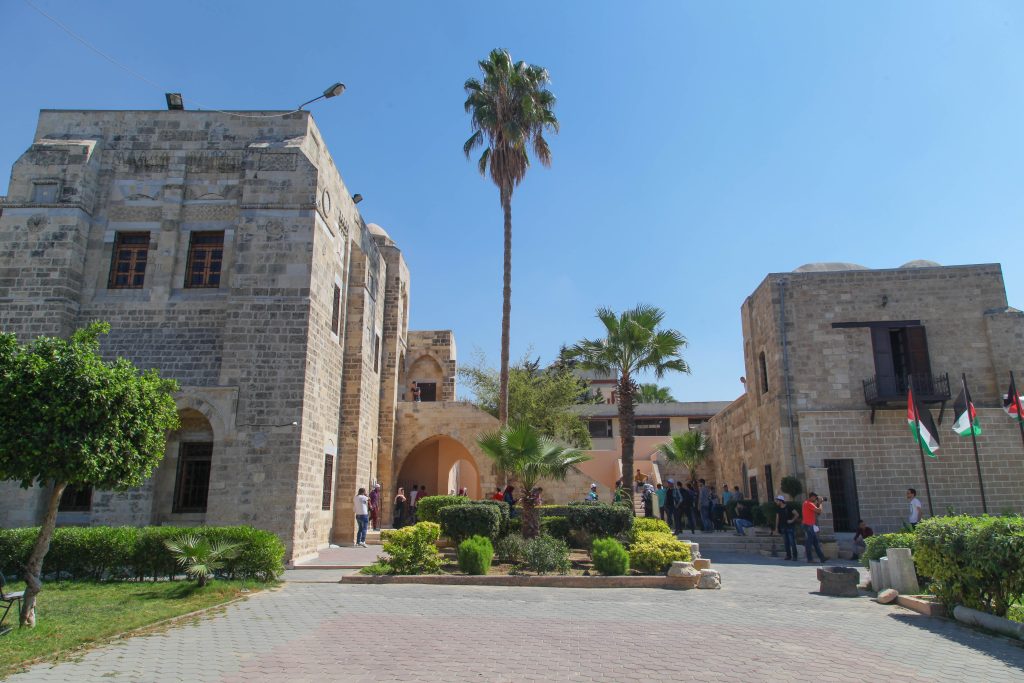
Gaza’s famed Qasr al-Basha before its destruction (Photo by Ramez Habboub/ 2016)
View this post on Instagram
Video from the aftermath of the complete destruction of Qasr al-Basha
Close by, the Hamam al-Sumara, a 700-year-old bathhouse cherished as one of Gaza’s most important monuments, has also been reduced to rubble. Its longtime guardian, Salim al-Wazir, returned from months of displacement to find it almost entirely destroyed. “I lost a place that meant a lot to me… a part of my family’s history and of Gaza’s collective memory,” he said.
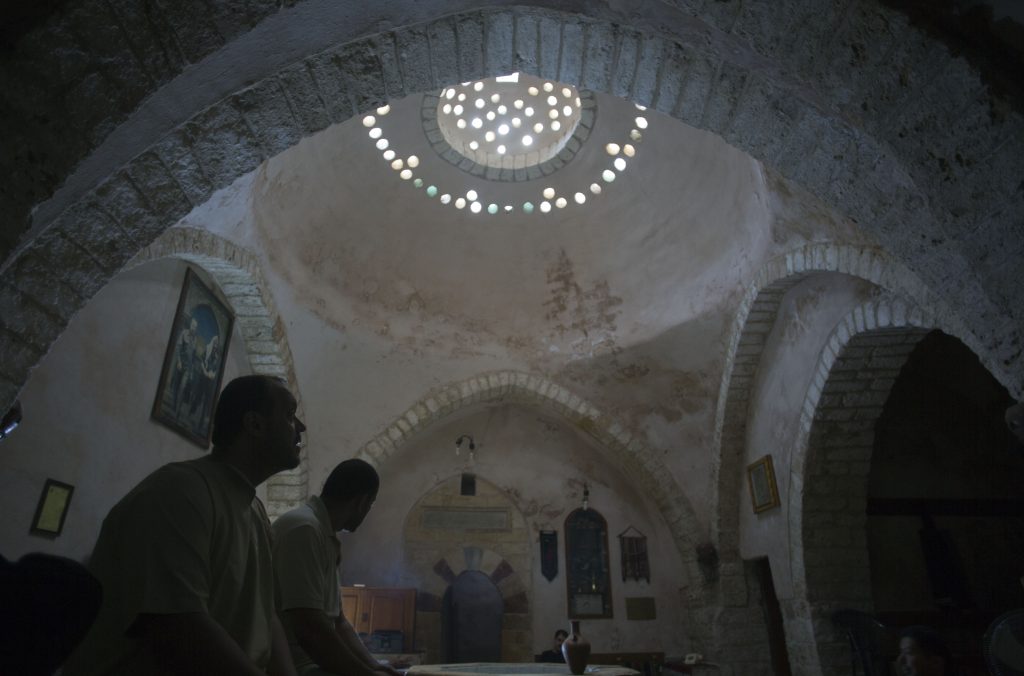
The steamy confines of Hamam al-Sumara, a centuries-old bathhouse where residents of the isolated territory used to find respite and relief before its destruction (AP 2015 Photo/Khalil Hamra)
تدمير حمام السمرا التاريخي بمدينة #غزة القديمة pic.twitter.com/XmIE5TUPX9
— #القدس_ينتفض 🇵🇸 (@MyPalestine0) December 26, 2023
Video from the aftermath of the bombardment of the Hamam al-Sumara.
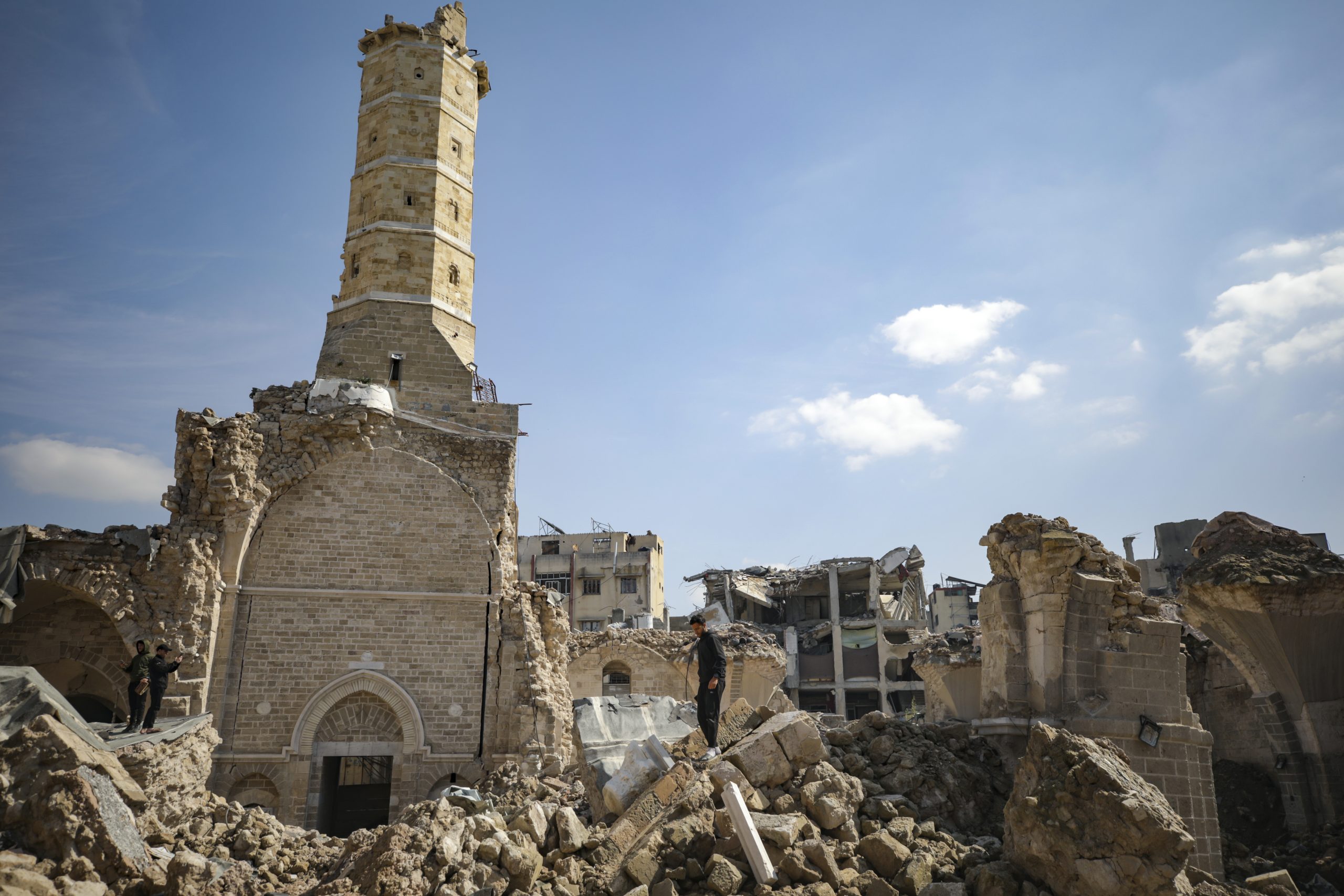
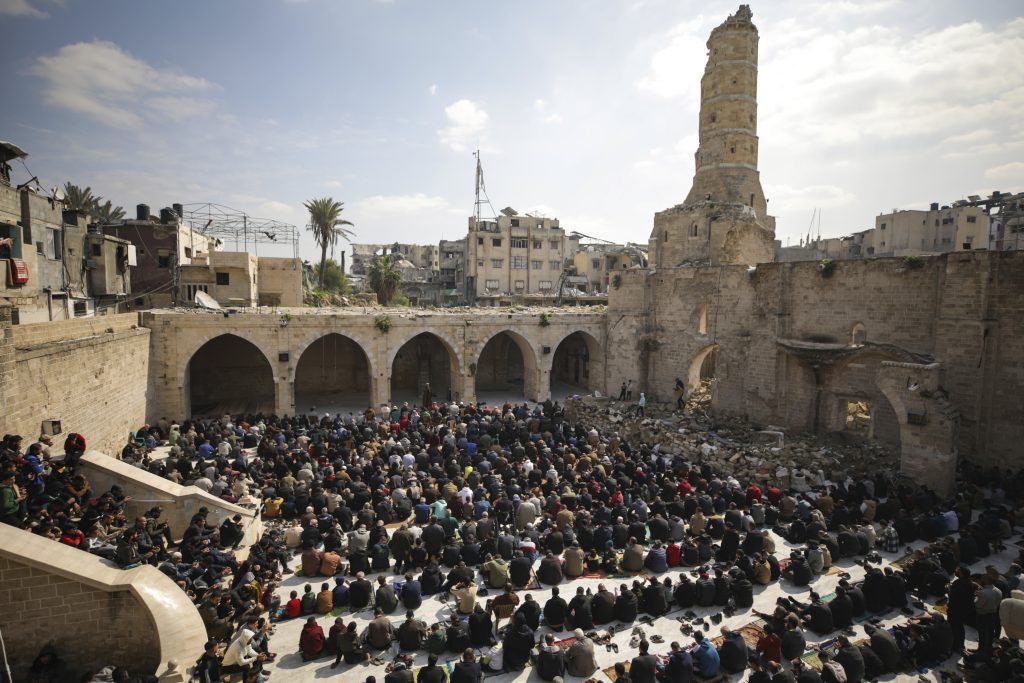
The devastation extends further. The famed Great Omari mosque, Gaza’s oldest and largest mosque which was once a Byzantine church before its conversion nearly 1,400 years ago, has been left severely damaged. Its minaret has partially collapsed and it has withstood severe damage on the ground level. Despite the devastating human loss and humanitarian crisis that the Strip has endured over the last 23 months, local volunteers are already salvaging stones to begin reconstruction. For many Gazans, the ruins carry more than historic value; they embody resilience and their timeless connection to their land.
The iconic Great Omari Mosque, which was damaged during the Israeli military’s air and ground operation in Gaza City, Feb. 14, 2025. (AP Photo/Jehad Alshrafi)
Gaza’s Rich History
For thousands of years Gaza, thrived as vital trading hub in the region, Many civilizations vied for this unique oasis that was situated in “one of the world’s great geographical crossroads between trade routes from Asia and Africa”. Egyptian, Neo-Assyrian, Greek and Roman, Byzantines, Persians and Mamluk all left their marks in the sands of Gaza.
Herodotus in 526 BC described Gaza—then known as Cadytis—as a wealthy port ruled by an “Arab king”. In 332 BC, Alexander the Great, commenced a siege of the city, which at the time was controlled by a Persian garrison led by eunuch “King Batis” and his Arab mercenaries. Gaza was central to Alexander’s plan as it was the gateway to Egypt. It took him though over 100 days to declare victory and when the defeated and chained Batis refused to kneel in front of him, Alexander enraged instructed that the eunuch commander had to suffer the same fate as Hector. He was tied to a chariot, and his body was pulled around Gaza’s walls. Such was the fury of the great Greek conqueror that his army executed any man suspected of participating in the fighting, the women and the children were enslaved while the treasures of the city were plundered and packed into 10 boats bound for Macedonia. According to Plutarch, Alexander even sent his old tutor Leonidas a gift of 10 tons of frankincense and two tons of myrrh.
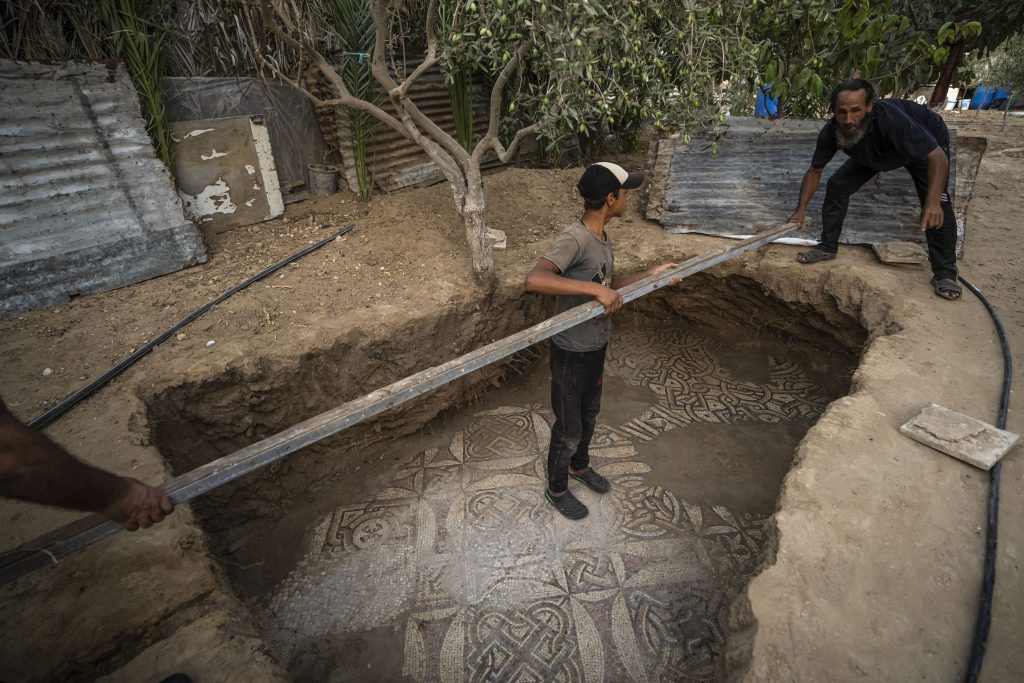
A Byzantine-era mosaic floor, uncovered by a farmer in Bureij in central Gaza Strip, Sept. 5, 2022. (Photo/Fatima Shbair)