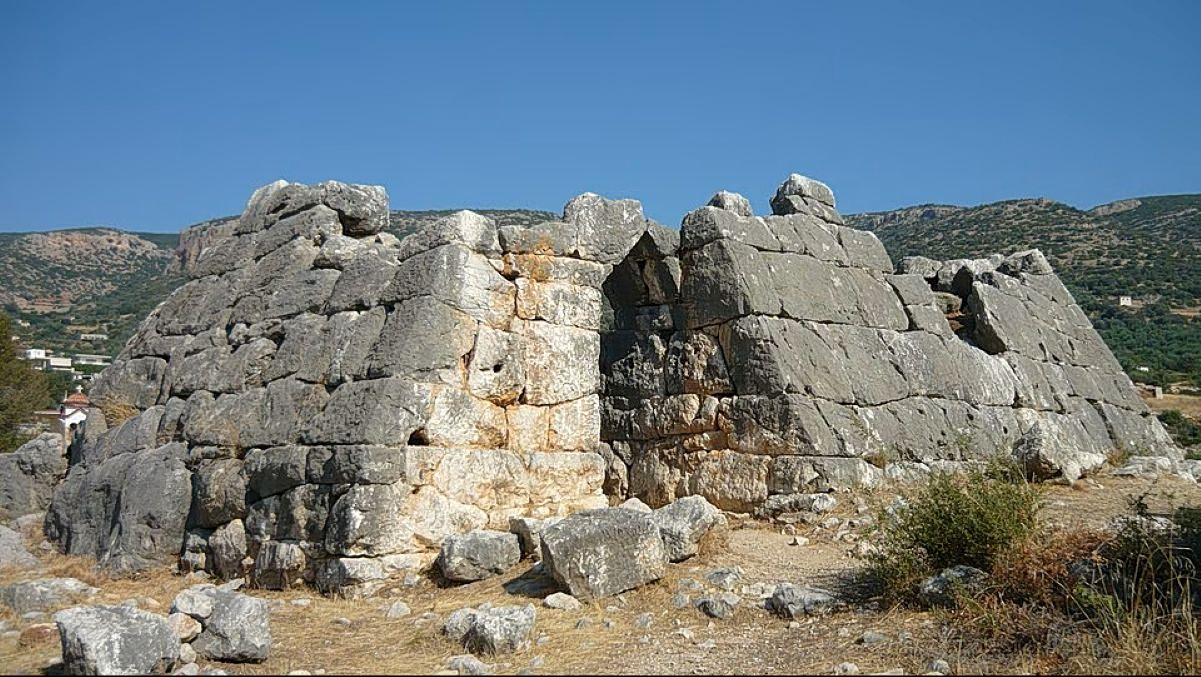
Scattered across the Greek landscape stand a handful of little-known pyramidal structures—rare examples of pyramid architecture in Europe that continue to puzzle scholars. Unlike the monumental forms of Egypt, Greece’s pyramids are smaller and architecturally distinct. Yet their origins, purpose and even age remain fiercely contested.
One of the most intriguing lies in Kefalari, in the region of Argolis near Argos. The area is known for its lush vegetation and seasonal springs that flow beneath the foundations of the church of Zoodochos Pigi (Panagia Kefalariotissa). Behind the church stretch the “Historic Caves,” once used as shelters during the Greek War of Independence in 1821.
A short distance away, near the village of Elliniko and along the ancient road that once connected Argos to Tegea in Arcadia, stands the so-called Pyramid of Elliniko. The 2nd-century traveler and geographer Pausanias is believed to have mentioned it, adding to its historical mystique.
In 1991, a research team led by Professor Ioannis Liritzis applied a novel dating method to the structure. Their findings placed its construction in the mid-to-late 3rd millennium BC—far earlier than previous estimates from a 1938 American archaeological mission, which had dated it to the 4th or 3rd century BC. If correct, this would make the monument older than Egypt’s iconic pyramids.
The conclusions sparked controversy. Classicist Mary Lefkowitz challenged the results, arguing that some measured stones may have been reused from older buildings and that earlier excavations—later reaffirmed by archaeologist Helena Fracchia—had been overlooked. Liritzis countered in a scientific journal that his methodology had been misunderstood.
Meanwhile, archaeologist Adamantios Sampson maintains that the monument was built atop Early Helladic foundations but constructed later, likely during the Classical or Late Classical period, based on its masonry.
The function of such structures—most now ruined—remains uncertain. Watchtowers, shrines, tombs or even astronomical observatories have all been proposed. What is certain is this: Greece’s pyramids endure as enigmatic relics, standing at the crossroads of history, science and speculation.
Sources and Credits
With information drawn from:
• Theodore Wiegand, monograph (1901)
• Louis E. Lord, The “Pyramids” of Argolis, Hesperia
• Louis E. Lord, M. Alison Frantz, Carl Roebuck, Blockhouses in the Argolid, Hesperia
Video source: Up Drones
Main image source: Egerváry Gergely, CC BY 3.0