
 Μake us preferred on Google
 Waal, who leads the research project “From Aleph to Alpha: The Spread and Development of Alphabetic Writing Across the Mediterranean,” presents her theory in a lecture at the Netherlands Institute at Athens entitled “The Real Age of the Greek Alphabet: Reconsidering the Transmission of Alphabetic Writing from ‘East’ to ‘West.’”

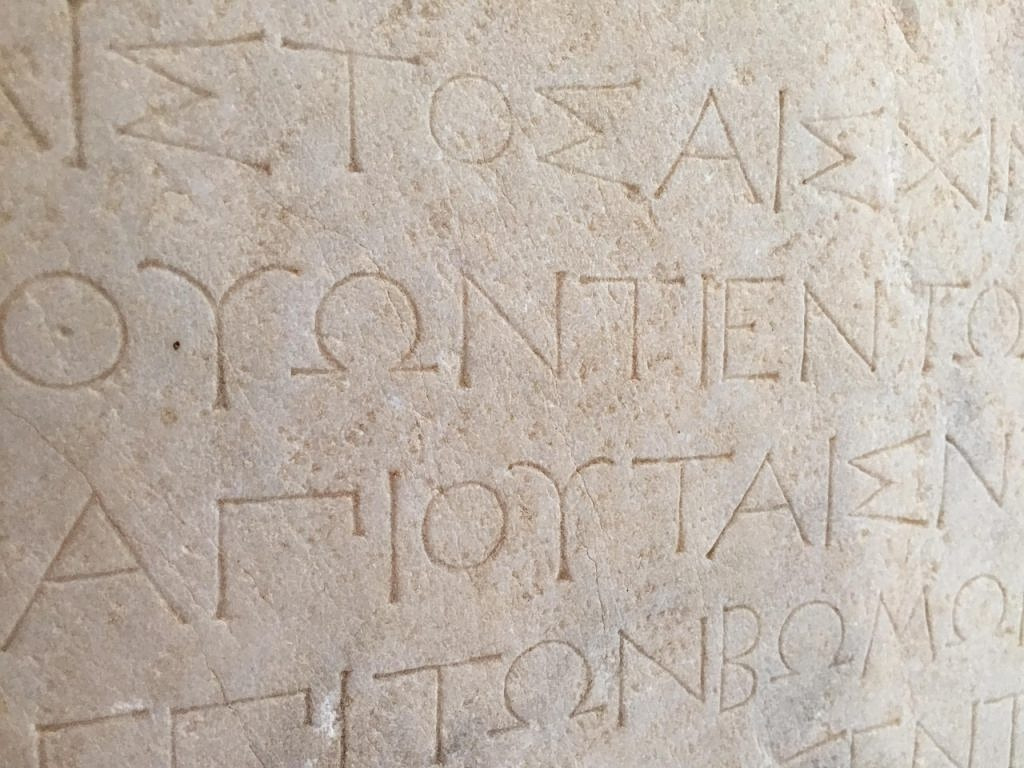
The conventional account holds that the Greeks adopted a Phoenician writing system around the eighth century B.C., adapting it to represent vowels. This followed the disappearance of Linear B, the syllabic script used in Mycenaean Greece, after the collapse of the Late Bronze Age around 1200 B.C.
Waal argues that the absence of earlier surviving inscriptions does not prove that alphabetic writing was unknown in Greece. Early records may have been written on perishable materials such as wood, papyrus or leaves, which would not have survived the region’s climate. She places the introduction of alphabetic writing around or before 1050 B.C.
She also points to the diversity of early Greek scripts, which developed numerous local forms and could be written from right to left, left to right or in alternating directions. These features, she argues, resemble earlier West Semitic practices and may indicate a longer period of development and contact.
The theory also challenges the view that Greek writing was the direct ancestor of other western and Anatolian alphabets, including Phrygian, Lydian and Carian. Some early Phrygian inscriptions, dated to around 800 B.C., are broadly contemporary with the earliest surviving Greek examples.
Waal proposes that some of these traditions may share a common predecessor rather than descend directly from Greek. However, the earlier dating and proposed family relationship remain scholarly hypotheses, while the Phoenician connection remains the prevailing explanation for the Greek alphabet’s origins.