A historic listed building at 32 Tripodon Street in Plaka, at the foot of the Acropolis, is undergoing restoration as part of a Culture Ministry project to revive the site as a cultural venue dedicated to Greek-language cinema. During works in the property’s courtyard and ground floor, important archaeological remains spanning from the Classical period to Byzantine times have been uncovered.
The Ministry of Culture announced that, following a unanimous positive opinion by the Central Archaeological Council (KAS), it will proceed with the protection, conservation and highlighting of the antiquities discovered on the site. The building, which is officially protected as a listed monument, is now set to combine cinematic heritage with layered archaeological history.
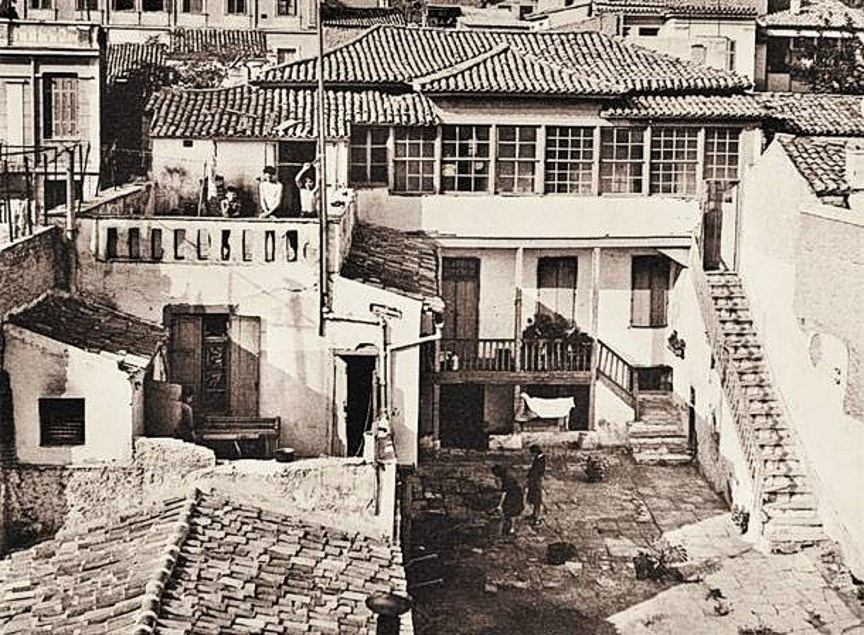
The residence during the 1950’s.
A landmark of Athenian architectural and cinematic history
The residence—popularly known as the “Kokovikos House” after the fictional couple in the beloved 1965 comedy And the Wife Shall Revere Her Husband—is deeply associated with Greece’s cinematic “golden age”. The Culture Ministry announced plans for its restoration in August 2025, with the project budgeted at €1.7 million, funded through national and EU resources managed by the Attica regional authority.
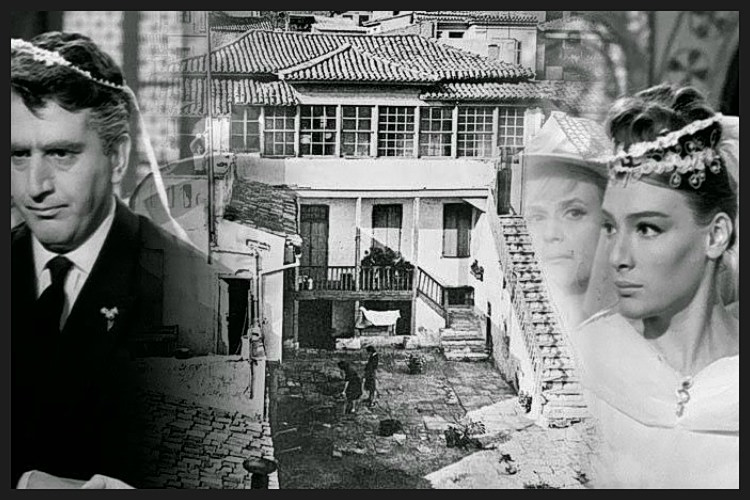
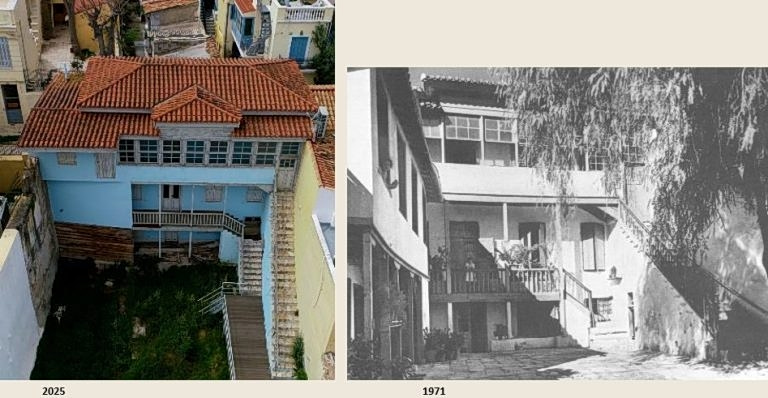
The three-and-a-half-storey building dates to around 1800, placing its construction in the final decades of Ottoman rule in Athens, shortly before the Greek War of Independence. It is considered a rare surviving example of “Athenian-style” popular architecture, which predates the dominance of Neoclassicism in the newly founded Greek state.
Culture Minister Lina Mendoni said the project would return one of the last remaining examples of this architectural type to the city’s cultural life.
“The rescue, restoration and reuse of this monument building on Tripodon Street contributes to its reintegration into contemporary urban life,” she said, adding that the complex will be restored to its historic form, enhancing both the character of Tripodon Street and the wider Plaka district.
What the excavations revealed
Archaeological investigation along the eastern edge of the property revealed sections of the ancient Tripodon Street, with stratigraphy ranging from the modern era back to the 4th century BC. At a depth of around two metres below the present street level, archaeologists uncovered the western retaining wall of the ancient road, alongside a poros-stone conduit and overlapping clay drainage pipes.
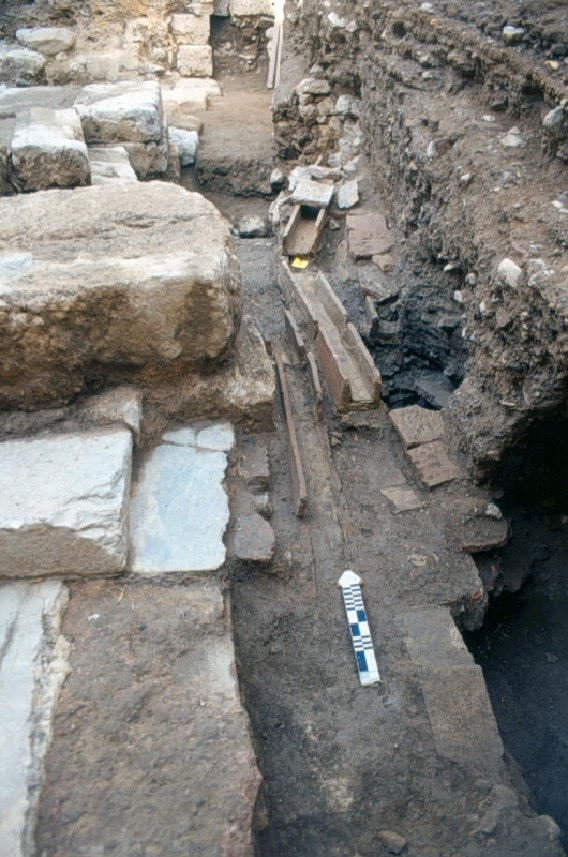
The retaining wall is interrupted by a stepped ascent of at least four steps, flanked by two square bases believed to have supported choreagic monuments—structures associated with dramatic competitions in ancient Athens.
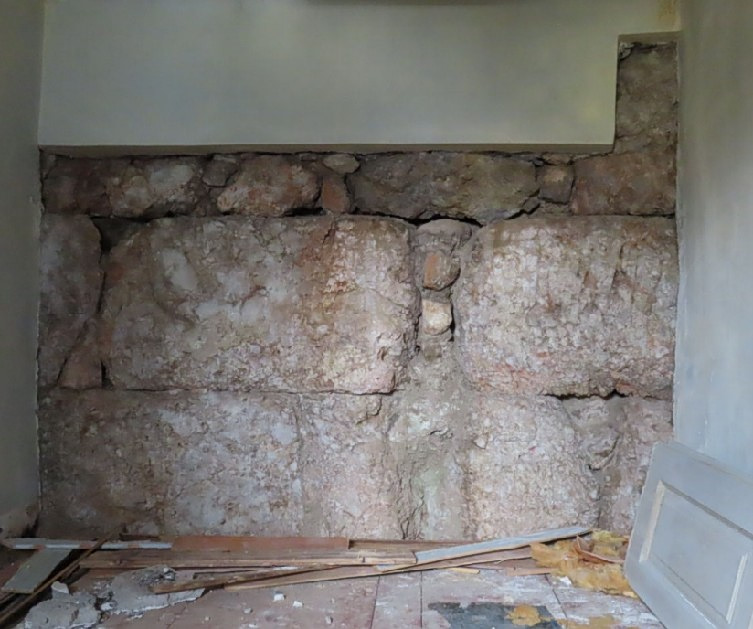
The retaining wall on the ground floor of the house’s central room.
Within the ground floor of the preserved residence, remains include a Hellenistic-period retaining wall, parts of which have also been identified in neighbouring properties, as well as a section of the so-called Peisistratean or Kimonian clay aqueduct.
On the western side of the courtyard, archaeologists uncovered a disused cistern filled with a large ceramic deposit dating to the late 4th century BC, consisting mainly of vessels linked to symposium use. Additional finds include remains of an Early Christian structure in the central room, while the southern room revealed successive road surfaces from the Classical, Archaic and Geometric periods.
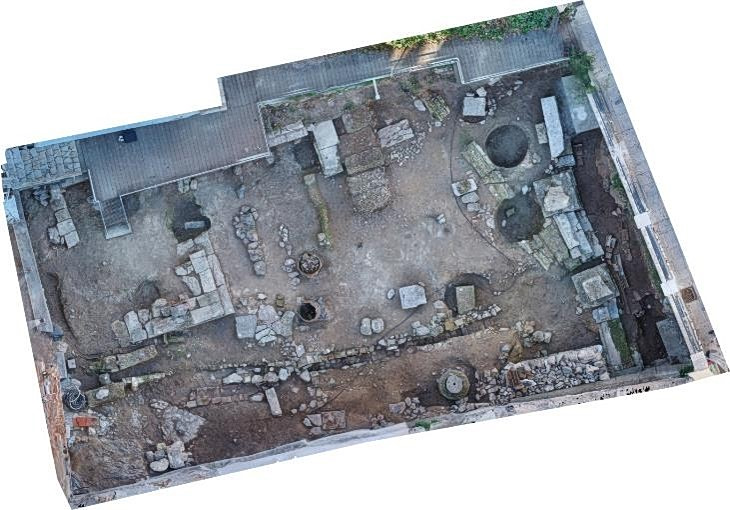
Early Christian and Byzantine remains were also identified, though most have since been removed. The architectural elements selected for public display and enhancement primarily date to the 4th century BC, underscoring the site’s exceptional continuity of use over more than two millennia.