Fresh tensions have erupted in the United Kingdom over the fate of the Parthenon Sculptures. A group of 34 prominent British figures—including former Prime Minister Liz Truss, historian Dr. David Starkey, and Sir John Redwood—have signed a letter opposing the potential return of the Parthenon Sculptures to Greece. The letter, sent to Prime Minister Keir Starmer and key cultural authorities, claims that the British Museum is engaged in a “secret and intensifying campaign” to repatriate the ancient artworks, also known as the Elgin Marbles, and warns against any effort to remove them from the museum’s collection.
The letter, first revealed by Sky News, was addressed to UK Prime Minister Keir Starmer, the Minister of Culture, and the trustees of the British Museum. It urges an immediate halt to any negotiations regarding the return of the sculptures, warning that legal action may follow if discussions continue without full transparency.

Britain’s Prime Minister Keir Starmer and Greece’s Prime Minister Kyriakos Mitsotakis pose for a photograph ahead of their meeting inside 10 Downing Street in central London on December 3, 2024. The prime ministers of Britain and Greece met in London on Tuesday in the shadow of the long-running row over the Parthenon Marbles, which reports say could be moving towards resolution. JUSTIN TALLIS/Pool via REUTERS
Legal and Political Tensions
The signatories claim that any such discussions are being conducted behind closed doors, accusing the museum of participating in a “covert negotiation” to remove the sculptures from British ownership. They argue that this undermines public trust and suggest that some museum trustees may need to “reconsider their positions.”
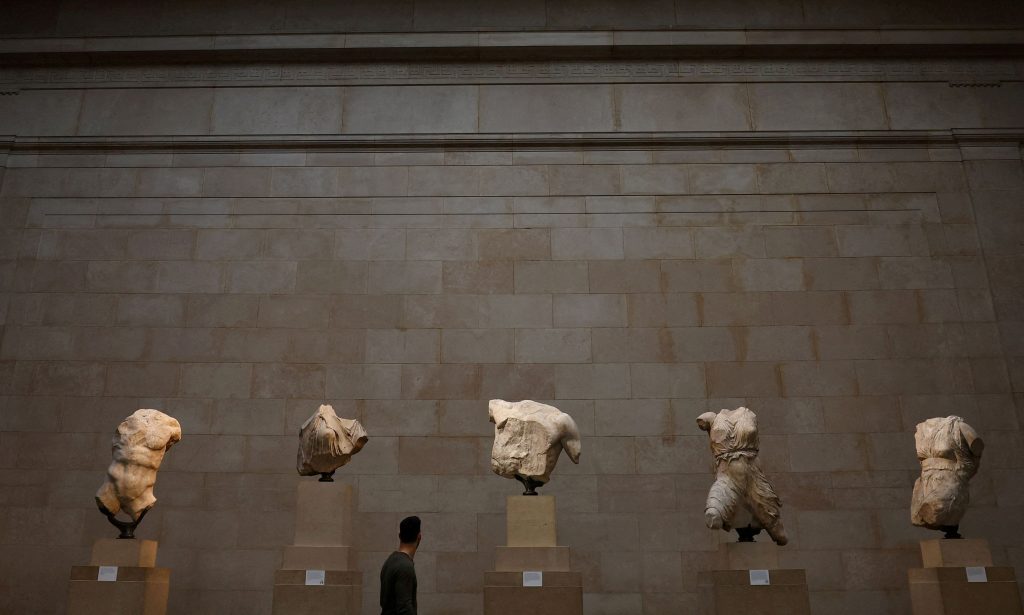
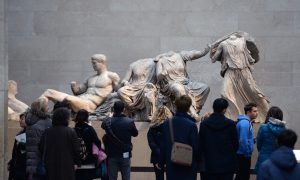
A man views examples of the Parthenon sculptures, sometimes referred to in the UK as the Elgin Marbles, on display at the British Museum in London, Britain, November 29, 2023. REUTERS/Hannah McKay TPX IMAGES OF THE DAY
The signatories argue that ongoing talks are happening behind closed doors and urge museum officials to reconsider their positions. They write: “We reserve the right to seek legal advice on how best to protect the interests of the British public, including pursuing injunctions to stop any present or future negotiations until the rightful stakeholders—the British public—are fully informed.
The campaign is being led by the right-leaning pressure group Great British PAC, headed by Conservative activist Claire Bullivant and Ben Habib, a former deputy chairman of the Reform Party.
Legal Restrictions on Repatriation
Under the British Museum Act of 1963, the museum is legally barred from permanently disposing of key pieces in its collection, including the Parthenon Sculptures. A government spokesperson confirmed there are no plans to change this law, which prohibits permanent or indefinite loans.
In comments to To Vima, a representative of the British Ministry of Culture stated: “We have no intention of changing the law to allow for the permanent transfer of the Parthenon Sculptures.”
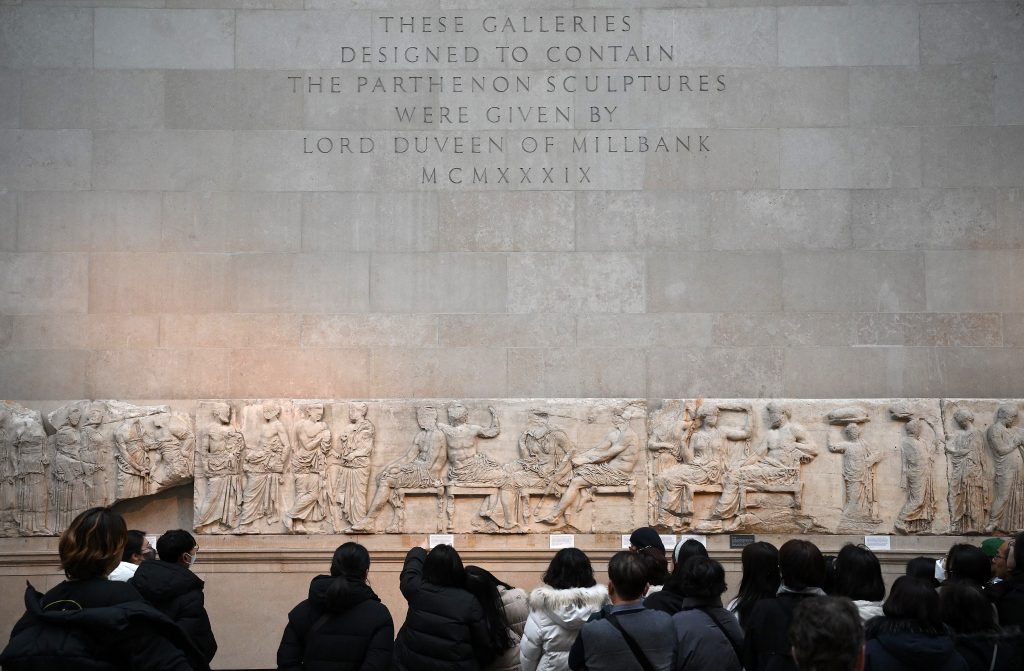
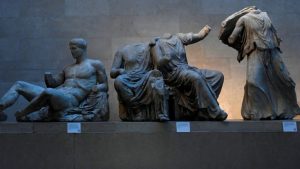
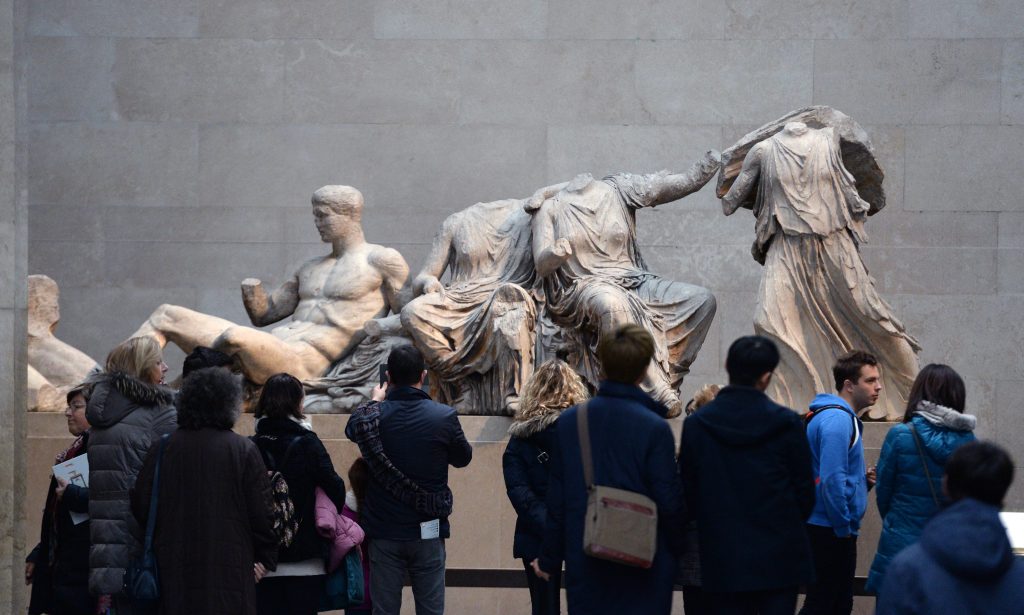
Visitors view the Parthenon Marbles, also known as the Elgin Marbles, at the British Museum in London on January 9, 2023. The ancient sculptures were taken from the Parthenon temple at the Acropolis in Athens in the early 19th century by British diplomat Thomas Bruce, the earl of Elgin. (Photo by Daniel LEAL / AFP) / RESTRICTED TO EDITORIAL USE – RESTRICTED TO EDITORIAL USE
They added that all decisions regarding care, management, or potential loans of the museum’s collection rest solely with its trustees—a position consistently upheld by successive UK governments.
Ongoing Discussions, But No Agreement Yet
In a statement to To Vima, a spokesperson said, that “Discussions with Greece on a Parthenon partnership are ongoing and constructive [..] We believe that such a long-term collaboration would strike the right balance between sharing our most important artifacts with the world and preserving the integrity of the remarkable collection housed in the museum.”
Although former Chancellor George Osborne previously commented that an agreement on the sculptures was still “some distance away,” a museum spokesperson later clarified that Osborne holds no operational role at the museum.
The museum stated that such long-term collaborations aim to balance global public access to its collections with the preservation of their historical and cultural integrity.
The Role of Advocacy Groups
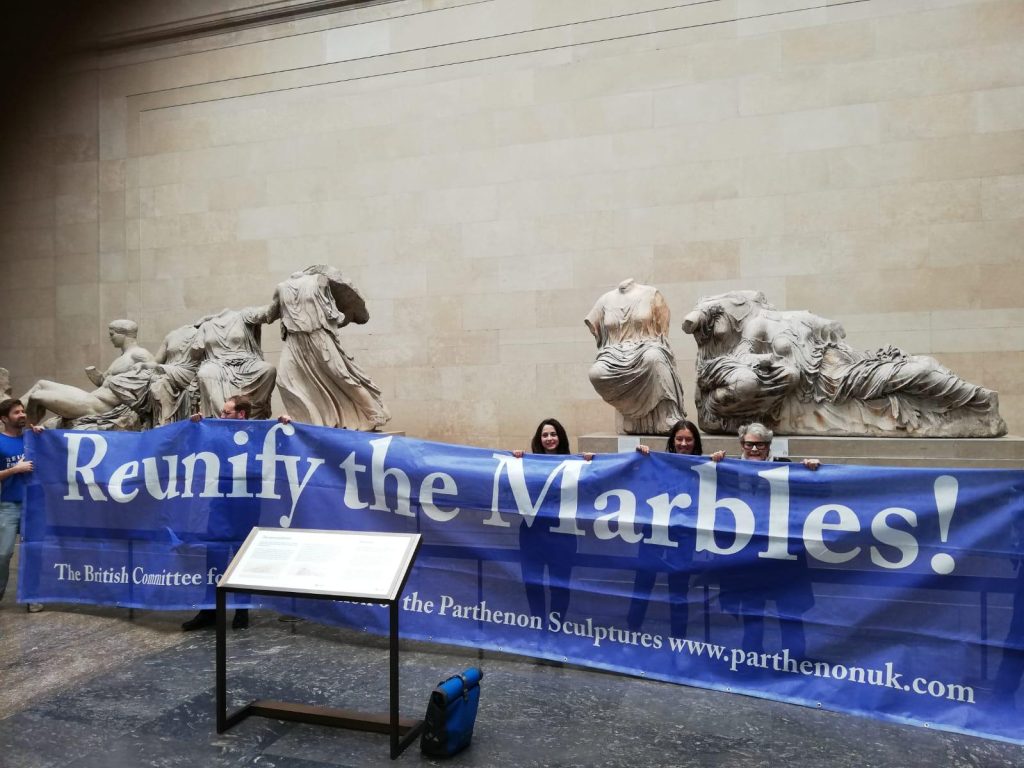
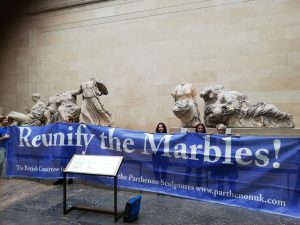
The letter’s publication has reignited public discourse, with critics accusing the British Museum of acting in secrecy. At the same time, the Parthenon Project—a group advocating for the sculptures’ return—dismissed the letter as being “generously funded by a foreign industrialist.” The project names Greek plastics magnate Yiannis Ladas and his family as its primary supporters and says it aims for a “win-win solution” that benefits both the UK and Greece.
As public debate continues over the future of the Parthenon Sculptures, the issue remains a cultural and political flashpoint between heritage, legality, and national identity.