If you’re reading this at the end of July, let’s hope you’re doing so with a view of the azure Mediterranean —maybe from a beach somewhere far from congested Athens – or possibly the deck of a ferry boat, or with the sea in mind even as one waits at an airport gate ready to board a flight towards a summer escape.
Below is a collection of international productions that chose to shoot here whether for a few scenes of an entire story.
There’s wartime epics, bittersweet dramas, sunlit romances, musicals and stories of carefree youth—some set against the backdrop of an Athens of yesteryear, a boundless Aegean or a sparkling Ionian Sea, whitewashed island houses with blue shutters, the buzz of cicadas or the twang of a mandolin, stone alleys, ancient theatres like Epidaurus or the Odeon of Herodes Atticus, and, of course, the timeless port of Piraeus. Places and moments that captured something essential about Greek summer—some of them now lost, or perhaps never to return.
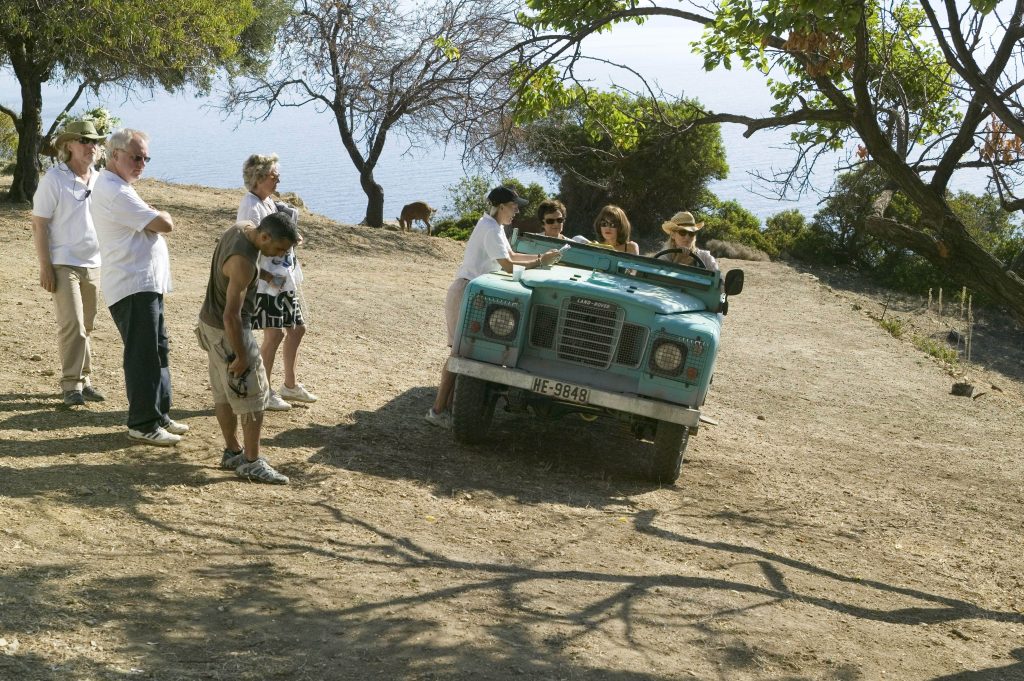
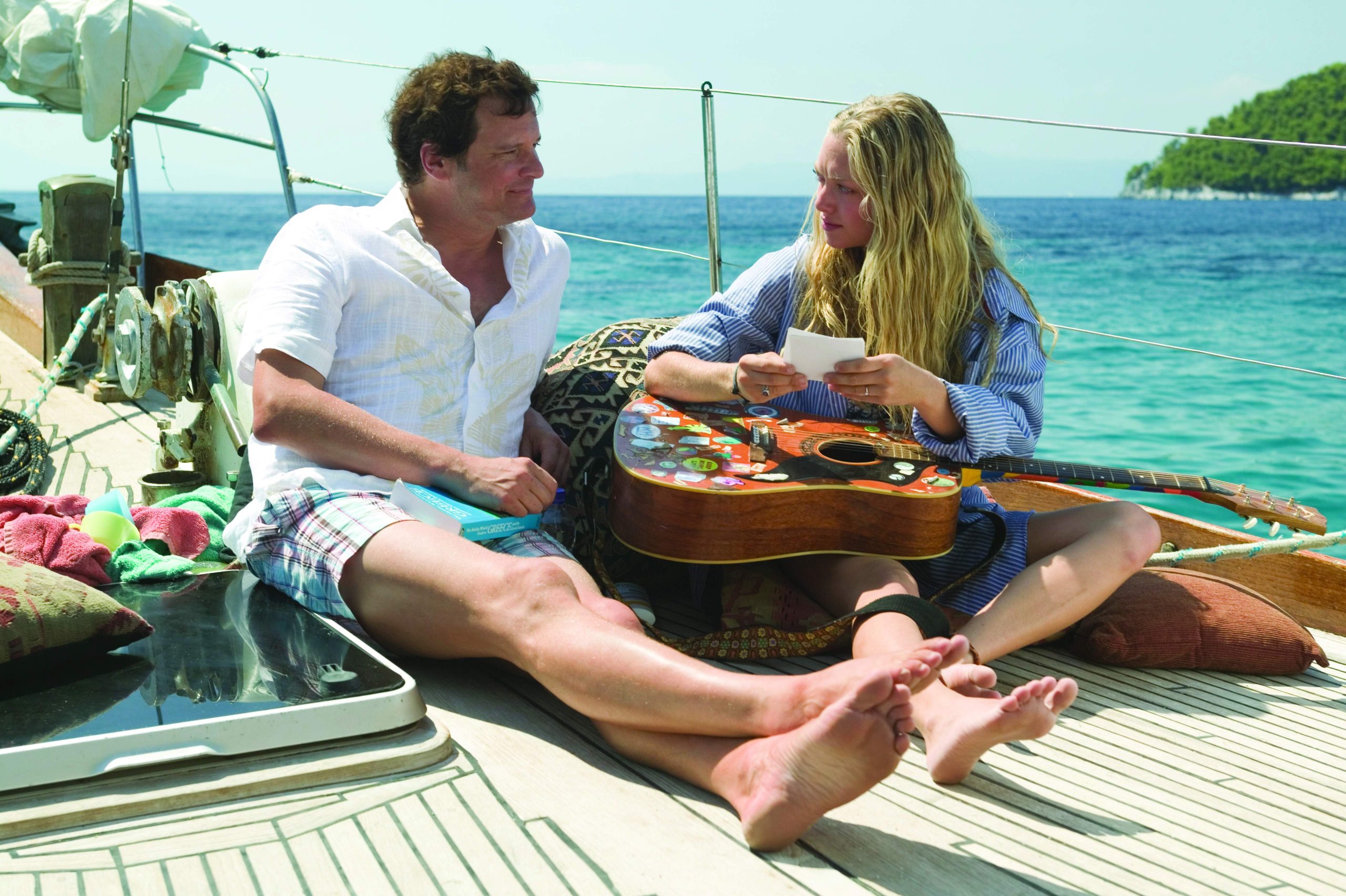
Still frame from the shooting of “Mamma mia”.
Because let’s be honest: that kind of Greek summer—the simple, carefree kind we once enjoyed without significant cost—is becoming harder to attain. Instances of overtourism, the European South’s “scourge” of wildfires, over-development in some very popular destinations, the specter of water shortages and high cost-of-living have turned a basic human right—the right to rest—into a luxury for many.
Of course, life isn’t a movie, and neither are vacations. But that doesn’t mean we have to accept that joy, beauty, and pause are things we no longer deserve to have access to.
So, with a dose of optimism, lightness, and yes—nostalgia—here are a few films that have captured Greece through the lens of foreign directors and international productions. Some might have first enchanted us on a cinema screen one winter long ago—but they live on as timeless love letters to this place.
Boy on a Dolphin (1957)
Boy on a Dolphin holds the distinction of being the first Hollywood feature film shot in Greece, offering international audiences a postcard-perfect view of the country’s postwar gritty beauty. Directed by Jean Negulesco and filmed in DeLuxe Color and CinemaScope, the film also marked the English-language debut of a then-rising star, Sophia Loren. Her role as Phaedra, a Greek sponge diver who discovers a sunken statue, blends classic Hollywood allure with authentic Mediterranean charm.
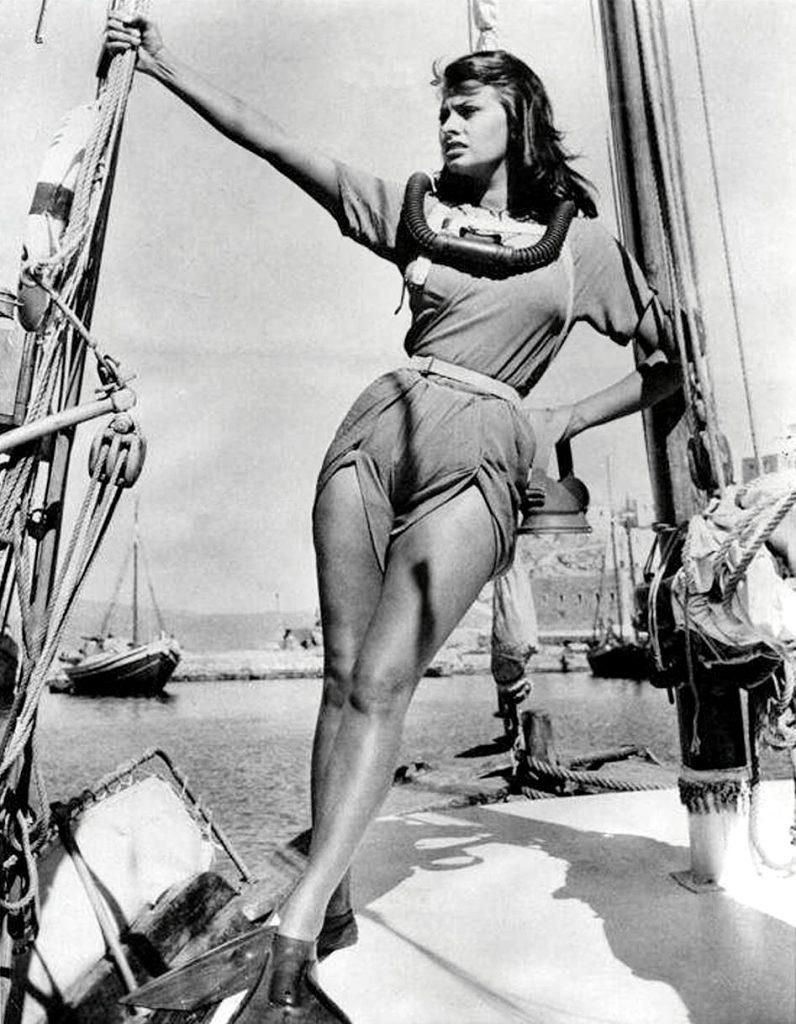
A young Sophia Loren stars as Phaedra in Boy on A Dolphin.
Much of the film was shot on the Saronic Gulf Island of Hydra, whose stone mansions, narrow alleyways, and unspoiled charm were immortalized before high-end tourism turned it into a cosmopolitan destination. Additional establishing shots came in Athens, the uninhabited but highly significant isle of Delos, and Rhodes, while one especially striking scene features the monastery complex of Meteora in central Greece, which decades later would also serve as a backdrop for the James Bond film For Your Eyes Only.
The film’s score, composed by Hugo Friedhofer, included the haunting theme “What Is This Thing They Call Love?”—adapted from a Greek melody—which earned an Academy Award nomination for Best Original Score.
Never on Sunday (1960)
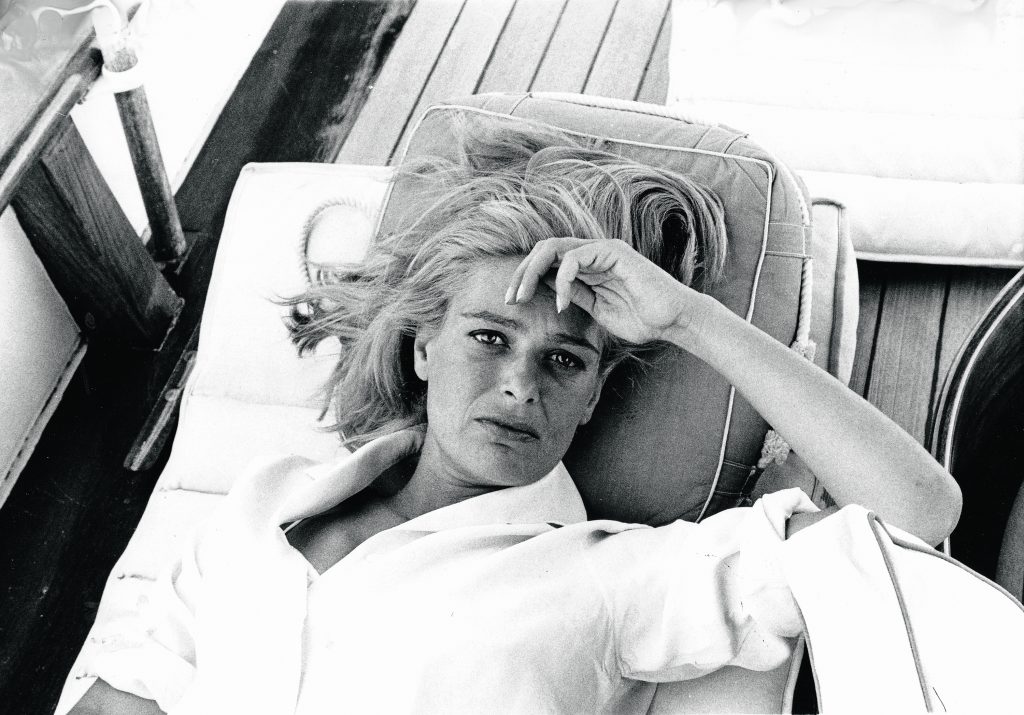
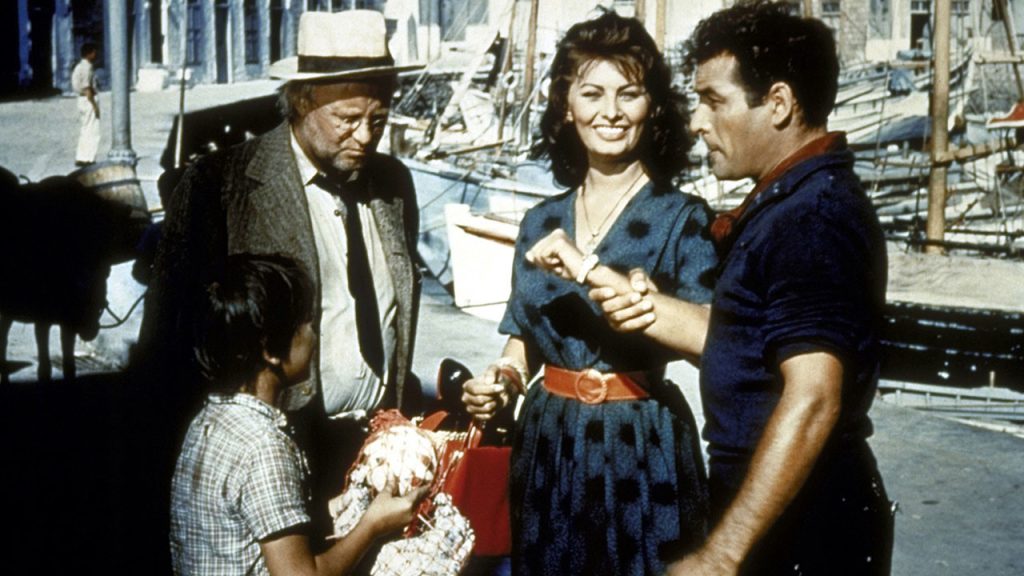
A cult classic of postwar Greek cinema, Never on Sunday is a vibrant and subversive comedy-drama set in the bustling port of Piraeus, where Melina Mercouri stars as Ilya—a fiercely independent, free-spirited prostitute with a love for life and Greek culture. When she crosses paths with Homer, a well-meaning but uptight American classicist (played by the film’s director, Jules Dassin), cultures clash and comic misunderstandings ensue.

Melina Mercouri as “Ilya” sings “The Boys of Piraeus” and looks at a photo of the Olympiacos team, in one of the most iconic moments in Greek cinema.
Filmed on location in Piraeus and Athens, the movie captures the lively street life of 1960s Greece—from the everyday rhythms of a working-class neighborhood to the grandeur of the Acropolis and the Odeon of Herodes Atticus, where Homer and Ilya attend a performance of Medea. The film’s infectious bouzouki theme by renowned composer Manos Hadjidakis became a global hit and earned Greece its first Academy Award for Best Original Song.
The film also garnered Oscar nominations for Best Actress (Mercouri), Best Director (Dassin), Best Screenplay, and Best Costume Design. Mercouri won Best Actress at the 1960 Cannes Film Festival, cementing her international status and the film’s place in cinematic history.
The Guns of Navarone (1961)
This film is part of the golden age of WWII epics, as the The Guns of Navarone is a thrilling tale of sabotage and survival. Directed by J. Lee Thompson and adapted from Alistair MacLean’s bestselling novel, the film follows a daring Allied commando mission to destroy a German fortress positioned on a fictional Greek island that threatens Allied naval movements in the Aegean.
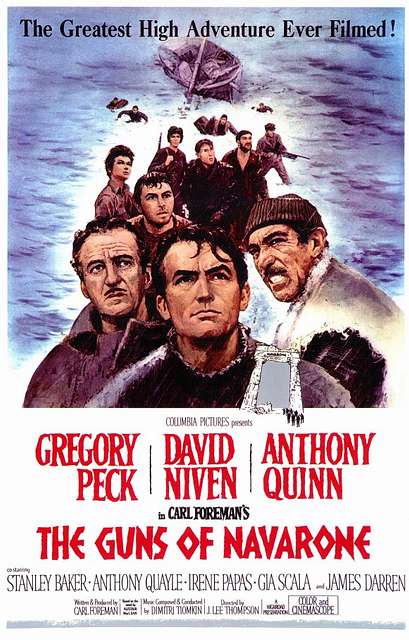
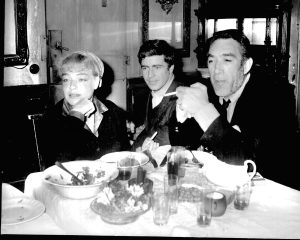
The film’s primary shooting location was the island of Rhodes, where the production ran from April to July 1960. The island’s rocky coastline, medieval structures, and dramatic landscapes provided the perfect stand-in for the fictional Navarone. The all-star cast—Gregory Peck, David Niven, Anthony Quinn, and Irene Papas—delivered gripping performances in one of the era’s most successful war dramas.
Legend has it that Anthony Quinn was so enamored with Rhodes during filming that he purchased a secluded bay intending to turn it into an international retreat for artists and filmmakers. Though the plan never materialized due to legal complications, challenges and proverbial “red tape”, the beach remains affectionately known as Anthony Quinn Bay—a picturesque tribute to the actor’s connection to Greece.
Zorba the Greek (1964)
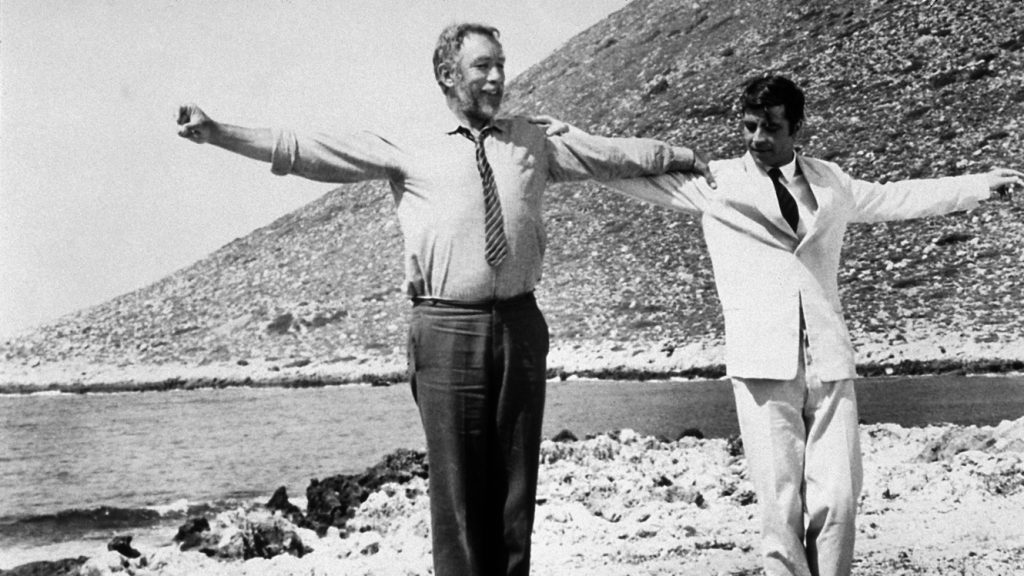
A reserved English writer of partial Greek descent travels to Crete on business, only to have his world turned upside down by the larger-than-life Alexis Zorba—played memorably by Academy Award-winning actor Anthony Quinn. Directed by Greek Cypriot filmmaker Michael Cacoyannis and based on Nikos Kazantzakis’ seminal 1946 novel The Life and Times of Alexis Zorba, this black-and-white masterpiece captures the untamed beauty of Crete and the raw energy of its people.
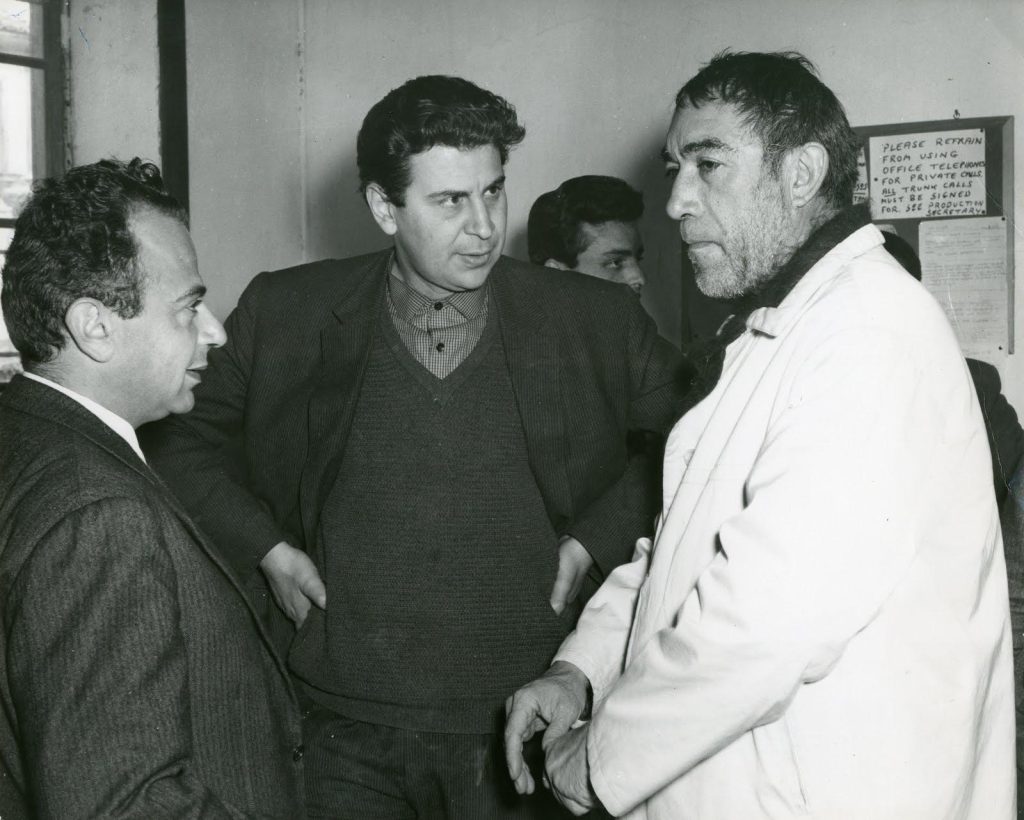
Filming took place in the picturesque prefecture of Chania, particularly in the villages of Kokkino Chorio and Stavros—the latter of which is now etched in cinematic history as the beach where Zorba famously dances the sirtaki. The film’s evocative musical score by Mikis Theodorakis and its philosophical undertones turned it into a global cultural touchstone. At the 37th Academy Awards, it won three Oscars, including Best Supporting Actress (Lila Kedrova), Best Cinematography, and Best Art Direction. Zorba’s zest for life became a symbol of Greek spirit—and that Cretan beach, a symbol of cinematic joy.
For Your Eyes Only (1981)
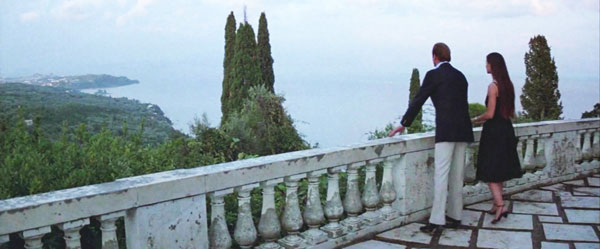
This classic Bond adventure takes us on a thrilling chase through some of Greece’s most iconic landscapes—from the sunlit shores of Corfu and the elegant Achilleion Palace to the breathtaking monasteries perched atop Meteora’s towering cliffs.
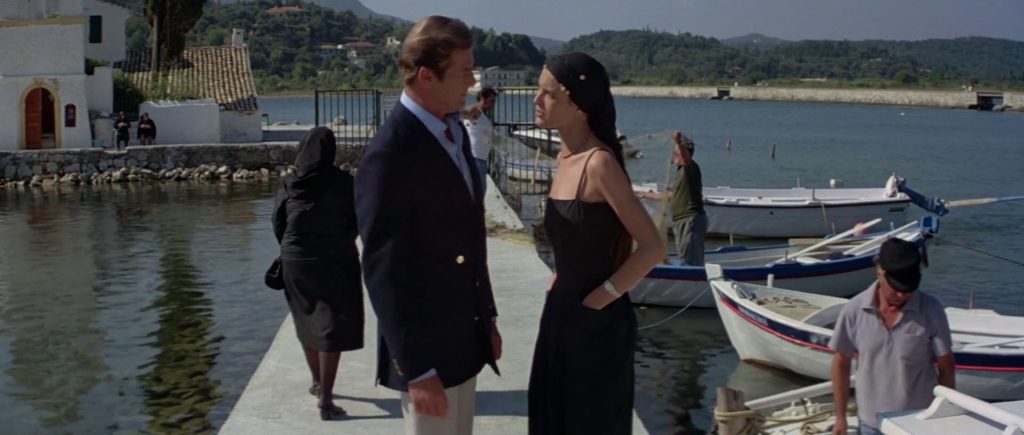
As 007 races against time to stop a dangerous missile system from falling into the wrong hands, the film beautifully captures a Greece both wild and refined, where history and modern intrigue intertwine. It’s a vivid, sun-kissed snapshot of a summer full of suspense, adventure, and unforgettable scenery.
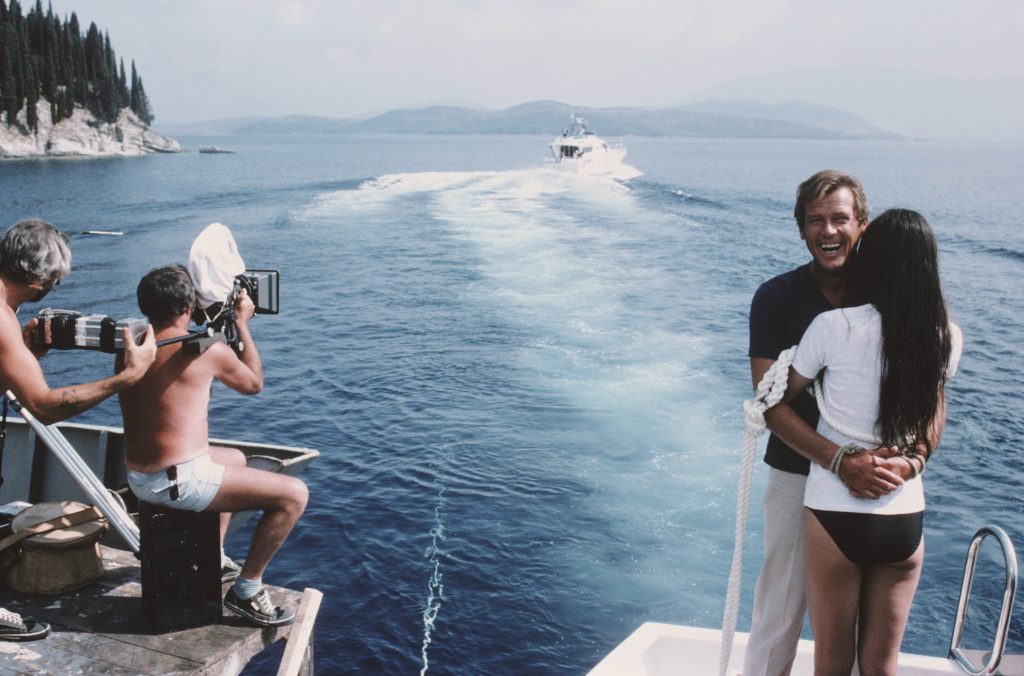
Roger Moore and Carole Bouquet “tied up” on the set of “For Your Eyes Only” on Corfu.
Summer Lovers (1982)
Few films embody the carefree hedonism of a Greek island summer quite like Summer Lovers. This quintessential early ’80s romantic drama follows a young American couple who, while vacationing in Greece, begin an affair with a French archaeologist—unfolding a story of youthful curiosity and emotional awakening.
Directed by Randal Kleiser (Grease), the film was shot during the height of the summer season in Santorini, offering a glimpse of the island before it became one of the world’s most photographed destinations. With special permission granted to film at the island’s prehistoric site of Akrotiri, the movie captures not just the beaches and sunsets but also a sense of history simmering beneath the volcanic soil. Other scenes include stops in Crete, Delos, and Mykonos, creating a visual love letter to the Aegean in peak summer heat.
The Big Blue (1988) — Le Grand Bleu
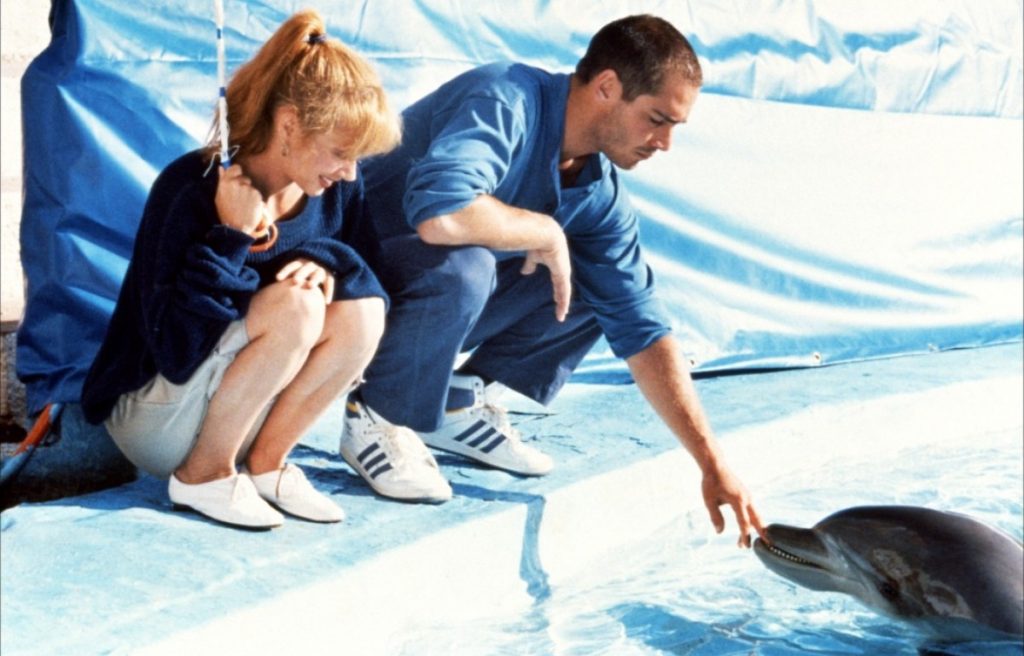
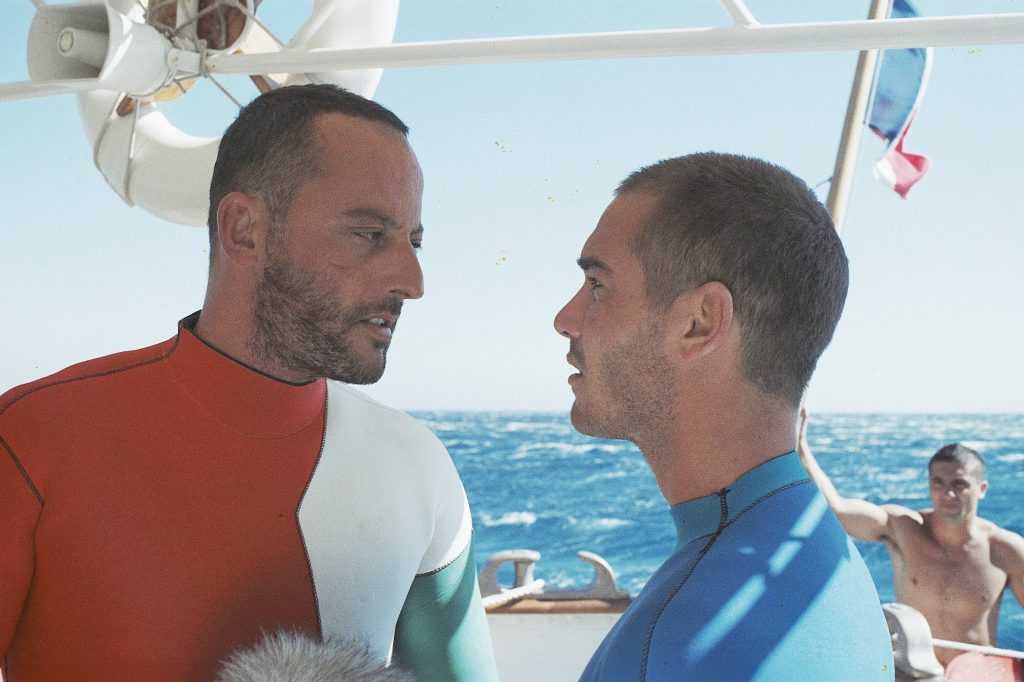
Luc Besson’s poetic French drama The Big Blue opens in Greece, where the deep and mysterious bond between two childhood friends—and rival free divers—takes root. Though filmed in multiple countries, the movie begins in the Cycladic islands, particularly Amorgos and Ios, painting an unforgettable portrait of their serene beauty.
The most iconic scenes were shot at Agia Anna Beach in Amorgos, a secluded spot beneath a monastery-topped cliff, where the sea blends so seamlessly into the sky that it’s nearly impossible to tell them apart. The film’s visuals are meditative and expansive, its soundtrack by Éric Serra won a César Award, and its atmosphere resonates with anyone who’s ever felt the stillness of a Greek summer afternoon by the sea. For many, The Big Blue is more than a film—it’s a feeling.
Captain Corelli’s Mandolin (2001)
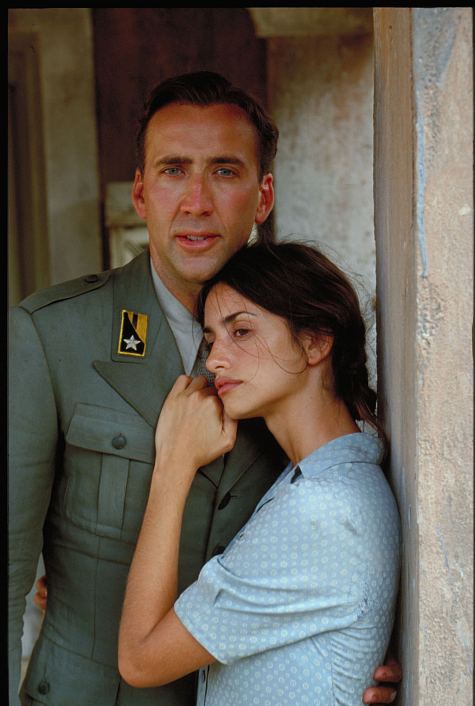
Set against the turbulent backdrop of World War II, Captain Corelli’s Mandolin tells the story of a Greek woman who falls for an Italian officer during the occupation of Cephalonia. Based on Louis de Bernières’ novel, the film serves as a tribute to the thousands of Italian soldiers executed by their erstwhile German allies in the Massacre of the Acqui Division, as well as the locals who endured both war and a devastating postwar earthquake.
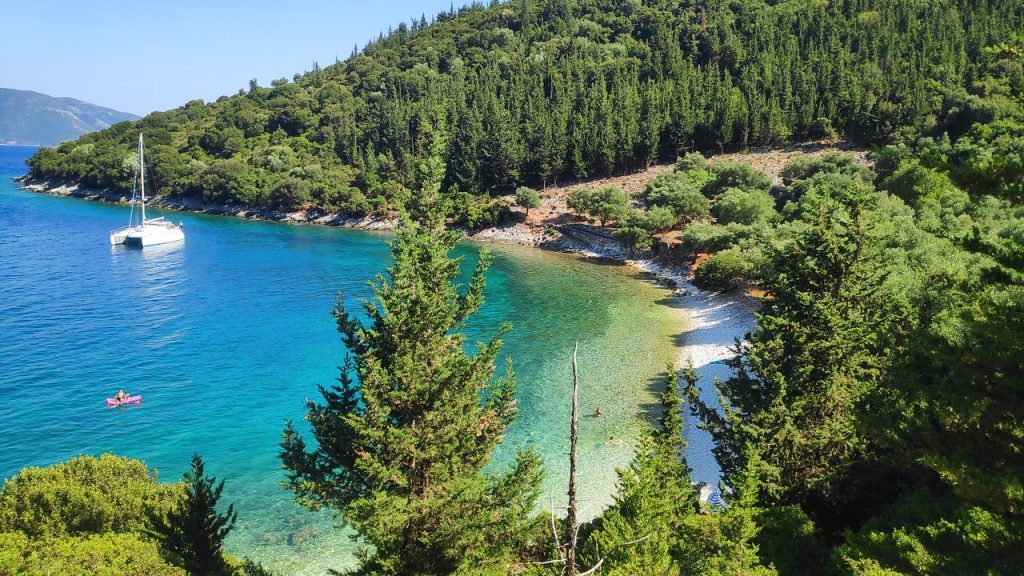
Chorgota beach, also known as “Pelagia Beach,” from the movie “Captain Corelli’s Mandolin”, is a picturesque and serene beach on the northeast coast of Kefalonia.

Filmed entirely on the Ionian Sea Island of Cephalonia, the movie immerses viewers in the island’s verdant hillsides, rustic homes, and dazzling coastline. The charming town of Sami provided much of the setting, while the dramatic explosion scene was filmed on the breathtaking Myrtos Beach, known for its white pebbles and electric-blue waters. The emotional weight of the story is amplified by the island’s radiant light and rugged beauty—quintessential elements of a Greek summer.
The Sisterhood of the Traveling Pants (2005)
Few teen films have managed to evoke the emotional pull of friendship and self-discovery quite like The Sisterhood of the Traveling Pants. Based on Ann Brashares’ bestselling novel, the film follows four teenage friends who stay connected over a summer apart by sharing a pair of magical jeans that miraculously fits them all. One of the film’s most memorable storylines is set in Santorini, where Lena (played by Alexis Bledel) spends the summer with her grandparents and finds unexpected romance with a local boy.

This spot below Oia, Santorini island, was used as a location shot for the movie “Sisterhood Of The Traveling Pants”./ ehpien flickr
Filmed during the island’s high season, The Sisterhood of the Traveling Pants showcases Santorini in full bloom—sun-bleached terraces, cerulean domes, and the hypnotic Aegean light. The caldera views and cliffside villages provide more than just scenery—they’re a metaphor for Lena’s emotional awakening and Greece becomes the soul of her storyline. For many young viewers, this film was their first dreamy cinematic encounter with the Greek islands.
Mamma Mia! (2008)
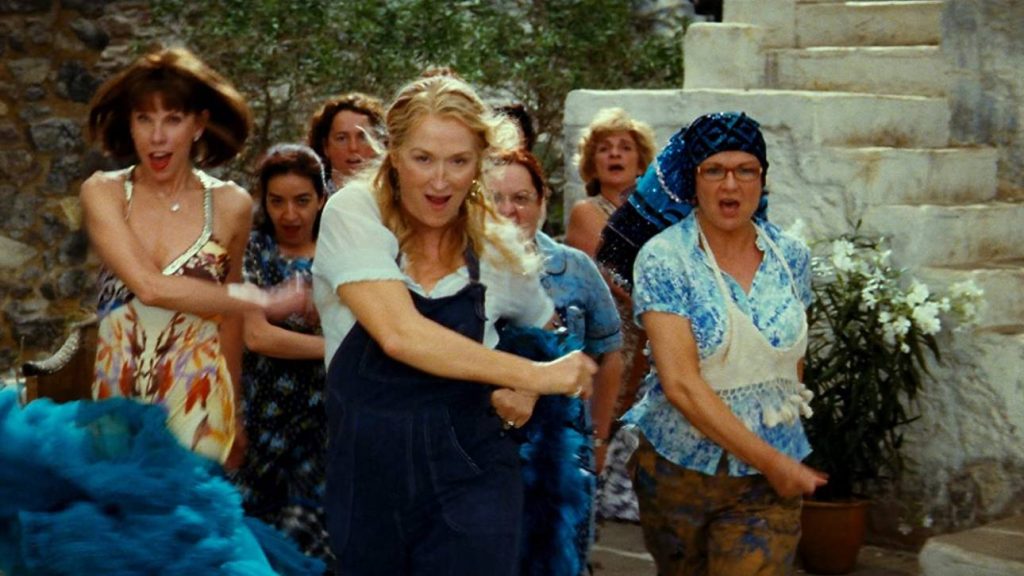
A summer wedding, three potential fathers, and a soundtrack filled with ABBA hits—Mamma Mia! became an instant classic by marrying musical theatre with the dreamy visuals of the Greek islands. Adapted by Catherine Johnson from her stage musical, the film introduced global audiences to the fictional island of “Kalokairi”—a stand-in for the real-life islands of Skopelos, Skiathos, and Pelion, where the bulk of the movie was filmed.
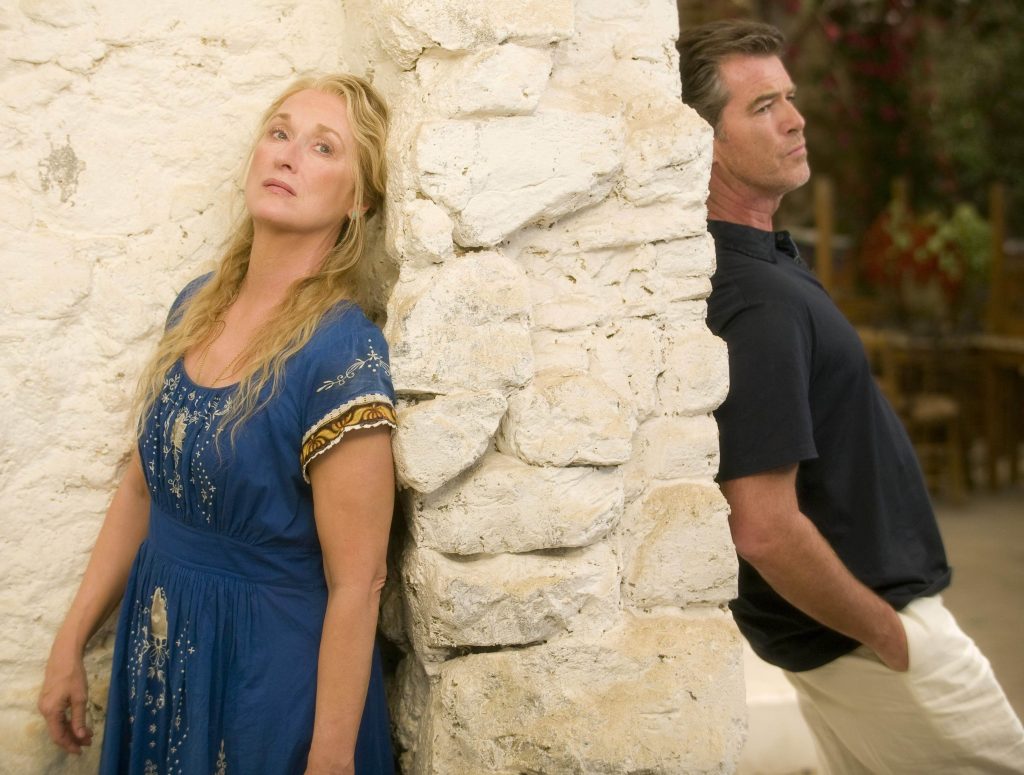

From the charming port of Skiathos to the sun-drenched chapel on Skopelos’ clifftop and the beach of Damouchari in Pelion, every frame bursts with summer energy. Featuring a star-studded cast led by Meryl Streep, Amanda Seyfried, Pierce Brosnan, Colin Firth, and Stellan Skarsgård, the film was a box office juggernaut, grossing over $611 million worldwide. Its success even spawned a 2018 sequel. But perhaps its greatest legacy is how it wrapped a joyful, sun-kissed Greek summer in the irresistible embrace of pop nostalgia.
My Life in Ruins (2009)
Written by and starring Greek-Canadian actress Nia Vardalos (My Big Fat Greek Wedding), My Life in Ruins is a breezy romantic comedy about a disenchanted tour guide rediscovering the magic of Greece—and herself. While light-hearted in tone, the film made cinematic history by being the first American studio production granted permission to film on the Acropolis.
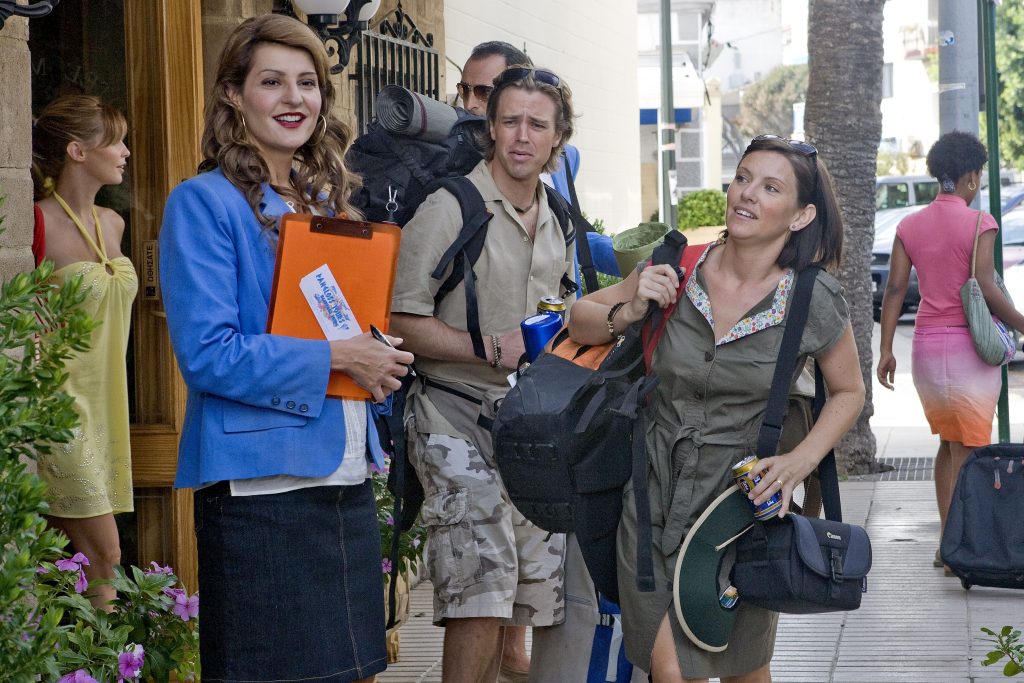
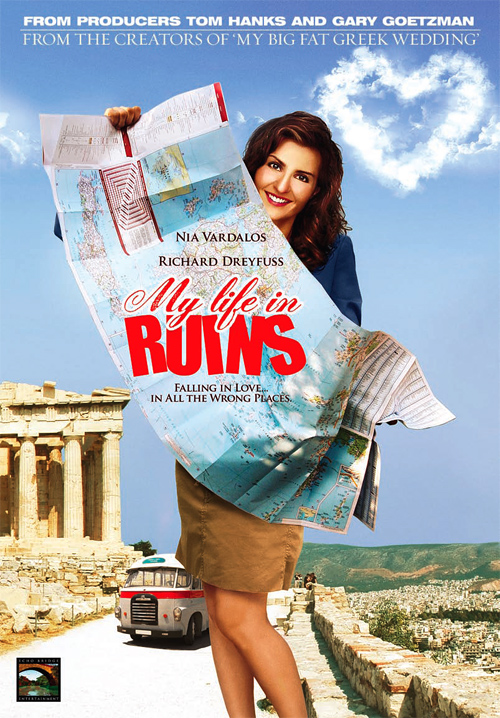
The plot follows a tour bus full of quirky characters as they explore some of Greece’s most iconic archaeological sites, including Olympia, Delphi, and Epidaurus. With its sweeping shots of ancient temples, coastal roads, and golden sunlight, the film plays like a visual postcard of the mainland’s most historic—and summery—destinations.
Before Midnight (2013)
The third installment in Richard Linklater’s acclaimed Before trilogy, Before Midnight trades the cobbled streets of Vienna and Parisian cafés for the still, sun-drenched landscapes of Messinia, in the southern Peloponnese. This chapter finds Jesse (Ethan Hawke) and Céline (Julie Delpy) grappling with the complexities of middle-aged love while spending a summer at a writer’s retreat.

Filmed entirely on location in and around the picturesque town of Kardamyli, as well as Pylos, and Voidokilia Beach, the film breathes in the silence and stillness of the Greek countryside. Scenes unfold in stone-built mansions, under olive trees, and along coastal roads shimmering in heat.
The Two Faces of January (2014)
Set in 1960s Greece, The Two Faces of January is a stylish psychological thriller adapted from a Patricia Highsmith novel. Directed by Hossein Amini, the film stars Viggo Mortensen, Kirsten Dunst, and Oscar Isaac as three travelers who become entangled in a web of lies and murder while moving through the ruins of the classical world.
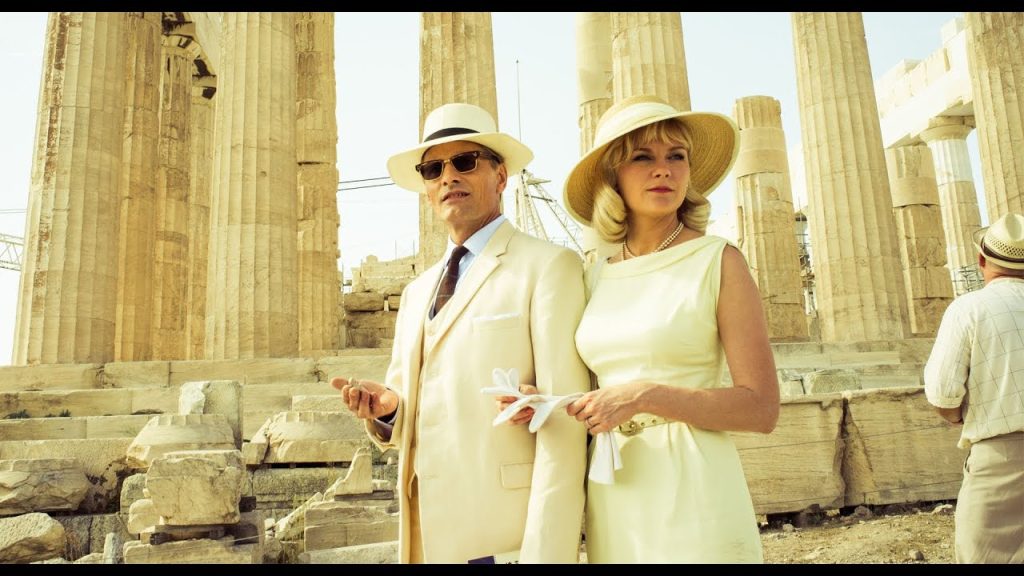
Filmed on location in Athens, Crete, and particularly the palace of Knossos, the movie makes use of iconic archaeological sites that lend both grandeur and eerie stillness to the unfolding drama. The tension between ancient stones and modern deception creates a moody, Hitchcockian atmosphere. The Heraklion Archaeological Museum, Plaka’s narrow alleys, and sun-drenched Greek hotels become both glamorous and claustrophobic—a perfect setting for paranoia.
The Lost Daughter (2021)
Maggie Gyllenhaal’s haunting directorial debut The Lost Daughter draws audiences into the sun-scorched, salt-laced tension of a Greek island holiday that takes an unsettling turn. Adapted from Elena Ferrante’s novel, the story follows Leda (Olivia Colman), a literature professor vacationing solo on Spetses, where an encounter with a young mother and daughter stirs memories of her own turbulent past.
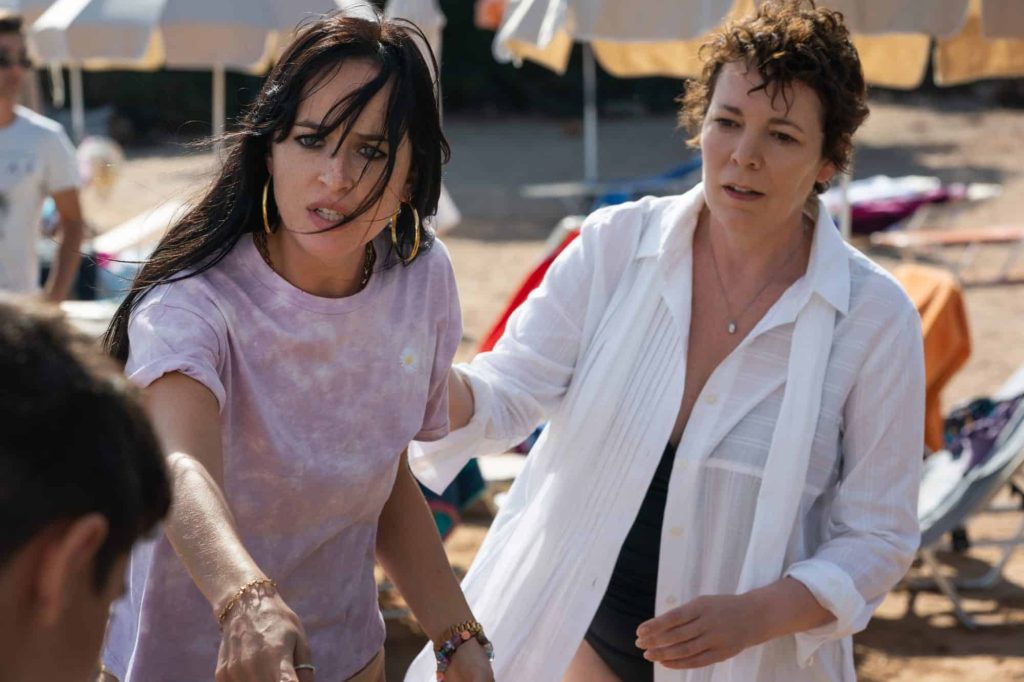
Filmed on location during the quiet summer months of 2020, The Lost Daughter makes striking use of Spetses’ neoclassical architecture, pine-shaded beaches, and cobblestone paths. Unlike typical portrayals of Greek islands as light-hearted and carefree, this film embraces an eerie stillness—sunlight that blinds rather than warms, waves that churn unease. The film made headlines not only for Colman’s acclaimed performance but also for being one of the first major international productions filmed in Greece during the pandemic. It earned three Academy Award nominations and positioned Spetses on the global film map.
Triangle of Sadness (2022)
Ruben Östlund’s Triangle of Sadness starts as a sharp satire of the fashion world and the ultra-wealthy but ends up deep in the wild beauty of Evia—Greece’s second-largest island. After a luxury yacht trip spirals into chaos, survivors find themselves stranded on a remote, sun-baked beach that becomes the stage for absurdist comedy and dark social commentary. Filming took place not only in Chiliadou beach on Evia but also across other Greek islands and aboard the Christina O, the legendary yacht once owned by Aristotle Onassis, sailing the Mediterranean.
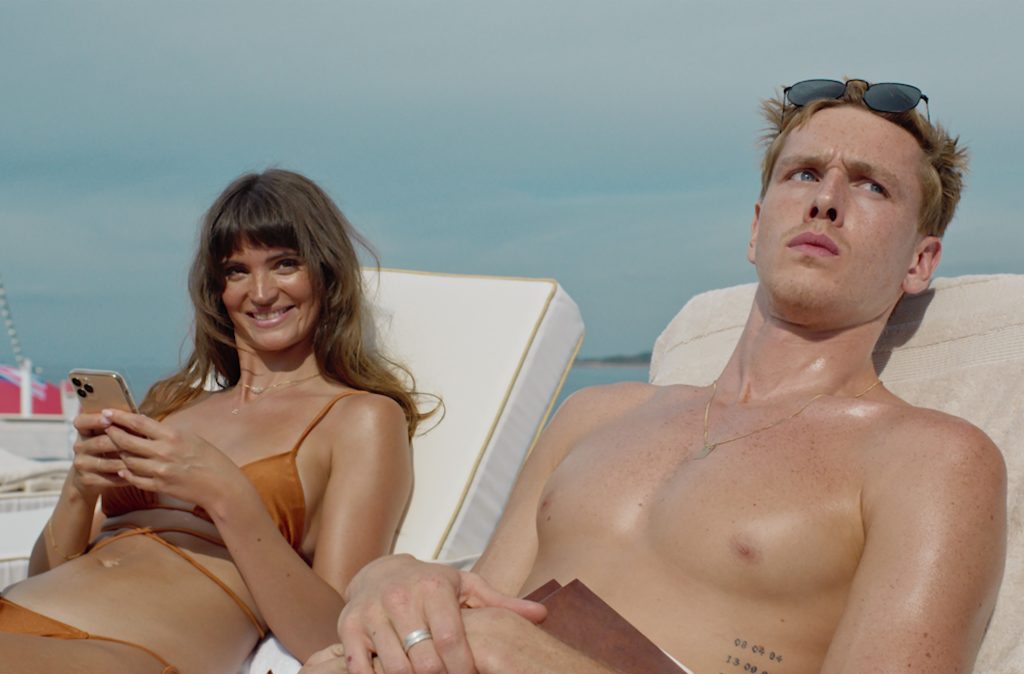
The film’s raw and ironic portrayal of power, privilege, and survival is matched by the stunning Greek landscapes that serve as both paradise and battleground. Winner of the Palme d’Or at Cannes, Triangle of Sadness proved that Greek landscapes can hold more than romance and beauty—they can also carry satire, irony, and edge.

Filming took place on the yacht “Christina O.”, formerly owned by Aristotle Onassis. ©stef-bravin/ Wikimedia Commons