Greece has secured a cautious opening from Brussels to consider a request to fund targeted energy support, though the European Commission made clear after Thursday’s Eurogroup meeting in Luxembourg that it will not tolerate a broader loosening of fiscal discipline.
Economy Commissioner Valdis Dombrovskis announced that the Commission had positively assessed requests from Athens and Rome to use the expanded flexibility of the national escape clause, originally designed for defense spending, to finance energy security measures. The requests now await final approval from the Council, and the Commission will continue to scrutinize their terms closely.
The two countries are pursuing different routes. Athens wants temporary measures excluded from the net expenditure indicator, while Rome is seeking to have the effect of inflation factored into assessments of compliance with spending limits, allowing windfall tax revenue to be channeled into short-term energy relief. The logic is simple: when high prices swell state coffers, governments want to return part of that money to the economy.
Dombrovskis, however, drew a firm line. “We cannot keep adding new fiscal flexibilities,” he said, warning that doing so would undermine the credibility of the EU’s commitment to sustainable public finances. He noted that inflationary pressures are already accounted for in country assessments and that price pressures may persist into the winter. Support, he insisted, must go only to the most vulnerable, since across-the-board measures raise fiscal costs and fuel inflation without providing meaningful help.
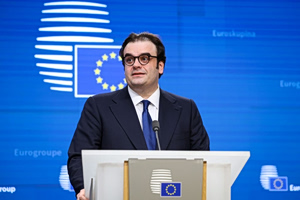
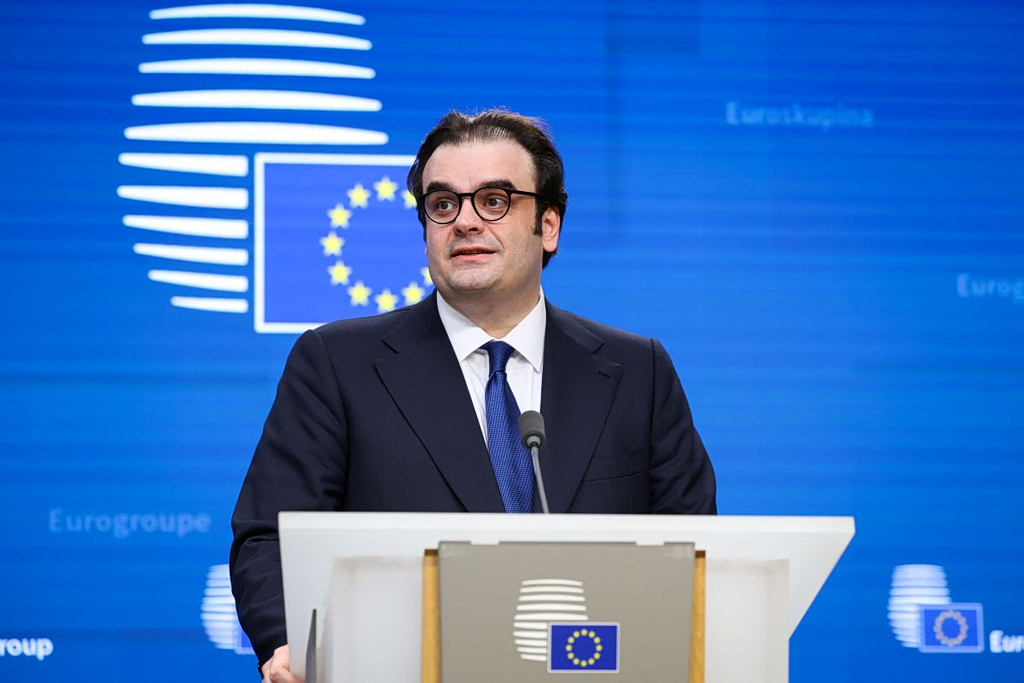
Eurogroup President Kyriakos Pierrakakis described the situation as a “difficult balance.” Pointing to price spikes in diesel and jet fuel since late August, he said the EU remains exposed to external risks. Ministers reaffirmed that any measures must follow the “three Ts”: temporary, targeted, and tailored.
Bond markets are narrowing the room for maneuver. Pierrakakis observed that investors are growing more sensitive to fiscal risk and demanding higher compensation for uncertainty. On widening spreads, particularly in France, he struck a reassuring tone: “We are vigilant, but not alarmed,” expressing confidence in French Finance Minister Roland Lescure. Dombrovskis added that high-debt countries are more exposed and urged sound budgets for next year.
For Greece, the stakes rise ahead of the 2027 budget. The government must now determine who needs help most, how much it will cost, and when it ends, while also advancing long-term investment in clean energy, electrification, grids, and interconnections to reduce future exposure to price shocks.