 Μake us preferred on Google
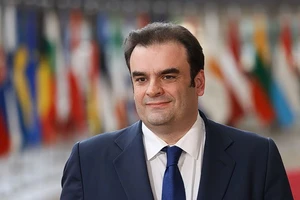
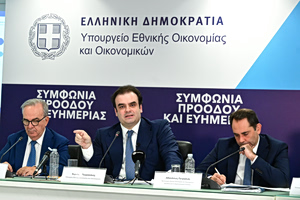
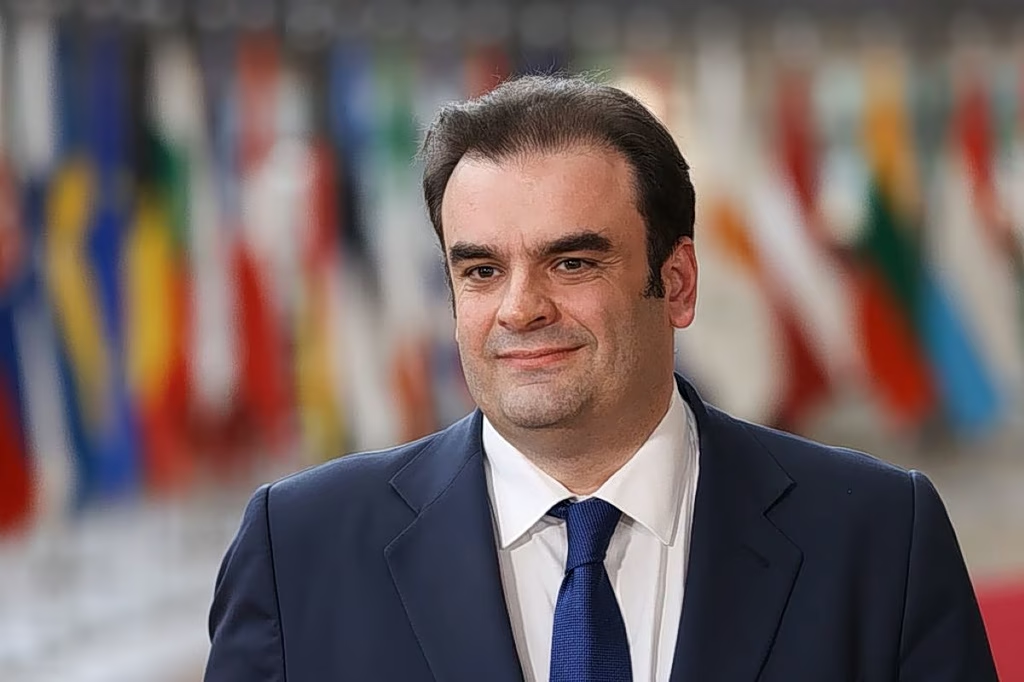
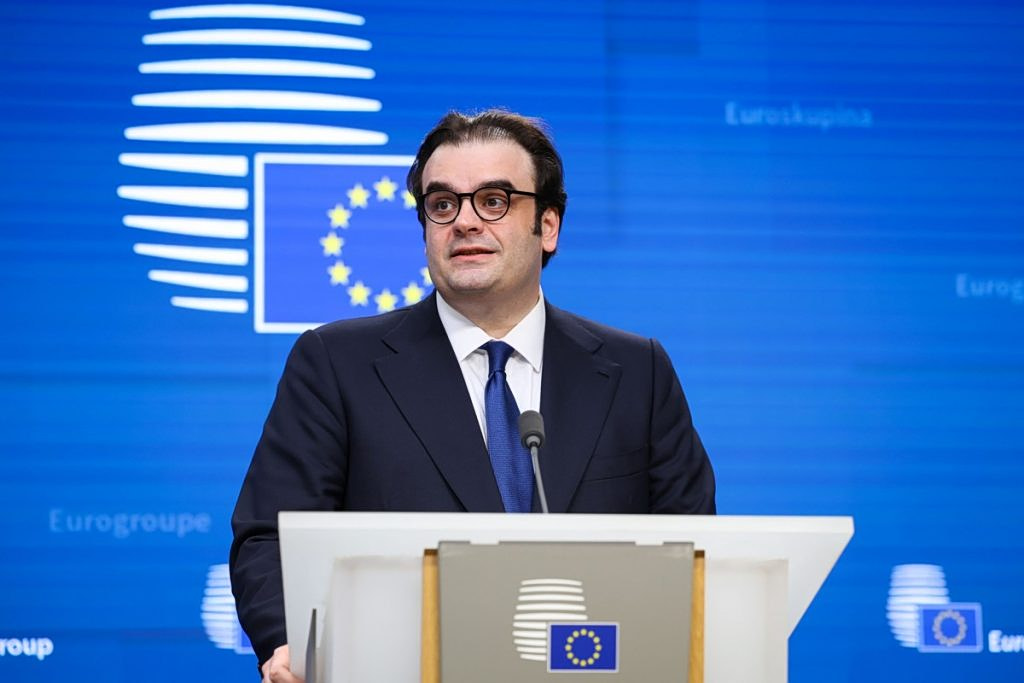
 Greek National Economy and Finance Minister and Eurogroup President Kyriakos Pierrakakis called for a more integrated and competitive European economy, warning that Europe cannot afford further delays as investment needs rise and global competitors move ahead.
“Europe must move now, because competitors, investment and technology are not waiting,” Pierrakakis said during a speech at the Eurofin Financial Forum in Dublin.
He said Europe’s investment needs were also increasing dramatically in areas including defense, energy, artificial intelligence, digital infrastructure, innovation and the green transition.
Public finances cannot fund investment alone
Pierrakakis said sound public finances remained the foundation of sustainable economic strength, but argued that national budgets alone could not finance investments on the required scale.
Europe, he said, had not yet created a financial system capable of effectively mobilizing its savings at the European level and directing them toward businesses, innovation and investment.
He pointed to the Savings and Investment Union as an effort to connect European savings more effectively with European investment and create deeper, more integrated financial markets.
Capital markets are only part of the equation, he said, noting that banks provide about 70% of financing for the European economy.
“We cannot have an effective Savings and Investment Union without a competitive and integrated banking sector,” Pierrakakis said.
For that reason, he described completing the Banking Union as more than a financial-sector issue, calling it a critical part of Europe’s growth strategy.
Banking fragmentation carries a cost
Pierrakakis said Europe’s banking sector remained fragmented along national borders and lacked sufficient scale, while parts of the regulatory and supervisory framework remained unnecessarily complex.
The cost of this fragmentation, he said, effectively acts as a “strategic tax” on Europe, scale, investment and growth.
Only about 16% of corporate lending in the eurozone is cross-border, according to the figures cited by the minister.
Cross-border banking groups continue to face restrictions on the effective movement of capital and liquidity between countries, limiting both integration and consolidation within the sector.
According to European Commission estimates cited by Pierrakakis, removing these restrictions could unlock €230 billion in high-quality liquid assets. The cost of complying with supervisory requirements and reporting obligations is estimated at about €24 billion, he said.
“We need a simpler and more proportionate framework,” Pierrakakis said. “And, obviously, we need greater integration and greater scale.”
He argued that scale was becoming increasingly important for competitiveness and investment in technology.
Europe needs banking institutions capable of competing globally, he said, while also maintaining strong regional and local banks that understand their communities, finance small and medium-sized businesses and keep capital connected to the real economy.
Pierrakakis said he strongly supported the direction set by the European Commission, describing its report and communication as ambitious and comprehensive.
Three priorities for Europe’s banking sector
Pierrakakis identified three areas where progress is needed.
First, integration and scale. Europe should remove cross-border barriers, facilitate further consolidation and allow capital and liquidity to move more efficiently.
Second, trust and common safeguards. This includes strengthening crisis management, liquidity and resolution mechanisms, as well as deposit insurance. Greater integration, he said, requires greater trust.
Third, competitiveness. Europe should simplify its framework, strengthen the principle of proportionality and improve consistency in supervision while maintaining the resilience that has been built.
“Better regulation, not less regulation,” he said.
‘The issue is growth’
“Our competitors are not waiting. Investment is not waiting. And certainly technology is not waiting,” Pierrakakis said.
He also highlighted the role of the Eurogroup, saying it provides the space needed for strategic policy discussions in the coming weeks and months.
Those discussions, he said, should allow ministers to hear different national perspectives, understand legitimate concerns, build trust and find common ground quickly enough to produce meaningful results.
“Ultimately, it is not about the banks. It is not about the banking sector as such. It is about growth,” he said.
Pierrakakis concluded by saying Europe could not afford further delays and that responsibility lay with the next generation.
He called for the political will to overcome differences, make difficult decisions and move with the speed and ambition required by current circumstances.
“A stronger Europe means stronger member states,” he said, describing them as more prosperous, more secure and better able to create opportunities for their citizens and businesses.