 Μake us preferred on Google
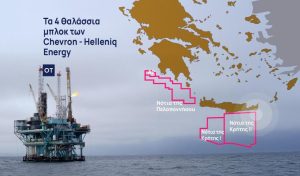
 In a significant move, with the ultimate aim of strengthening the country’s energy and geopolitical footprint in the Eastern Mediterranean, Athens is moving forward by signing the concession contracts for the four offshore blocks south of the Peloponnese and south of Crete, between the Greek state and the consortium of the American giant Chevron and HelleniQ Energy.
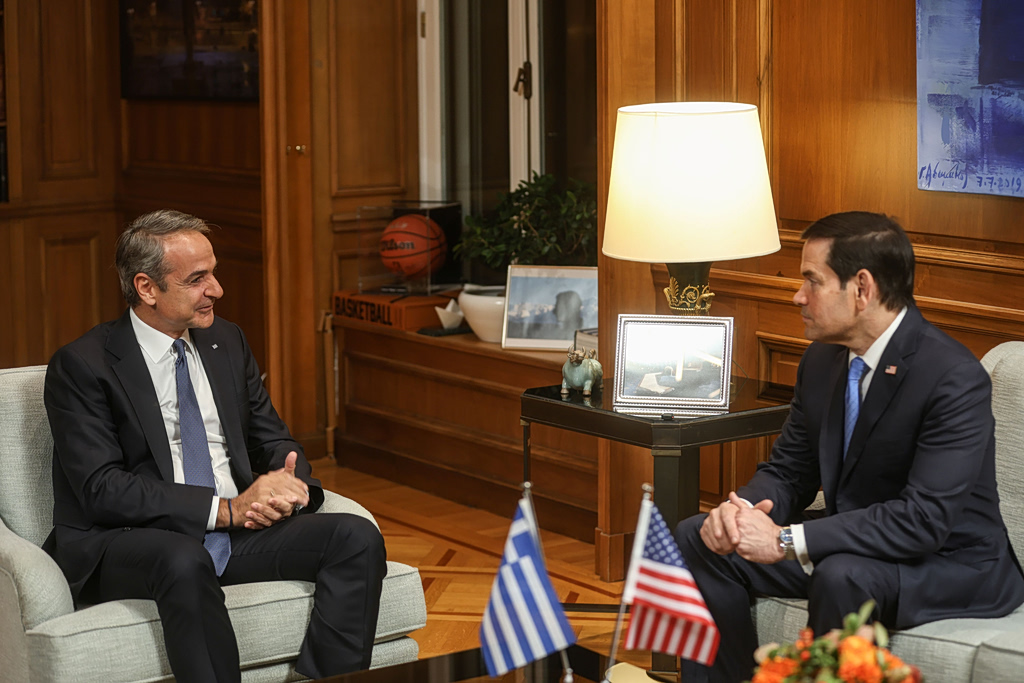
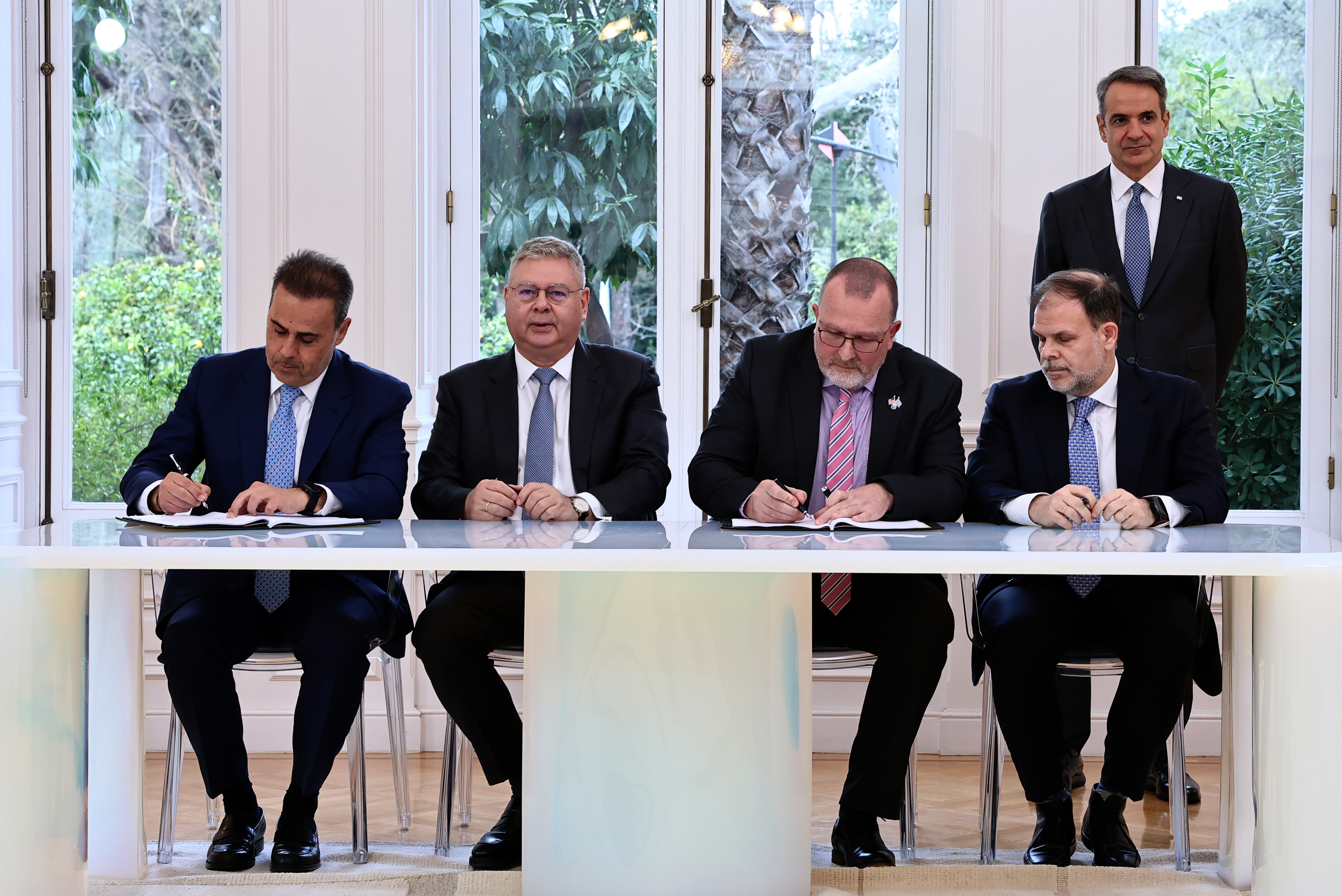
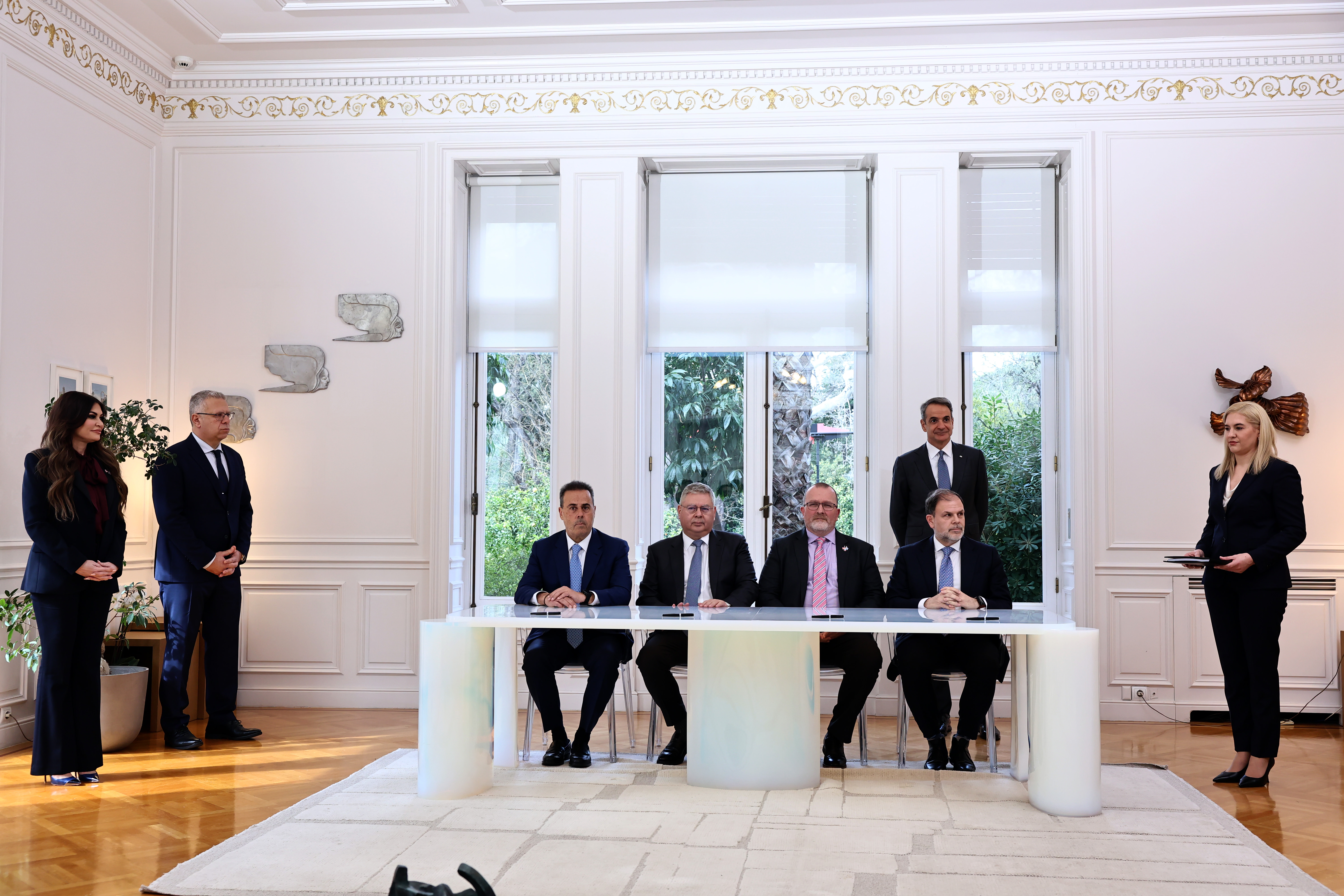
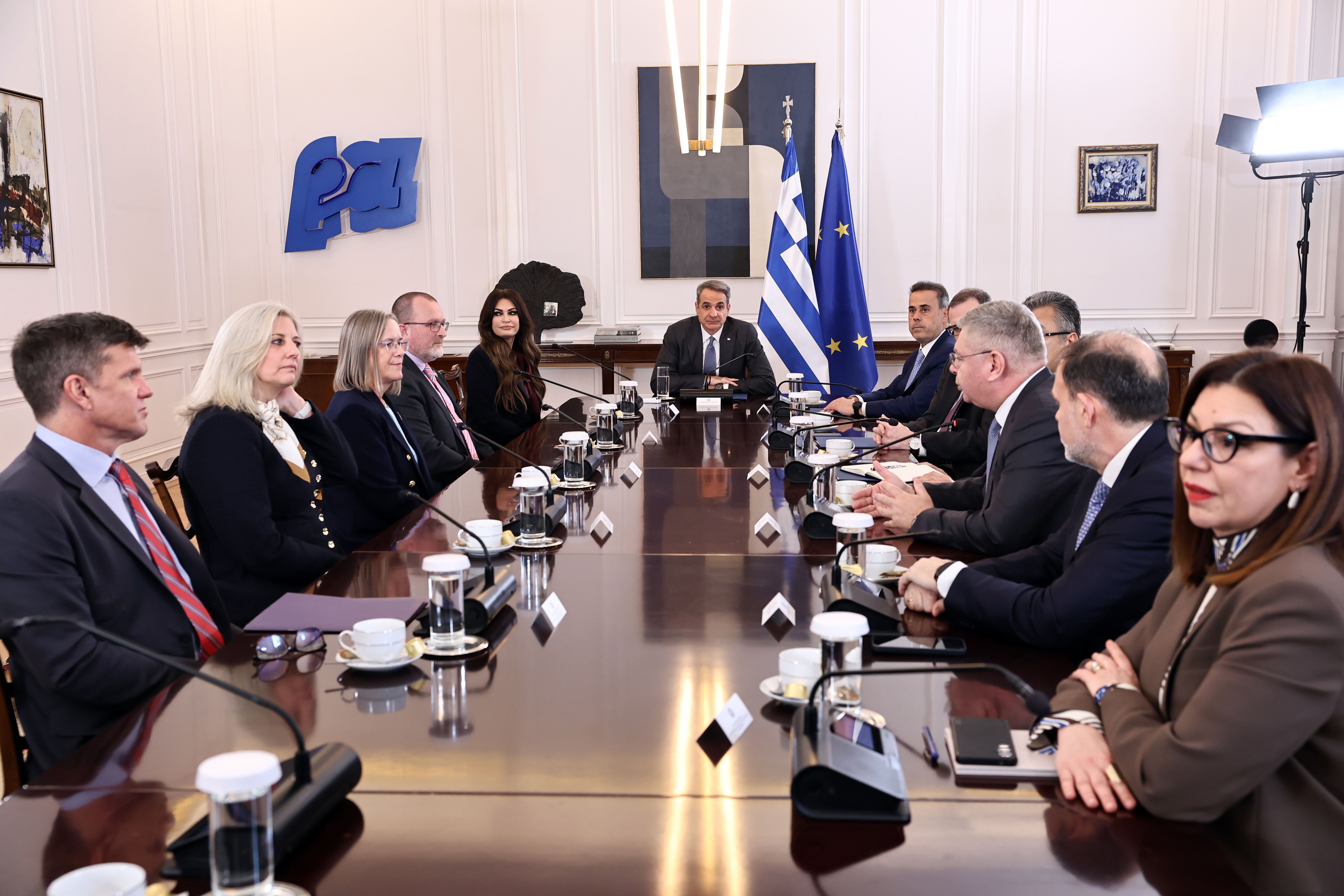
The process took place in the presence of Kyriakos Mitsotakis at 11:00 at the Maximos Mansion, where on the Greek side the contracts will be signed by Energy Minister Stavros Papastavrou and the CEO of EDEYEP (Hellenic Hydrocarbons and Energy Resources Management Company) Aris Stefatos, while on behalf of Chevron it will be Gavin Lewis, vice president of Global New Ventures, as well as Andreas Siamisis, CEO of HelleniQ Energy.
The first seismic surveys are expected to start, at a two-dimensional level, at the end of 2026- early 2027, while if there are indeed sufficient exploitable natural gas deposits, then the exploitation of these resources will contribute to strengthening the Greek economy and the country’s energy self-sufficiency. Within the next month, the contracts will be introduced to Parliament for ratification.
Chevron: The geopolitical ramifications
The venture, however, also stands out for notable geopolitical dimensions, as the activity of the powerful American company in the Eastern Mediterranean on the one hand strengthens Athens–Washington diplomatic relations, and on the other shields Greek interests and Greek sovereign rights in the region—especially at a time when the government is seeking ways to further open channels of communication with the White House.
Besides, it is known that such agreements attract the interest of U.S. President Donald Trump, on the basis of the new “Drill, baby drill” logic—namely the reintroduction of fossil energy as a major economic stake globally.
Companies of Chevron’s stature, with projects worldwide and revenues of tens of billions of dollars annually, study in depth the geopolitical data in every area of investment interest. And the maps in the hands of the American giant’s executives capture the Greek approach on the ground, where the two offshore blocks “Crete-1” and “Crete-2,” in which Chevron will operate in consortium with HelleniQ Energy, extend up to the limit of the median line drawn in 2011 with the Maniatis law.
This delineation, which was formalized internationally through the submission of Greece’s Maritime Spatial Planning to the European Union, is based on the provisions of the Law of the Sea, according to which Greek islands, regardless of size, have a right to an EEZ and continental shelf. The Greek median line was recently challenged by Libya by means of a verbal note to the United Nations and is consistently rejected by Turkey.
Of course, as is known, the activity of private companies does not entail the securing of sovereign rights; however, no one can deny that if Chevron indeed carries out surveys south of Crete, then on the one hand there arises a de facto acceptance of the Greek logic.
The signing of the contracts with Chevron comes about two months after the agreements for Exxon Mobil’s participation in drilling in the Ionian Sea, and also the activation of the Vertical Corridor, the aim of which is the transport of American LNG from Greece to central and eastern Europe.
Ankara’s reaction
The Eastern Mediterranean is now at the center not only of energy, but of broader geostrategic interest, constituting at the same time a claimed vital space by Turkey, and in the Greek capital they know that Ankara will continue to interpose itself, directly and indirectly, in every undertaking by Athens, all the more so south of Crete. Ankara has in the past harassed private companies in the field, for example within Cyprus’ EEZ, even leading to the cancellation of energy ventures, but it is easily understood that similar practices against the American Chevron would entail enormous risk.
It should be noted that the Greek median line was challenged last summer by Libya by means of a verbal note to the United Nations, and is consistently rejected by Turkey. As for south of Crete, Ankara shows special interest, as parts of the two blocks are unlawfully included in the Turkey–Libya memorandum.