Greece, the United States, Cyprus and Israel have signed a declaration establishing the East Mediterranean Energy Center, a permanent research and development body to be hosted at Rice University in Houston, Texas, marking a significant step forward for the 3+1 Cooperation Framework that has grouped the four countries on energy issues.
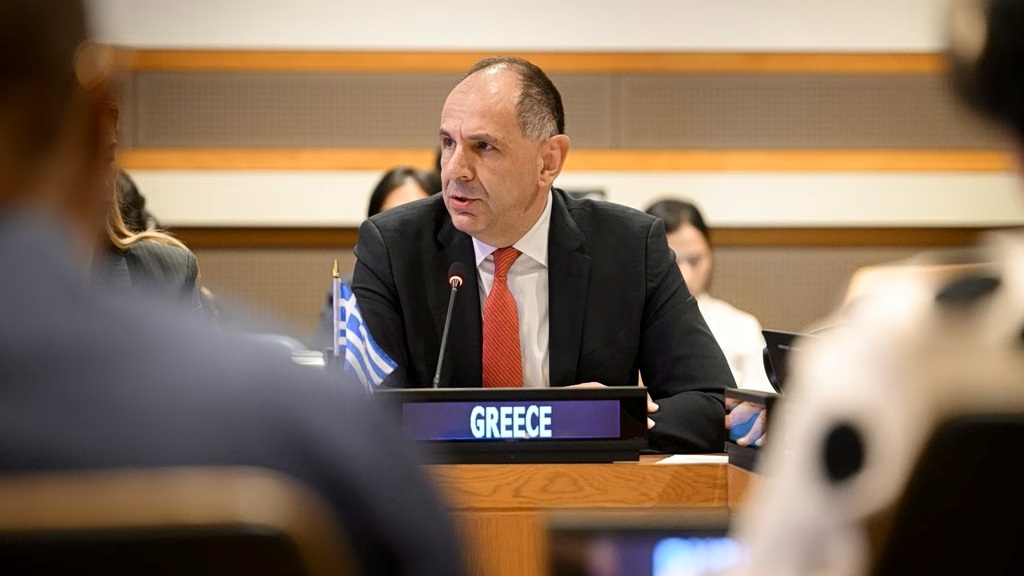
The signing took place on the sidelines of the ministerial meeting of the 3+1 Framework, which brought together Greek Environment and Energy Minister Stavros Papastavrou, U.S. Secretary of Energy Chris Wright, Cypriot Energy, Commerce and Industry Minister Michalis Damianos, Israel’s Ambassador to the United States Dr. Yechiel Leiter, and the Director General of Israel’s Energy Ministry, Moshe Dayan.
A new permanent institution
The East Mediterranean Energy Center, known by its acronym EMEC, is designed to serve as a fixed point for research and development on energy security and regional cooperation, bringing together scientific expertise, academic institutions, the private sector, technological innovation and energy know-how. Rice University will host the center.
The 3+1 Cooperation Framework, which groups Greece, Cyprus, Israel and the United States, was established to advance energy security in the Eastern Mediterranean, a region that has emerged in recent years as a significant natural gas province. The framework has also served as a vehicle for strategic coordination among the four allies on infrastructure and investment.
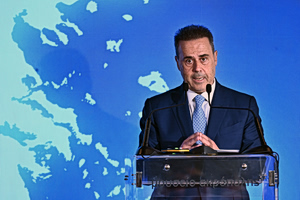
At the signing ceremony, Papastavrou described the moment as “historic,” saying the four countries were “joining forces to deepen our strategic cooperation and enhance connectivity in the Eastern Mediterranean.” He said EMEC would provide “a permanent framework for promoting regional stability, energy security and economic cooperation.”
He also invoked the broader significance of the initiative, citing what he described as the enduring ties of Hellenism, the bond between Greece and Cyprus, Greece’s long-standing relationship with the United States and the strategic importance of Greek-Israeli cooperation. “Today, from Houston, we send a message to the region and the world that our countries will cooperate for the security, stability and prosperity of the Eastern Mediterranean and its peoples,” he said.
The minister also sounded a pointed note on energy geopolitics. “Energy must never be weaponized,” he said. “Unilateral actions and threats, whether expressed or implied, that undermine regional stability have no place in our shared future.”
Cybersecurity and interconnections added to the agenda
During the ministerial session, participants reaffirmed the importance of the 3+1 initiative for energy security in the Eastern Mediterranean and agreed to expand the framework’s work program to include cybersecurity and interconnection projects as new priorities.
Bilateral talks and upstream interest
Earlier in Houston, Papastavrou held a bilateral working meeting with U.S. Energy Secretary Wright, during which the two discussed recent developments regarding the Vertical Corridor, a proposed energy infrastructure route linking Eastern Mediterranean gas fields to European markets. The conversation also covered the interest of Serbia and North Macedonia in joining an expanded version of that project.
The two ministers discussed progress on an exploratory drilling campaign in the northwestern Ionian Sea, which ExxonMobil is scheduled to conduct in February 2027, as well as Chevron’s growing interest in Greece’s hydrocarbons sector.