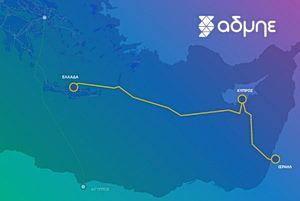
The Great Sea Interconnector, the planned undersea power cable that will eventually link Greece with Cyprus and Israel, remains at the center of regional geopolitical tensions after Turkey requested a briefing on the maritime survey work the project requires. Greek officials have responded by reaffirming that the cable, formally known as the GSI, will be completed.
Turkey’s requeat is not the only outstanding issue. Cyprus has its own regulatory hurdles to clear first. A 2024 intergovernmental agreement between Greece and Cyprus requires Nicosia to issue a regulatory decision that would recover 50 million euros, through charges on the island’s electricity transmission system, to cover 2024 and 2025. According to sources Cyprus has not yet taken any steps toward that decision.
A French vessel takes over survey work
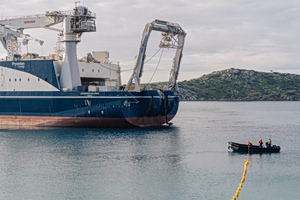
Planning among the companies involved, Greece’s power grid operator, known as IPTO/ADMIE, the French cable manufacturer Nexans and the French investment group Meridiam, is continuing, with the French side reportedly spearheading preparations for the technical side of the project. Sources say a French vessel will likely replace the Italian ship that surveyed waters up to Kasos two years ago, before Turkish objections halted the work
NAVTEX and an October target
Sources who spoke with the Greek financial outlet OT.gr say that once Cyprus resolves its outstanding regulatory issue, the companies involved plan to request a NAVTEX, the maritime notice used to alert vessels to activity at sea, for October. Survey work has already been completed in Greece’s six nautical mile zone and Cyprus’s 12 nautical mile zone. What remains is the section in international waters east of Kasos and off western Cyprus, which the NAVTEX would clear the way to survey. The companies also expect to have completed the necessary steps needed to formally bring Meridiam into the GSI’s ownership structure by the time that request is filed
Strong backing, on paper
Meridiam’s entry has added to what is already substantial financial and political support for the project. The European Union has disbursed a 657 million euro subsidy, and the European Investment Bank has agreed to consider financing the roughly 2 billion euro project. Meridiam itself has close ties to the Elysee Palace, while Nexans holds the contract to build the 898 kilometer cable connecting Crete and Cyprus. The U.S. State Department has also voiced support for the project as part of its broader push for energy security in the Eastern Mediterranean.
Source: OT.gr