 Μake us preferred on Google
 Eurozone finance ministries are preparing record bond sales for 2027, at the same time that the IMF warns borrowing costs in the EU have reached their highest level in two decades.
Imagine an investor who fell asleep in the summer of 2012, at the height of the euro crisis, and woke up this morning. They would remember a simple map: in the north, a core group of countries that borrowed cheaply, with Germany at the center. In the south, a periphery of debtors (Greece, Portugal, Spain, Italy and Ireland) that paid dearly for the privilege of staying in the single currency. Fourteen years later, that map no longer describes the eurozone.
Belgium, home to the institutions of the European Union, now borrows at 4.29% on 10-year bonds. Greece, which has received three bailout packages, pays 4.35%, almost the same rate. Portugal, which was bailed out in 2011, pays less than Spain. Ireland, which was bailed out in 2010, pays nearly the same as the Netherlands. And France pays more than Italy.
What caused the shift in the EU?
Bond yields are the interest rates a government pays to borrow. They rise when investors believe a country will need more money than it can comfortably repay, and they fall when the opposite is proven. International analysts note that Greece has spent a decade proving the opposite.
In 2025, Athens recorded a budget surplus of 1.7% of GDP, while its debt, although still the highest in the EU, fell by more than nine percentage points of GDP in a single year.
“For years, when markets talked about sovereign risk in Europe, attention usually focused on the periphery,” Ken Egan, head of European sovereign ratings at the credit rating agency KBRA, told Euronews.
Over the past decade, he added, “these countries followed more prudent fiscal policies, improved their primary balances, extended their debt maturities, improved tax collection through digitalization and rebuilt their banks. This helped ease refinancing risks and put debt on a much more stable path compared with 10 or 15 years ago.”
What does “prudent” fiscal policy cost Greeks?
However, the Greek “success story” that the government of Kyriakos Mitsotakis constantly boasts about was not achieved so much by the state collecting taxes from the wealthy, but by bringing the social majority to its knees through a combination of low wages, indirect taxation and “imported” crises, which the government addresses only by handing out “passes,” “baskets” and benefits.
At the same time, cuts continue in critical sectors such as health, education and social welfare, deepening inequality and pushing citizens into poverty.
The housing crisis, which has indeed become a European issue, is not being addressed. Neither are the high prices of food, everyday goods and energy, because the prime minister waits for and requests permission from Brussels to show “flexibility” and offer something more than a benefit, which is swallowed up anyway by prices that are in the “red.”
The answer to the social impasse can also be given in numbers, which the government prefers: 420.9 billion euros in private debt, or about 169% of GDP. In just twelve months, another 22.1 billion euros was added.
Of the 420.9 billion euros, 238.6 billion is overdue. Of the overdue amount, about 166.3 billion euros is owed to the tax authority and the e-EFKA social security fund: 114.5 billion to the tax authority and 51.8 billion to e-EFKA.
In short, the Greek state has a surplus, but society has a deep deficit.
One in 13 people in Greece faces food insecurity
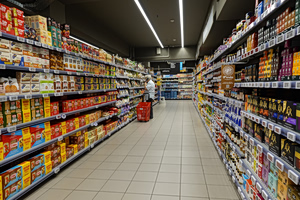
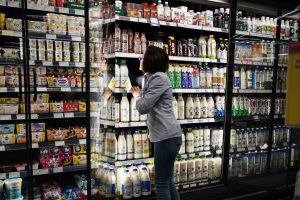
As proof, data from the Hellenic Statistical Authority (ELSTAT) for 2025 show an increase in food insecurity in Greece, with 7.5% of the population reporting moderate or severe difficulty securing enough food, compared with 7% in 2024.
A household is considered to have moderate or severe food insecurity when at least one member reported that, during the 12 months before the survey, they had to skip a meal, ate less than they felt they needed, ran out of food, were hungry but did not eat, or went a whole day without food due to a lack of money or other resources.
In addition, a household is considered to have severe food insecurity when at least one member reported that, during the 12 months before the survey, they went a whole day without food due to a lack of money or other resources.
Specifically, according to the Survey on Income and Living Conditions of Households, released on Wednesday, 1.7% of the Greek population experienced severe food insecurity (based on the global Food Insecurity Experience Scale, FIES), the highest rate since 2019.
At the same time, almost half of households in the country do not use central heating because of high prices and the inability to pay their bills.
As for the government, it continues to “pass the ball” to the EU, while the entire opposition submits proposals, as well as bills and amendments that include relief measures for citizens, explaining to the Maximos Mansion that there are things it can do without needing permission from Brussels. Political will is what is needed.