In northern Greece, near the town of Eleftheroupoli in Kavala, spring arrives with a familiar hum: thousands of bees moving across mountain slopes rich in wild herbs and native plants. This is where Theodora Novakidou, a third-generation beekeeper, continues a family tradition that began nearly a century ago.
Although she studied business administration, Novakidou also holds formal certification in beekeeping and has been running Melino, her organic honey brand, for the past 24 years.
“I was practically born among the hives,” she says with a smile. “The smell of the smoker still feels like childhood to me.”

Why Greek Honey Is So Special
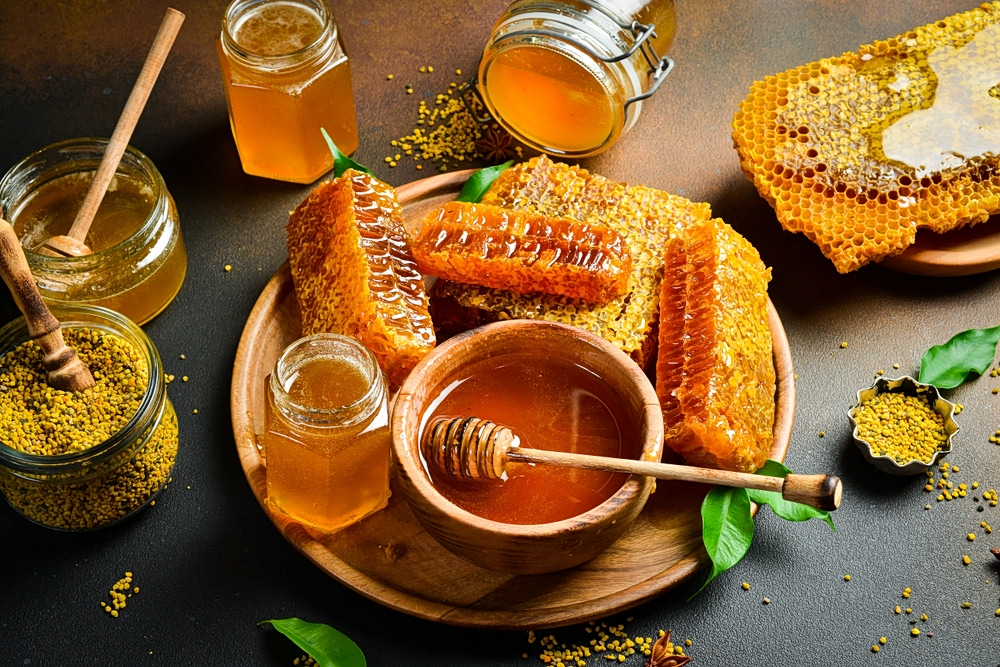
Greece’s relationship with honey goes far beyond nutrition. Honey has long been considered medicine, ritual, and cultural symbol — a taste of summer preserved in a glass jar.
“Greek honey is considered among the best in the world,” Novakidou explains. “That’s because of biodiversity. Greece has around 800 endemic plant species that grow nowhere else. Bees collect aromas you simply can’t replicate.”
Instead of a single dominant type, Greek honey forms a kind of culinary map of the landscape. Among the most notable varieties are:
- Thyme honey – aromatic, thick, rare, and highly prized
- Oak honey – very dark, almost black, with mild sweetness
- Fir honey (including red fir) – deep red tones reminiscent of wine
- Heather honey – earthy, intense, rich in protein
- Chestnut, pine, strawberry tree, cotton, flower honey, and more
Each variety reflects the ecosystem where the bees forage — mountains, forests, islands, or plains.

The “King” of Greek Honey: Thyme
Among them all, thyme honey reigns supreme.
“It doesn’t exist anywhere else quite like it does in Greece,” Novakidou insists. “It crystallizes very slowly — sometimes it can take up to 18 months.”
Crystallization, she explains, is not a flaw but a sign of quality.
“People think something has gone wrong when honey crystallizes, but it’s actually proof that it’s pure. If honey never crystallizes, it has most likely been overheated or heavily processed.”
How to Tell If Honey Is Pure
Novakidou shares two simple tests anyone can try at home:
- The water test:
Drop a spoonful of honey into a glass of water. Pure honey won’t dissolve immediately like syrup. - The spoon test:
Let honey run off a spoon. High-quality honey flows in a steady, continuous stream rather than dripping in breaks.
She also emphasizes that many Greek producers still follow traditional practices:
“No blending, no heating, no pollen removal. Once you overprocess honey, it turns into something plastic-like. It loses its value.”

How to Store Honey
Storage is refreshingly simple:
- Keep honey in a cool, dark cupboard
- Protect it from strong odors
- Avoid excessive heat
“Honey never really spoils,” Novakidou says calmly. “Honey over 3,000 years old has been found in ancient vessels — and it was still edible.”
More Than a Product
By the end of the conversation, one thing becomes clear: Greek honey isn’t just food. It’s place, memory, aroma, and character.
Every spoonful carries a story — told jointly by the bee and the person who tends it.
And during the holidays, that story often ends up in one beloved dessert.
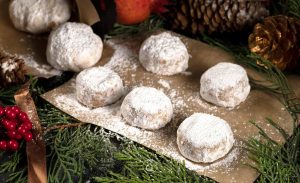
Melomakarona (Greek Honey Cookies)

A classic Greek Christmas treat
- Prep time: 15 minutes
- Baking time: 15 minutes
- Difficulty: Easy
- Makes: approx. 70 cookies
Ingredients
For the cookies
- 2 cups coarsely chopped walnuts (plus extra, ground, for serving)
- 2 cups sunflower oil
- 1 cup sugar
- 1 cup freshly squeezed orange juice
- Zest of 1–2 unwaxed oranges
- ½ cup brandy
- 1 tsp baking soda
- 1 tsp baking powder
- 1 tbsp ground cinnamon
- ¼ tsp ground cloves
- 1 kg all-purpose flour
For the syrup
- 1 cup Greek honey
- 2½ cups water
- 2 cups sugar
- 2 cinnamon sticks
- Peel of 1 lemon
Method
- Place all cookie ingredients in a mixer fitted with the paddle attachment and mix until a soft dough forms.
- Shape small portions into oval cookies.
- Arrange on a baking tray lined with parchment paper and bake in a preheated oven at 165°C / 330°F for about 15 minutes.
- Meanwhile, prepare the syrup: combine all syrup ingredients in a saucepan and boil for 5 minutes. Remove from heat and let rest for 10 minutes.
- Dip the hot cookies into the warm syrup, then transfer them to a rack to cool.
- Sprinkle generously with ground walnuts and serve.