 Μake us preferred on Google
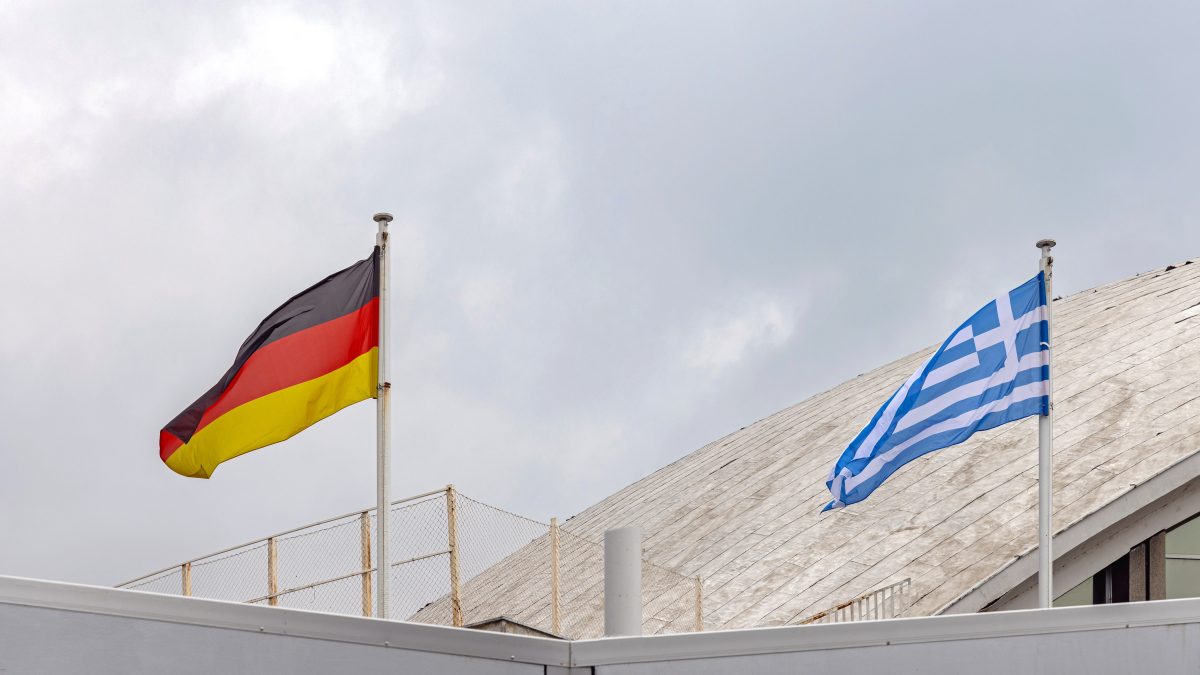
 “The bilateral relationship between Greece and Germany is stronger today than it has ever been,” Greek Finance Minister Kyriakos Pierakakis said at the conclusion of his visit to Berlin in late November. Shortly thereafter, his European counterparts elected him to the influential post of president of the Eurogroup. That a candidate from Athens could ascend to such a position just ten years after the country’s severe financial crisis made headlines internationally. Only in passing was it noted that Greece’s success on the international stage was made possible largely by Germany’s openly expressed and early support.
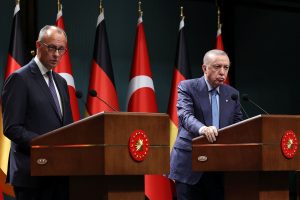
A look back at this new phase of improved Greek-German relations begins somewhat earlier – about six months before that moment. It was ultimately a matter of coincidence that the Greek prime minister became the first foreign leader to pay his respects to Germany’s newly sworn-in chancellor at the seat of government. Kyriakos Mitsotakis’ mid-May visit to Berlin had long been planned, where he was to be honored at an event organized by the Economic Council of the governing Christian Democratic Union (CDU) for his reform agenda, which German conservatives regard as particularly successful. That Mitsotakis and Friedrich Merz belong to the same political family – and are said to be personally close – is certainly no disadvantage for bilateral relations. But in politics, and especially in international relations, it is not personal sympathies that count, but national interests.
At their first meeting, the two heads of government agreed – according to records from the Chancellery – to further expand and deepen the good and friendly relations between their countries. The new chancellor was quick to become concrete, articulating two clear expectations of his guest from Athens. First, a solution had to be found to the problem of so-called secondary migration. “Secondary migration from Greece to Germany must decrease. Greek readmissions must increase,” Merz declared. In addition, he expressed the expectation that cooperation in the defense industry be intensified – in plain terms, that Greece should purchase more German weapons.
Over the past six months, an intense phase of travel diplomacy has unfolded between the two countries. In November alone, four members of the Greek cabinet traveled to Germany on official missions. Conversely, German politicians from the second tier visited Greece, among them the prime minister of the state of Hesse and the chairman of the CDU in Baden-Württemberg, who stands a good chance of becoming minister-president after the state elections next spring. Boris Rhein and Manuel Hagel came to Athens with the explicit aim of gaining firsthand impressions of Greece’s much-praised reform agenda – particularly the digital transformation of the Greek state. Germany could learn from Greece, at least in certain policy areas, was a thesis the visitors subsequently promoted in interviews. This reflects a fundamental shift in mood within key circles of Germany’s political establishment. The days when Greece was viewed in Berlin primarily as a problem case or a disruptive factor appear – at least for now – to be over.
This shift, however, was not limited to benevolent rhetoric. In the long-contested field of migration policy, Berlin and Athens sent a clear signal. The written agreement signed in mid-December by Greek Migration Minister Thanos Plevris and German Interior Minister Alexander Dobrindt is a classic compromise: Germany largely refrains from returning secondary migrants to Greece; in return, Athens commits itself to readmitting, starting in the summer of 2026, those refugees who entered Germany via Greece.
While this resolved a long-standing point of contention by mutual consent, frustration persists in Berlin over Greece’s sluggish procurement from German defense companies. According to reports in the Greek press, German suppliers have barely been considered in the allocation of Greek defense contracts over the past three years, estimated at around €15 billion. The lion’s share has gone to companies from France, the United States, and Israel. German arms manufacturers are not entirely shut out, however. What is striking is that such cooperation is rarely communicated publicly. “We are not allowed to speak publicly about our business,” says the representative of a German defense firm in Athens. Still, the situation has improved in recent months. “There is a great deal of cooperation,” the manager adds, speaking on condition of anonymity.
In this context, a remark by German Ambassador Andreas Kindl in an interview with a Greek daily has drawn attention. Greece may buy Rafale fighter jets and frigates from France, he said, “but the cooperation between German and Greek defense companies – at a very high technological level – exists with no other country.” As evidence, Kindl pointed to the modernization of the Leopard tanks. With more than 850 units, Greece possesses the largest Leopard tank fleet in Europe. Many of these vehicles are outdated and urgently in need of modernization. This multi-year mammoth project has been taken on by German manufacturers in close cooperation with local partners – without public fanfare. Agreements also exist in other weapons segments, as can be heard behind closed doors. Nevertheless, informed circles in Athens and Berlin say that the German side remains broadly dissatisfied with its access to the Greek defense market.
Accordingly, the arms issue was expected to feature on the agenda of the visit to Athens planned for October by Foreign Minister Johann Wadephul. Irritation arose on the German side, however, when Greek Foreign Minister Georgios Gerapetritis canceled at very short notice. He cited the need to accompany the prime minister on his trip to the American peace summit in Egypt. This diplomatic mishap – as the German side described it – did not, however, damage the overall improved political climate. In the spring, it is said in Berlin, Wadephul intends to make up for the visit. Other ministers from key portfolios are expected to follow, including the interior minister, the minister for digitalization, and not least the defense minister. The latter is likely – so it is assumed – to promote weapons bearing the label “Made in Germany.” The timing of these meetings has not been officially announced. What is certain, however, is that Prime Minister Mitsotakis will travel to Germany in mid-February to attend a major CDU event as its sole foreign guest. Among Germany’s conservatives, the Greek prime minister has long enjoyed the status of a political pop star. And it appears that Mitsotakis – often criticized harshly at home – has grown rather fond of the role.
Dr. Ronald Meinardus is a senior research fellow at the Hellenic Foundation for European and Foreign Policy (ELIAMEP).