 Μake us preferred on Google
 This horrifying and, sadly, unending chain of brutal murders of women provokes outrage every time such crimes come to light, while also raising deep questions about the root causes of a phenomenon that offends fundamental human values and falls far outside the boundaries of Western civilization.
In recent years, women, young and old alike, have increasingly met tragic deaths at the hands of partners, husbands, or men they trusted and bound their lives to. The reasons cited in reports on such cases are typically pathological jealousy and long-standing patterns of abusive behavior that, unfortunately, did not create the conditions for victims to leave and save themselves.
The state, for its part, as the phenomenon has grown significantly in recent years, has implemented a range of measures. Some are substantive: training police officers, providing domestic violence victims with panic buttons, establishing shelters for abused women, and more. Yet these well-intentioned steps have so far proven insufficient to curb femicides, which continue to occur in both urban centers and rural areas with alarming frequency and ever-increasing brutality.
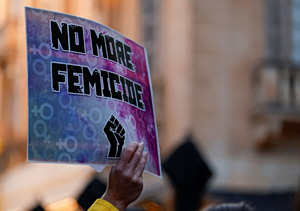
The public watches these horrific crimes in stunned silence, while women’s groups and civic organizations protest loudly and publicly each time another woman loses her life in a brutal manner. The murders of women have also mobilized the legal community, with many voices calling insistently for femicide to be codified as an aggravating circumstance in homicide law. More recently, a political proposal has emerged as well, put forward by the main opposition party, to include the term “femicide” in the Greek Constitution itself.
On the legal question, respected legal scholars are skeptical. A notable example is distinguished criminal law expert Polychronis Tsiridis, who recently came out publicly against such a provision. His argument, shared by other jurists, is that there is no meaningful reason to include femicide as a special circumstance in law, given that all homicides, including femicides, are already punishable by the maximum sentence available, namely life imprisonment.
The counterargument put forward by those who hold the opposite view does not rest on the substance of criminal punishment, since there is no room to go beyond a life sentence, but on symbolic grounds, which proponents argue carry value in their own right.
The truth is that establishing a special legal category for femicide cannot offer anything substantively beyond the already severe criminal penalties in place for this horrific crime. It is also not realistic to create parallel provisions for every specific type of killing. At the same time, the political proposal to enshrine the term “femicide” in the Constitution during the current revision process has not found agreement among eminent legal and judicial figures, who see in it little more than an attempt at optics and speak of what they call constitutional populism. The Constitution, as a foundational institutional document of immense weight, cannot accommodate everything, because it would ultimately become a text at odds with its own political gravity and enormous institutional role.