 Μake us preferred on Google
 It is now acknowledged that Europe is confronted with challenges of existential significance, particularly regarding the organization and strengthening of its common defense. The growing momentum observed in recent years through numerous European initiatives and financial instruments clearly reflects this reality. The EU’s effort to prepare for a new strategic security environment that is already taking shape. Europe now finds itself at the center of multiple geopolitical crises, from the war in Ukraine to the clashes in the Middle East and the escalating tensions involving Iran, without yet possessing the necessary capabilities to assume the geopolitical role which the current circumstances demand.
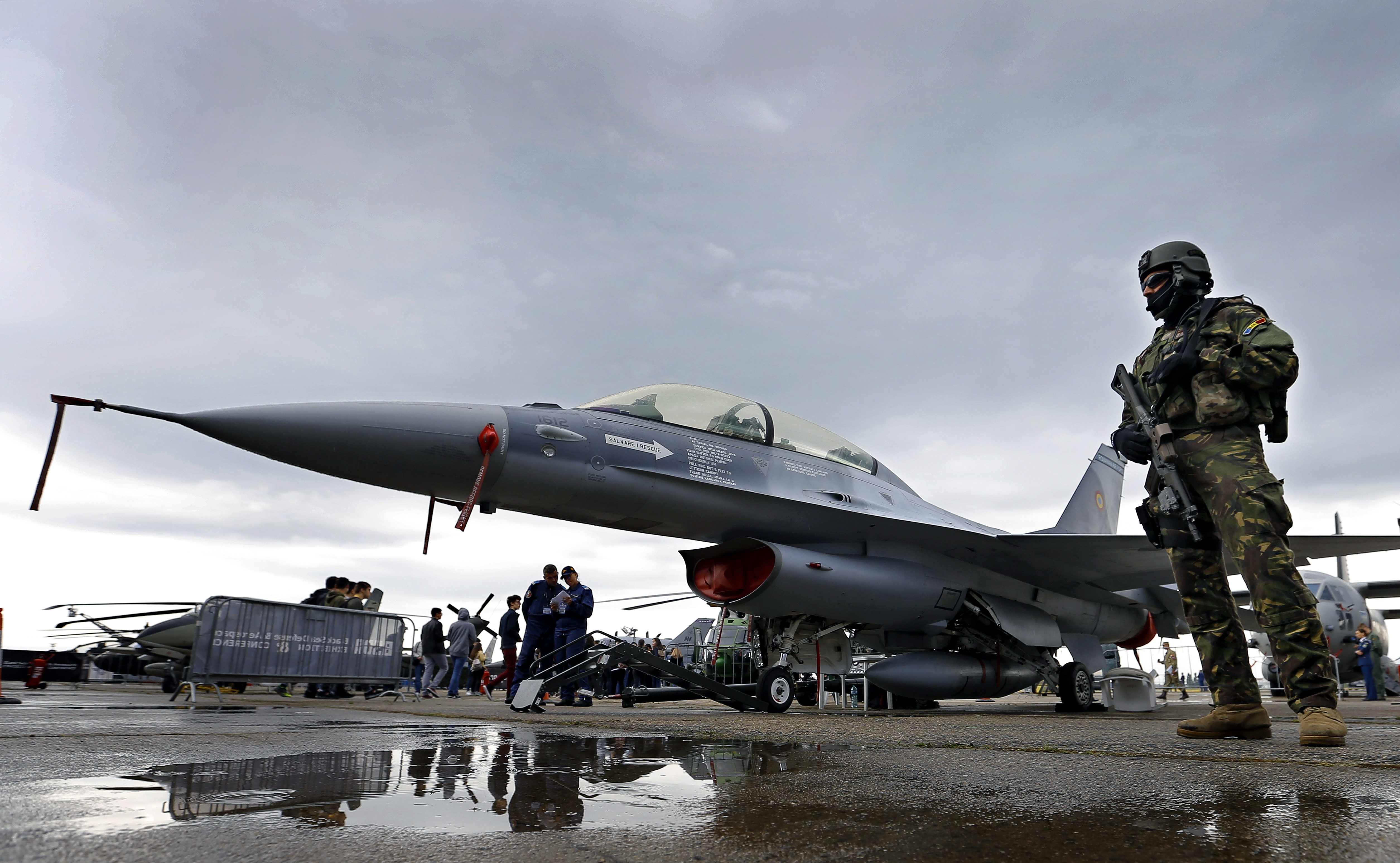
A development of paramount importance is the Security Action for Europe (SAFE) instrument, though which the Member States are granted access to low-interest loans amounting to up to €150 billion for the procurement of new defense systems. This initiative primarily aims to address the critical capability gaps that continue to affect key areas such as air defense and missile defense systems across the European continent. Equally significant are the provisions concerning the interoperability of defense systems and the strengthening of the European defense industrial base, as a substantial proportion of newly developed capabilities must be manufactured within the European Union under the “Made in Europe” principle. Despite its strategic importance, SAFE also incorporates several strategic constraints. Participation in the program generally requires the cooperation of at least two states during both the procurement process and the acquisition of defense equipment, while unilateral participation is permitted only under exceptional circumstances. At the same time, particular attention should be paid to the provisions allowing the participation of third countries in joint procurement projects, thereby enabling countries such as Ukraine and the United Kingdom to further deepen their defense cooperation with the EU.
Withing the same strategic framework, the resumption of the EU’s financial assistance to Ukraine, amounting to € 16.4 billion, constitutes another major development. Beyond providing immediate financial support to the Ukrainian state, this decision carries considerable political significance, as it represents an effort to restore European unity, which had been severely tested in recent months by divergent positions among Member States regarding the management of the Ukrainian crisis. In this context, the change of political leadership in Hungary is widely regarded as a development that could facilitate broader consensus-building within the Union (Mohamed E., 2026).
At the same time, Ukraine remains the sole beneficiary of the Prioritized Ukraine Requirement List (PURL), a mechanism through which European Union Member Stares and NATO allies procure defense equipment form the US stockpiles for immediate delivery to the Ukrainian Armed Forces. The conception of the PURL has been attributed to President Donald Trump, who has repeatedly argued that the era during which Europe benefited from the American security umbrella at virtually no cost has definitively come to an end. The PURL serves multiple strategic objectives. From an economic perspective, it fundamentally reshapes the model of American military assistance by replacing direct military aid with a system based on financial procurement. Simultaneously, it functions as a political instrument designed to encourage greater burden-sharing among European allies whose military support for Ukraine has thus been perceived as limited or inconsistent, thereby reinforcing the expectation that Europe far should assume a larger share of the costs associated with collective security.
Finally, the development of autonomous space capabilities has emerged as another critical pillar of Europe’s future strategic autonomy. The war in Ukraine has demonstrated with remarkable clarity the decisive importance of space infrastructure for both communications networks and military operation, with the Starlink system representing perhaps the most prominent example. Consequently, space technology is rapidly becoming an indispensable component of modern deterrence and defense planning. Despite its considerable technological potential, the European Union continues to lag the United States, China and Russia in its domain and, for the time being, remains more of a junior partner than a leading actor in the emerging global space competition.
As Europe confronts this evolving security environment, defense expenditure and strategic priorities have undergone a significant transformation at both the European Union and Member State levels. The response to Russia’s war against Ukraine has prompted a fundamental reassessment of Europe’s defence posture, leading the EU and its Member States to increase investment, strengthen defense cooperation, and address long-standing capability gaps. One of the clearest examples of this shift can be observed within NATO, where the traditional 2% of GDP defense spending benchmark, established at the 2014 Wales Summit, has increasingly been viewed as insufficient to respond to the scale and complexity of current and future security challenges. In this context, NATO Allies have recognized the need to move beyond the existing threshold, acknowledging that higher levels of investment are required to close capability gaps and enhance deterrence. This evolution culminated in discussions ahead of the 2025 NATO Summit in The Hague, where Allied countries agreed on a new commitment to allocate 5% of GDP to defense and security-related spending by 2035.
At the European Union level, this changing security environment is also reshaping the Union’s financial priorities. The proposed Multiannual Financial Framework (MFF) 2028–2034 reflects a profound transformation in the European Union’s strategic priorities, particularly regarding security, defense and strategic autonomy. It is increasingly recognized that Europe is facing a new security environment characterized by geopolitical instability and growing competition between global powers. The war in Ukraine has represented a decisive turning point, demonstrating the limitations of Europe’s existing defense capabilities and highlighting the need for greater coordination, investment and cooperation among Member States. In this context, the new financial framework aims to provide greater support for the development of joint European defense capabilities, particularly in response to the security challenges created by Russia’s war against Ukraine. While previous EU budgets focused primarily on supporting national initiatives and limited defense-related instruments, the new MFF introduces a more ambitious approach based on collective investment, industrial cooperation and capability development at the European level. In general terms, the MFF 2028–2034 represents a significant change in the way the European Union understands security: defense is no longer treated as a primarily national responsibility but as a collective European priority linked to industrial competitiveness, technological innovation and geopolitical influence. Therefore, the proposed budget reflects the emergence of a more security-oriented EU, one that seeks to reduce strategic dependencies, strengthen its defense industry and acquire the capabilities necessary to operate as a credible geopolitical actor in an increasingly unstable international environment.
Beyond the economic dimension, the profound changes currently reshaping security and defense policies across Europe are likely to generate significant social and political implications at both the European and national levels. A sustained increase in defense expenditure may require governments to justify to their citizens the reallocation of resources that have traditionally been directed towards welfare systems, education, healthcare, and other domestic priorities. This shift could intensify political and societal debates across the continent, particularly in countries where pacifist traditions, historical experiences, or skepticism towards military engagement continue to shape public attitudes. Furthermore, the emergence of a more security-oriented political agenda may reshape electoral dynamics, influence party positions, and redefine national policy debates. Political parties may therefore be required to reconsider their positions on military expenditure, strategic autonomy and the balance between security and welfare. Importantly, these debates are unlikely to follow a simple left-right division, as party positions on defense spending are also shaped by factors such as nationalism and the broader international strategic environment.
At the specific level of the European Union, these developments may generate significant political and social consequences, as they challenge one of the historical balances upon which the European project has been built: the relationship between security and social welfare. For decades, European states benefited from a favourable strategic environment in which the United States assumed the primary responsibility for the continent’s defence through NATO, allowing European governments to progressively reduce military expenditure and allocate greater resources to the consolidation of extensive welfare systems. This process gave rise to what has been described as the “peace dividend”, whereby the end of the Cold War created additional fiscal space for investment in areas such as healthcare, pensions, education, and social protection. However, the deterioration of the European security environment and the uncertainty surrounding the continuity of long-standing transatlantic security guarantees are now forcing European governments to reassess their budgetary priorities and seek a new balance between increased defense investment and the preservation of the European social model. The increasing emphasis on defense expenditure may therefore contribute to a broader transformation of the EU’s political identity. Historically, the European integration process has been primarily associated with economic cooperation, peace-building and the development of a social model based on stability and welfare protection. Nevertheless, the current security environment is gradually encouraging the emergence of a different vision of Europe: one increasingly defined by strategic autonomy, resilience and geopolitical capacity. This transition reflects a fundamental shift in the understanding of security, which is no longer perceived exclusively through the absence of military conflict but increasingly through the ability of the European Union to protect its interests, secure its supply chains and develop autonomous capabilities in a context of intensifying global competition.
At the same time, the expansion of European defence cooperation could contribute to further integration among Member States.The need to rapidly increase military capabilities may encourage stronger coordination at the European level, particularly through the pooling of defence procurement, the development of joint industrial initiatives and the use of common financing mechanisms. These measures could help address the fragmentation of the European defence market, enhance efficiency, reduce costs and strengthen Europe’s capacity to develop greater strategic autonomy. However, achieving this objective will depend on overcoming persistent challenges, including differences among Member States over national priorities, financial solidarity and the appropriate balance between national sovereignty and European-level decision-making.
In this context, the future of European defence policy will depend not only on the amount of resources allocated to security but also on the political legitimacy surrounding this transformation. A successful transition towards a more security-oriented European Union will require governments and institutions to demonstrate that increased defence investment is compatible with the preservation of Europe’s social model and does not represent a simple replacement of welfare priorities with military objectives. Therefore, the central challenge facing the European Union will be to establish a sustainable balance between strategic autonomy and social cohesion, ensuring that the pursuit of greater security strengthens rather than undermines the political foundations upon which European integration has been built.
Dimitris Tsaknis works for the EPLO/ELGS Rome Office (Italy) as Responsible for Academic Affairs. He is a Political Scientist with a Master in International and European Governance. His academic interests spanning EU Security and Defense Policies, EU Enlargement, the relations between the EU and the US as well EU and Russia.
Teresa Pareja Sánchez is a EU law scholar and Director of Academic Programs at AP Institute | Universidad Nebrija, where she leads the design and implementation of high-impact training programs that support talent pipelines, business expansion, and strategic positioning for companies in the defense and security sector. As a PhD Candidate in European Administrative Law, she has built a strong research profile on EU administrative governance, public decision-making, and the regulatory implications of emerging technologies.g