However one sets out to interpret the events in Ceuta, Spain—from whatever angle one approaches them, no matter how much conspiracy theory or naivety one brings to the table—one thing cannot be denied:
Europe is facing a severe immigration problem, which it has failed to control or regulate.
It is not just Spain or Morocco. It’s not about Sánchez, Trump, or Netanyahu. It has nothing to do with far-right or far-left rhetoric. It’s more than a petty political exercise in xenophobia or insecurity.
Immigration is a problem because the overwhelming majority of European citizens perceive it as such, and it is a problem for which the European Union has yet to find a solution.
As an issue, it’s as easy to describe as it is hard to tackle.
Truth be told, Europe cannot turn itself into a fortress overnight. But neither should it pride itself on being open to all comers.
Especially when the cost is not borne equally by all. The burden shouldered by a gateway country for migration flows—such as Greece, Spain, and Italy—cannot be compared to that of a country that summers on the Baltic or plays politics on the banks of the Danube.
And a solution means, first and foremost, providing relief from the problem.
This is all the more true, given that immigration isn’t a test of humanitarianism, or justice, or good intentions—which, I am sure, abound everywhere.
It’s a matter of regulation. Or rather, of a set of regulations that will open Europe’s doors to those it wishes to admit, when it wishes to admit them. And certainly not to every would-be border-crasher at Evros, the Aegean, Ceuta, or Lampedusa.
In other words, a set of rules to be adapted and applied in every case and circumstance. And which will, obviously, be grounded in the will and consent of the citizens of Europe.
For better or worse, this old continent remains a democracy, so any resolution can only come about through democratic processes.
The rest is just noise. Obviously, migration flows often involve desperate and sometimes persecuted people.
But, to borrow a phrase the French Socialist Michel Rocard was fond of repeating, no one “can accommodate all the misery of the world.”
The European Union does not have to prove its democratic and judicial credentials to anyone. Nor does it need to offer guilt-ridden apologies for guarding its borders and protecting the European space—a self-evident undertaking.
It just needs to decide what it has to do.
The Misery of the World
However one sets out to interpret the events in Ceuta, Spain—from whatever angle one approaches them, no matter how much conspiracy theory or naivety one brings to the table—one thing cannot be denied: Europe is facing a severe immigration problem, which it has failed to control or regulate. It is not just Spain or Morocco. […]
Follow tovima.com on Google News to keep up with the latest stories
Read More
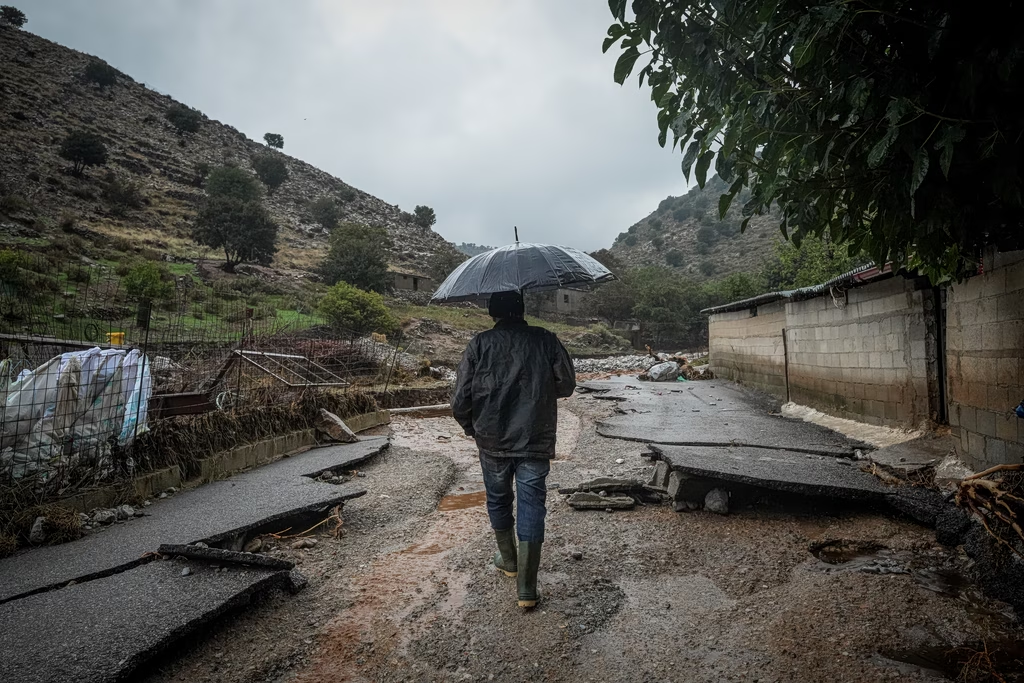
Heavy rain and strong winds have damaged roads and water networks, flooded farms and trapped residents and visitors across the island, with more than 80% of potato and vegetable production in the Lasithi Plateau reportedly destroyed.