 Μake us preferred on Google
The latest draft agreement at the COP31 UN climate summit no longer mentions fossil fuels, a major setback for vulnerable countries and campaigners as the talks entered their second-to-last scheduled day on Thursday.
Presidents Defend The Text
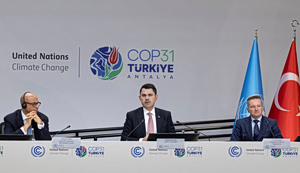
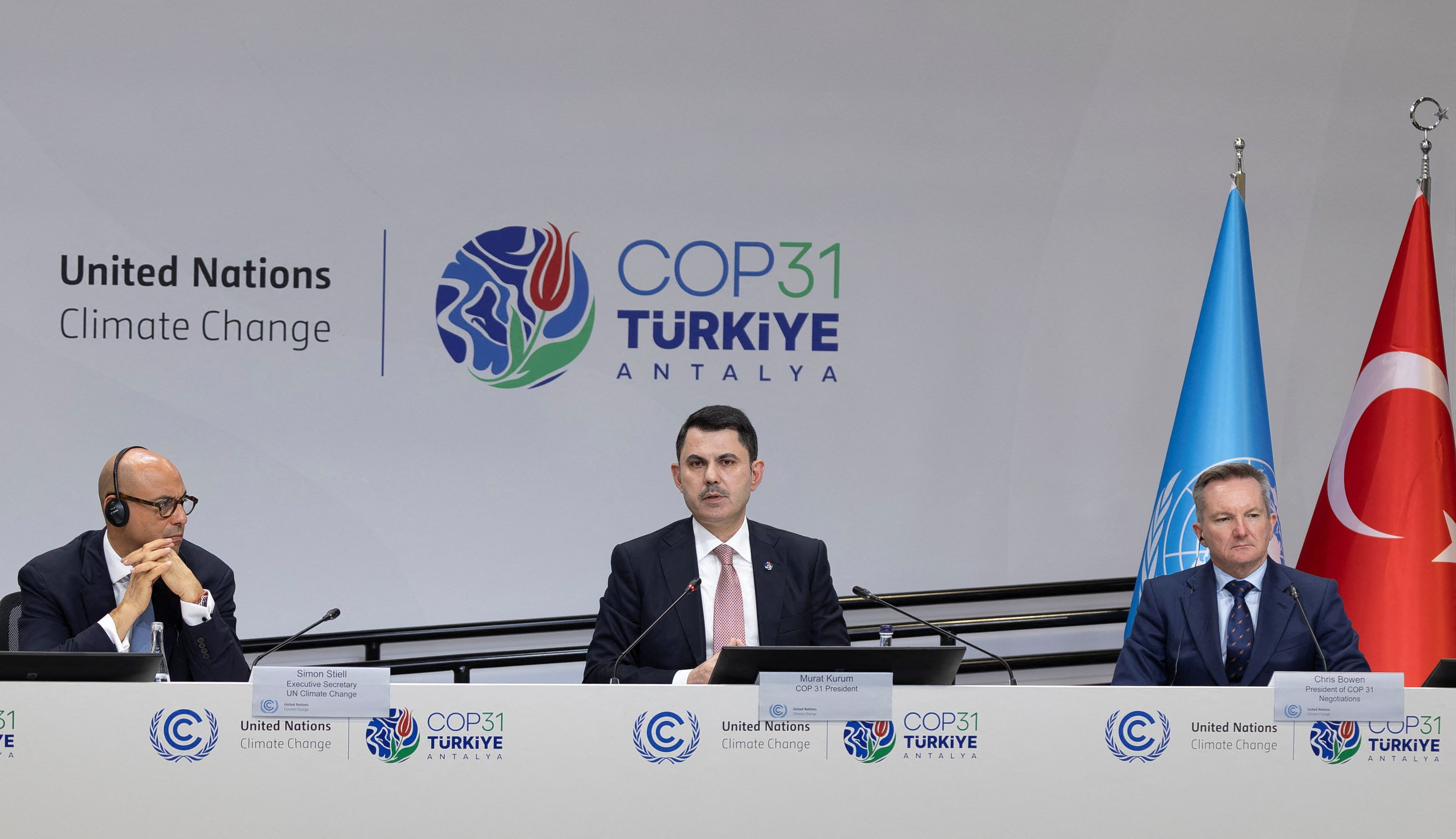
The summit is being run under a joint presidency, with Australia’s Chris Bowen leading the negotiations alongside Turkey’s Murat Kurum. Asked at a press conference why fossil fuels had disappeared from the main “cover decision,” Bowen said this COP is focused on implementation. In his view, the best way forward is to confirm the shift toward low emissions, recommit to keeping the 1.5C warming limit within reach and electrify the economy. He said the presidency had put forward concrete proposals and welcomed feedback.
Kurum backed him, saying the summit was not there to revisit earlier decisions, such as the agreement at COP28 to transition away from fossil fuels. He argued that the target to electrify economies by 2035 already implies moving away from fossil fuels, and rejected claims of backsliding from the first draft, which did mention them. Bowen said the first, broader draft had been meant to put all parties’ views on the table for transparency.
Panama Threatens A Veto
Panama made an unusual move, sending a letter to the presidency warning that it will block any outcome unless its demands are met. Because a final deal must be adopted unanimously, the threat carries real weight. The letter, signed by Environment Minister Juan Carlos Navarro, criticized the “endless oratory” of the talks while the planet is being destroyed. It said Panama would formally object to any decision that does not reflect its principles.
Panama’s demands include putting science at the core of the process, real transparency, new rules of engagement and a cap on oil production. The last demand is a nonstarter for fossil fuel producers, some of which object even to mentioning fossil fuels in the text. Bowen said he had not seen the letter but would keep working until consensus was reached, an aim that looks optimistic.
A Wave Of Criticism
Environmental groups reacted angrily to the new draft. Andreas Sieber, head of political strategy at 350.org, accused the presidencies of a shocking failure of leadership. He said they had reduced one of the defining challenges of the era to a paragraph they would rather delete, while allowing fossil fuels to be passed off as clean electrification. He contrasted this year’s talks with last year’s in Brazil, which he said had shown courage in starting to address how to move beyond fossil fuels. He also called rich countries’ failure to deliver climate finance a historic disgrace.
John Verdieck, director of international climate policy at The Nature Conservancy, noted that it took almost 30 years to get an explicit reference to fossil fuels into a final COP text, and that COP31 risks undoing that progress overnight. He still saw reasons for hope in work outside the main negotiations, including Brazil’s deforestation roadmap and the Tropical Forest Forever Facility, a fund that pays countries to keep tropical forests standing. Chris Dragisic of the National Audubon Society agreed, pointing to a steady stream of progress on forests happening away from the negotiating table.
Fernanda de Carvalho of WWF International was more cautious. She said the talks were not going well, especially on finance and adaptation. Language on the 1.5C limit had been weakened since the first draft, she said, and a provision promoting a global scale-up of carbon capture was dangerous and based on overestimated figures. Quoting Lenny Kravitz, she said it “ain’t over till it’s over” and urged the presidencies to keep pushing for consensus.
The European Union declined to comment on the removal of fossil fuels. EU climate commissioner Wopke Hoekstra and Ireland’s climate minister, Darragh O’Brien, whose country holds the EU’s rotating presidency, said their teams were still studying the text. They said they would judge it against the mandate set by EU governments before the talks.
Electrification And Energy Security
The debate over electrification has become closely tied to the push to move away from fossil fuels. Many countries want electrification pledges linked to renewable energy. Mohamed Adow, director of the think tank Power Shift Africa, called for the proposed 35% electrification goal to be tied explicitly to renewables. Governments, he said, should not repackage electricity generated from fossil fuels as a climate breakthrough.
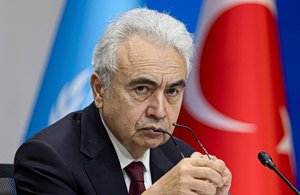
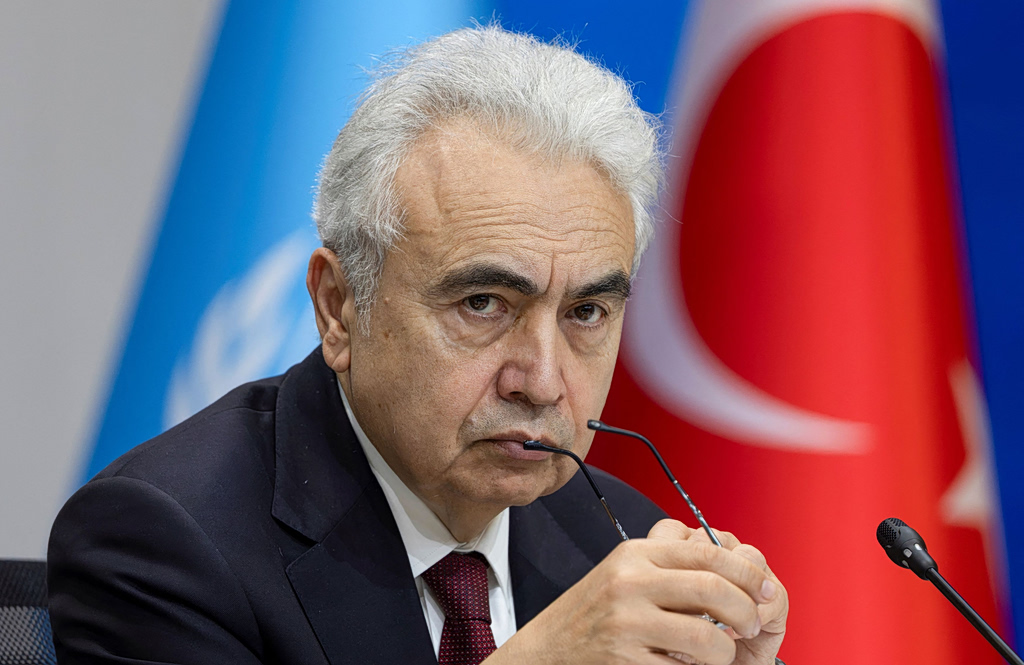
The International Energy Agency released its annual global outlook the same day, warning of extraordinary uncertainty caused by the war in Iran and shipping disruptions in the Strait of Hormuz. IEA chief Fatih Birol said he saw no credible path for the energy world to return to how it was before, and that energy security and the energy transition have never been so closely linked. The agency expects energy demand to keep rising, driven by population growth, artificial intelligence and the need for cooling as the world heats up.
UN climate chief Simon Stiell insisted the Paris agreement is working despite the obstacles. He admitted the world is far from meeting the 1.5C goal, but said the worst warming scenarios once feared are no longer expected. The real problem, he said, is the lack of speed.
Oil Pledge From Shenzhen
Thousands of miles away, the leaders of three of the world’s biggest powers and polluters sent a very different signal. At their trilateral meeting in Shenzhen, Donald Trump, Xi Jinping and Vladimir Putin committed in a joint statement to increase production and supply of refined petroleum products “for the benefit of all nations,” and stressed the importance of stable energy flows. The United States and Russia are among the world’s largest oil and gas exporters, and China is the biggest emitter of greenhouse gases. None of the three leaders attended COP31.
Asked about the pledge, and about the limited role of the United States and China in the talks, Bowen said China was engaging constructively, raising its concerns while trying to help the process succeed.
Final Day Ahead
Organizers said COP31 has registered almost 120,000 participants, including 69,000 on site. The summit is scheduled to close on Friday. Other concerns raised on Thursday included a warning from a leading researcher that delaying the next report from the Intergovernmental Panel on Climate Change (IPCC) would undermine global climate efforts.