
 Μake us preferred on Google
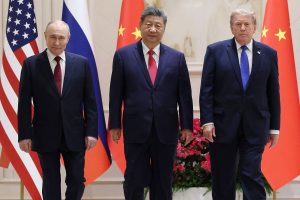
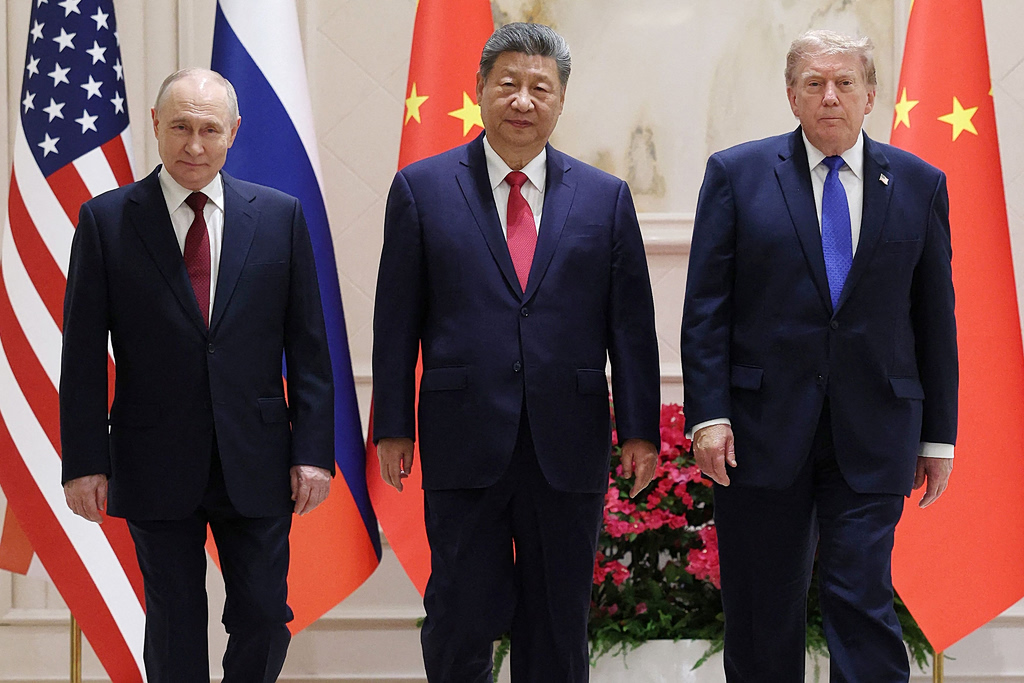
Chinese President Xi Jinping, U.S. President Donald Trump and Russian President Vladimir Putin wrapped up their unprecedented three-way meeting on Thursday with a largely symbolic “peace declaration.” The leaders of the world’s three biggest nuclear powers reaffirmed that a nuclear war must never be fought, but made no commitments on arms control.
Officials had made clear in advance that major deals were unlikely, and the meeting was always more about the image of the three men together than about concrete results. The declaration capped a three-day Asia tour by Trump that, despite his repeated claims of making history and brokering peace, produced few tangible wins and left some U.S. allies uneasy about his growing closeness to Putin.
What The Declaration Says
As expected, the document contained no pledge to reduce nuclear stockpiles. Instead, the three powers stated that a nuclear war cannot be won and must never be fought, and promised to hold talks on lowering nuclear risks and preventing the spread of nuclear weapons, without setting any timeline.
They also committed to pushing forward reforms of the United Nations, increasing fuel supplies for all countries and upholding the immunity of state officials before international courts. The last point is especially significant for Putin, against whom the International Criminal Court issued an arrest warrant more than three years ago over alleged war crimes in Ukraine. Moscow rejects the accusations.
The declaration made no reference to the war in Ukraine or the conflict with Iran. At a news conference afterward, Putin acknowledged that it did not set ambitious goals and that no one would be forced to follow its decisions. Trump left Shenzhen without commenting.
Daryl Kimball, executive director of the U.S.-based Arms Control Association, welcomed the reaffirmation on nuclear war but said rhetoric was not enough and that real disarmament diplomacy was needed. Jonathan Eyal of London’s Royal United Services Institute said the rejection of international norms and courts was the most striking part of the statement, describing a world in which big powers set the rules and small ones pay the price. In his view, Putin came out the winner, regaining credibility and shedding his pariah status, while Trump got a photo opportunity he did not need.
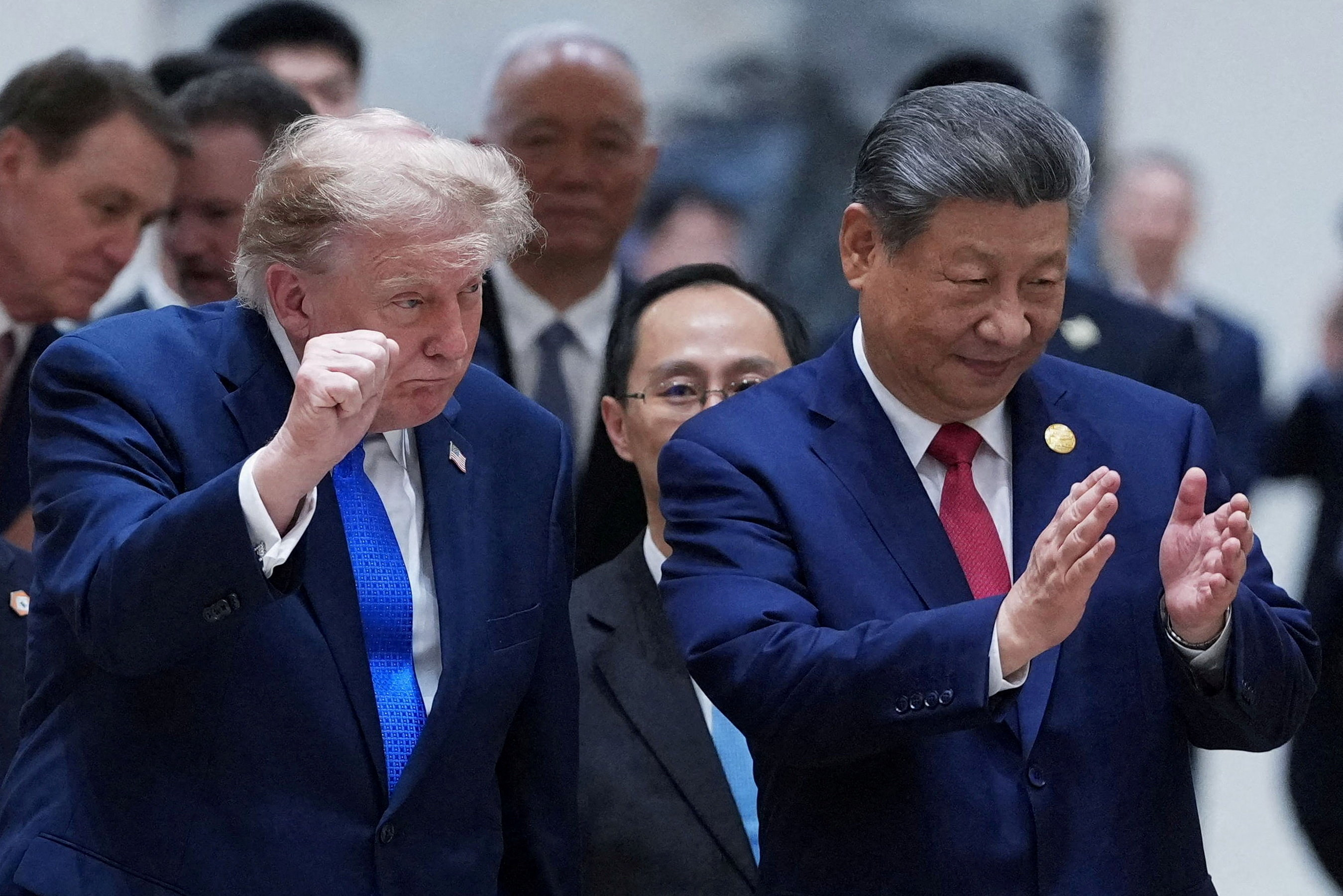
US President Donald Trump and Chinese President Xi Jinping react to musicians’ performance as they walk to their luncheon at the Kylin Villa in Shenzhen in southern China’s Guangdong Province, Thursday, Nov. 19, 2026. Mark Schiefelbein/Pool via REUTERS
81 Minutes At A Round Table
The leaders met for 81 minutes at Kylin Villa, a state guesthouse set in wooded hills beside a lake on the outskirts of Shenzhen, next to a tiger safari park. The villa has a long history of sensitive diplomacy, having hosted former North Korean leader Kim Jong-il, Xi’s father Xi Zhongxun and envoys of the Dalai Lama. The three sat at a round table with Xi in the middle.
Xi opened by saying that peace among great powers keeps the world secure, while conflict between them brings chaos. Trump argued that no peace had ever been achieved by refusing to engage, adding that “we are really making history.” Before the trilateral, Trump met Xi and Putin separately and called both his friends.
The summit capped years of personal diplomacy. As AP noted beforehand, Trump and Putin have met face-to-face on seven different occasions, most recently in Alaska in August 2025. Xi and Trump have held face-to-face talks on eight occasions, including a September state visit to Washington by Xi. So far, though, the flattery has yielded little. The Alaska summit did not end the Ukraine war, trade and rare earth disputes still strain U.S.-China ties, and both Moscow and Beijing are helping Iran.
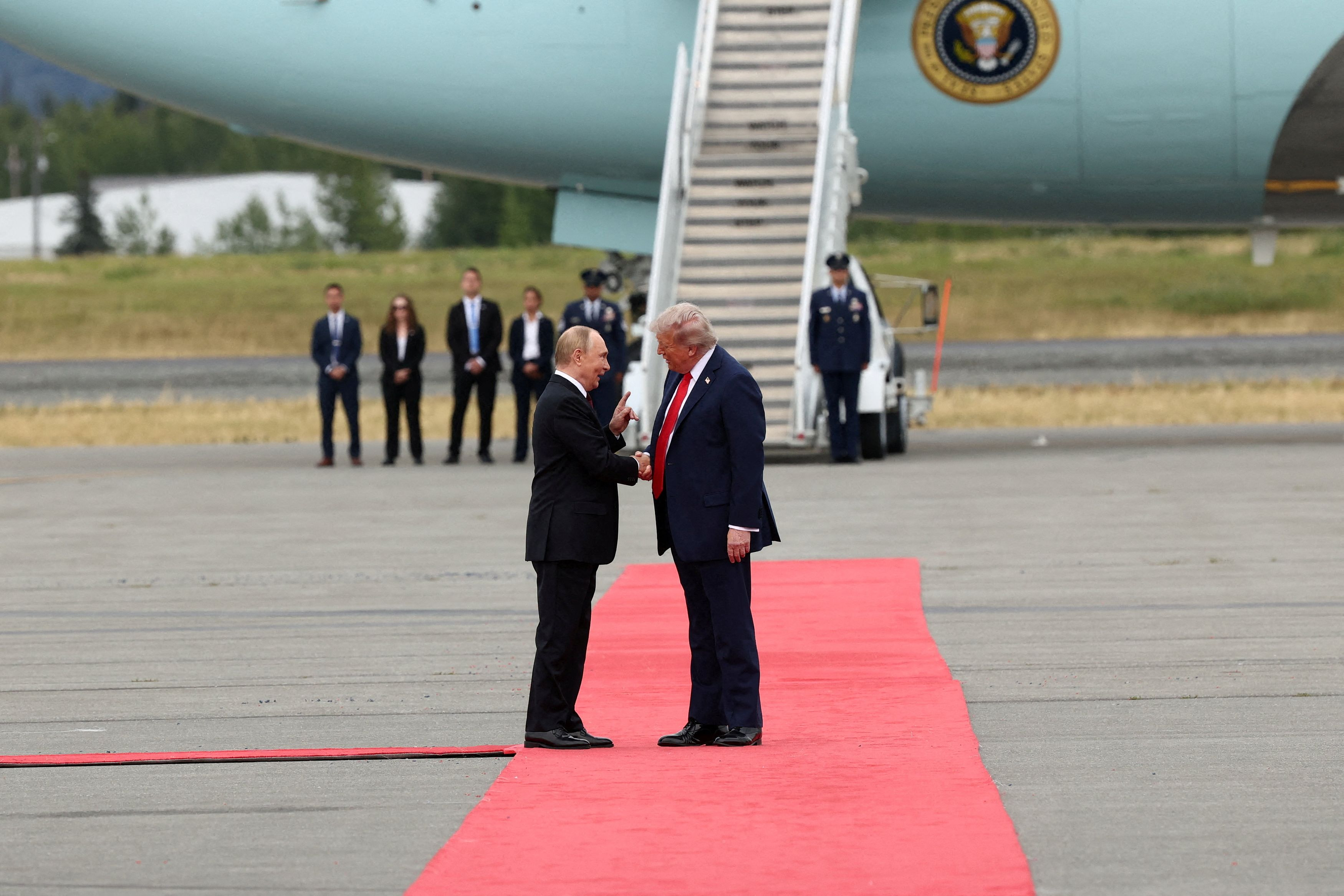
U.S. President Donald Trump shakes hand with Russian President Vladimir Putin, as they meet to negotiate for an end to the war in Ukraine, at Joint Base Elmendorf-Richardson in Anchorage, Alaska, U.S., August 15, 2025. REUTERS/Kevin Lamarque
A Comeback For Putin
For Putin, the meeting was a diplomatic coup. Nearly five years after his invasion of Ukraine left him isolated, he sat as an equal with the leaders of far more powerful countries, even though Russia’s economy is only about a tenth the size of China’s and most Russian businesses are cut off from Western trade by sanctions.
Putin had originally proposed the meeting as a way to discuss Ukraine without Ukraine present, which alarmed Kyiv and prompted comparisons to the 1945 Yalta conference, where the victorious powers divided the postwar world into spheres of influence. Both Xi and Putin referred to the post-World War II settlement in their opening remarks. Putin, who arrived just after Ukraine crippled a key bridge linking Crimea to Russia, said the three shared many interests in settling regional conflicts, including Ukraine.
Kyiv was unimpressed. Ukrainian Foreign Minister Andriy Sybiha wrote on X that Shenzhen had not turned out to be the “Yalta of Putin’s dreams,” noting that Russia had practically lost its bridge to the real Yalta in occupied Crimea, and urging him to end a war he cannot win. The summit ended a few hours before Ukrainian officials and European leaders were due to meet Trump’s envoys, Steve Witkoff and Jared Kushner, in Berlin.
Nuclear Arms: A Hard Sell
Trump had insisted that nuclear arms control be at the center of the talks, despite past objections from China. He wants a new agreement with Russia and China, but admitted at the table that giving up nuclear weapons is not easy. Washington had set modest expectations. A U.S. official told AP beforehand that the meeting was meant as the “beginning of hopefully a conversation” on nuclear disarmament “that can be productive going forward.”
China has long resisted being pulled into formal nuclear talks, arguing that its arsenal is far smaller than those of the United States and Russia. Reuters had reported that Trump’s repeated insistence that the first-of-its-kind meeting of the three leaders focus on nuclear arms reductions has riled China, which is hosting a summit focused on trade and commerce.
Two Wars In The Background
Trump and Putin are each mired in wars that have lasted longer than expected, in Iran and in Ukraine, draining military resources and pushing up prices worldwide, to Xi’s frustration. Trump has not pressed Moscow or Beijing to cut ties with Tehran. He has even eased sanctions on Russian diesel to bring down fuel costs driven up by the Iran war, indirectly benefiting Russia. The Iran war, which he first said would last six weeks, is unpopular at home and contributed to Republican losses in the midterms, and he is now weighing a new round of heavy bombing. His campaign promise to end the Ukraine war within 24 hours is 667 days overdue.
Taiwan, Trade And Chips
On Taiwan, Xi told Trump the United States must “do the right thing” to avoid serious setbacks in their relationship. The two leaders met after recently extending their trade truce, but tensions remain over reports that Nvidia chips are reaching China through Southeast Asia, raising doubts about U.S. export controls.
The visit was also overshadowed by the scandal involving former Nvidia CEO Jensen Huang and an alleged Chinese intelligence asset, which has exposed a split in Trump’s cabinet over limiting AI chip sales to China. Trump said he raised the spying issue only briefly with Xi at dinner, not wanting to insult China, and told Asian leaders he opposes “globalist” regulation of AI, while admitting the technology has some harmful elements.
Pageantry And An Isolated Japan
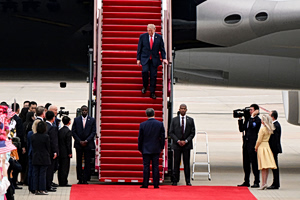
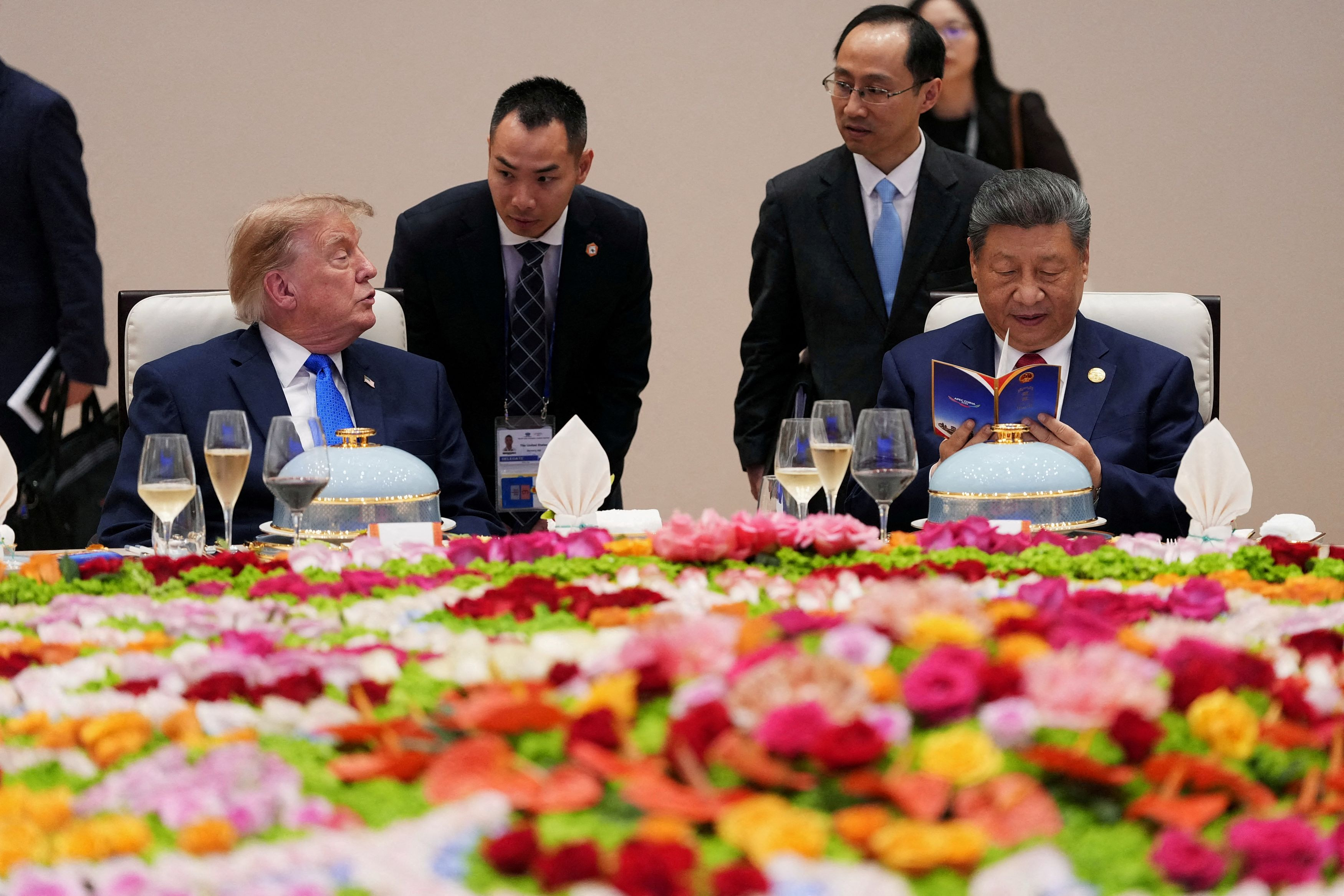
Trump highlighted the lavish welcome he received, which contrasted with the more modest reception for other leaders, including Putin. Xi greeted him at the airport, the first time he has done so for any visiting leader as president, returning Trump’s gesture at Joint Base Andrews in September, and the two briefly hugged. Speaking to Fox News, Trump called it a win for both countries and praised the fanfare, crowds, children and soldiers.
Japanese Prime Minister Sanae Takaichi, by contrast, arrived without any ceremony and cut an isolated figure throughout the summit. Relations between Tokyo and Beijing have soured since she said in 2025 that Japan could deploy its military if a Chinese move on Taiwan threatened its territory. In Shenzhen, she said Japan’s position on Taiwan had not changed since 1972.
A Win For Beijing
China is likely to count the summit as a diplomatic success. Trump’s assurance to Xi that the two would “never have a problem” while they are in charge is welcome in Beijing as U.S. lawmakers push for tighter controls on Chinese access to American technology. Beijing clearly sought to make the most of Trump’s goodwill before Democrats take control of Congress and as he enters the last stretch of his final term.
The lack of concrete results also suited Xi, who was wary of anything resembling a new Yalta deciding Ukraine’s fate. Instead, he appeared as a global convener standing as an equal next to the United States, without difficult commitments. That boosts his profile ahead of next year’s key Communist Party gathering, where he is expected to secure a fourth term.
What Comes Next
The meeting unsettled smaller countries that fear their interests could be ignored by the big powers, and the underlying tensions may resurface within weeks. Trump hosts the Group of 20 summit at his Florida golf resort next month, where he is expected to meet Xi again. Putin said he would consider attending after discussing it with Trump, but would need to take the situation in Russia into account. His presence would likely anger Washington’s European allies.