One of the Russian pranksters who tricked Greece’s national security adviser into a video call flatly rejected the Greek government’s account of the incident on Friday, undercutting Athens’ attempt to frame the breach as a sophisticated attack.
Hours after the Prime Minister’s office described the episode as a “hybrid-type attack” involving “highly advanced artificial intelligence technology,” Vladimir Kuznetsov, the prankster known as “Vovan,” ridiculed that explanation. “Highly advanced artificial intelligence. What a stupid thing for the Greek authorities to say,” he said. “We simply wrote an email from Gmail to his office, and they answered us.”
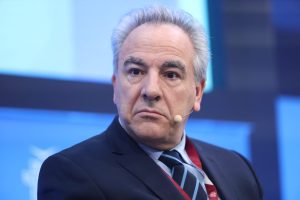
Vovan and his partner, known as “Lexus,” are a Russian duo notorious for impersonating world leaders and senior officials in elaborate hoaxes. Their target this time was Thanos Dokos, national security adviser to Greek Prime Minister Kyriakos Mitsotakis, who believed he was speaking with Rustem Umerov, the head of Ukrainian President Volodymyr Zelenskyy’s national security council.
Vovan’s rebuttal sharpened the focus on what critics have called a serious gap in the security of Greek government communications. If access to a senior adviser required nothing more than a message from a free email account, the “advanced AI” framing offered by Athens looks difficult to sustain.
Dokos: “I thought I was talking to Umerov”
In an evening appearance on SKAI TV, Dokos gave his own detailed account of the call and acknowledged he had no indication he was dealing with a fake contact.
“I thought I was talking to Umerov,” he said. “It was live, I could see him, the way I see you now.”
Dokos called it a “very unpleasant experience,” adding that “I felt that you can no longer even trust your own eyes.” He said Mitsotakis, who was informed immediately, was deeply troubled by the incident.
His remarks pointed to a deepfake, or an AI-generated likeness convincing enough to pass for the real official on a live video feed, even as Vovan insisted the initial access had been secured by the simplest of means.
What Dokos said during the call
The footage published by the pranksters shows Dokos discussing sensitive matters with the impostor. The conversation followed the recent discovery of a Ukrainian drone off the coast of Lefkada, an Ionian island, and the pranksters suggested a similar incident could recur.
Dokos is heard voicing concern about the timing. “It is the tourist season. There is increased ship traffic. We understand the needs of the war, on your side, but let us try very hard to prevent another such incident,” he said. “Bear in mind that we have elections in a few months, and such an accident could cause very significant problems for the Greek government. And our reaction would be very strong.”
Opposition demands his resignation
The disclosures drew a unanimous call from opposition parties for Dokos to be dismissed.
Former Prime Minister Antonis Samaras summed up the mood in a single pointed line: “Is Mr. Dokos still in his post?”
Harry Tzimitras, foreign policy spokesman for the Greek Left Alliance, the party recently launched by former Prime Minister Alexis Tsipras, said the episode was another worrying blow to national security. He argued that a security adviser falling victim to Russian hackers and revealing the country’s plans both on Ukraine and on the movements of the head of Greece’s National Intelligence Service, amounted to another worrying event following the Ukrainian drone incident. The Mitsotakis government, he said, was proving “dangerously amateurish” in handling sensitive national matters while remaining “entirely professional” in its communications.
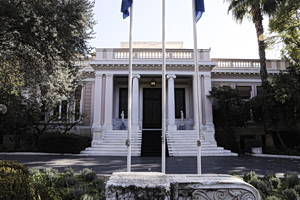
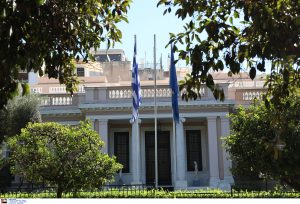
Despite the discomfort inside the Maximos Mansion, the seat of the Greek prime minister, the government has signaled there is no question of Dokos stepping down. Officials maintain that no confidential or classified information was disclosed during the conversation, and note that similar attacks have previously targeted high-ranking European officials.