
 Μake us preferred on Google
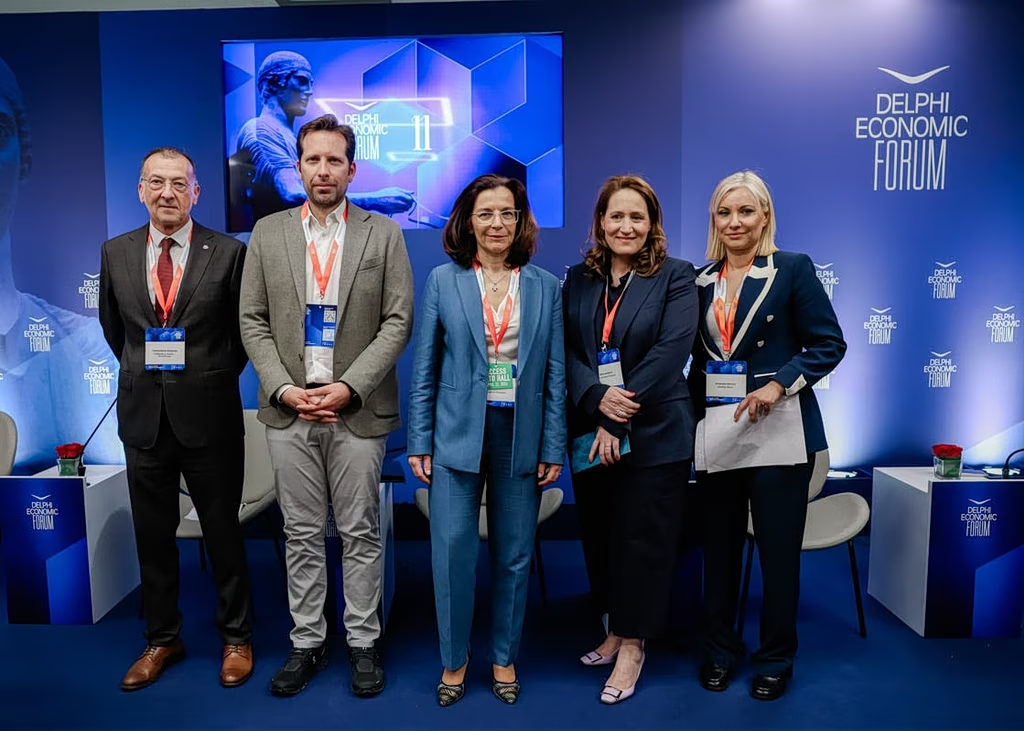
 A major national program aimed at upgrading digital and green skills has already reached nearly 580,000 beneficiaries, according to government officials speaking at the Delphi Economic Forum, where the future of work and workforce transformation took center stage.
The initiative, described as the largest of its kind in the country, reflects growing concerns about how automation, artificial intelligence and rapid technological change are reshaping labor markets.
Automation Reshaping Jobs
Deputy Labor Minister Konstantinos Karagkounis warned that around 27% of jobs are at increased risk of automation, particularly routine roles. However, he noted that many positions will not disappear but instead evolve through interaction with intelligent systems.
“The priority is to strengthen education and training systems,” he said, highlighting the government’s efforts to equip workers and students with the skills required for future professions.
The program includes outreach to schools, aiming to inform students early about emerging career paths and the expected impact of artificial intelligence on employment choices.
Talent Redefined in a Changing Economy
Speakers from the private sector emphasized that traditional definitions of talent are rapidly changing. Adaptability and the ability to continuously learn are becoming more valuable than linear career progression.
Business leaders noted that employees must evolve as quickly as their roles, particularly as organizations increasingly integrate AI into daily operations. At the same time, companies are being urged to create environments that support learning, flexibility and long-term development.
Skills and Competitiveness
Officials stressed that building a strong skills ecosystem is essential for economic competitiveness. Beyond attracting investment, countries must also attract, retain and develop talent.
Recent improvements in the labor market were also highlighted, with unemployment falling significantly in recent years. However, speakers agreed that the focus must now shift from job quantity to job quality, with greater emphasis on skills development and alignment between education and labor market needs.
Inclusion and Leadership Challenges
Inclusion emerged as a key theme, with participants warning that excluding groups such as women, young people and those outside major urban centers from decision-making risks leaving them behind in the future of work.
At the same time, the role of leadership is evolving. Modern leaders are expected to understand technology, foster a culture of continuous learning and adapt to constant change. Traditional hierarchical structures and rigid organizational models were identified as obstacles to effective transformation.
A Workforce in Transition
The discussions underscored that the future of work will be defined by adaptability, collaboration and continuous learning. As technological change accelerates, both governments and businesses face increasing pressure to invest in people, ensuring that workers are equipped to navigate an uncertain and rapidly evolving environment.
The Delphi forum concluded that aligning education, training and labor market demands will be critical to sustaining growth and competitiveness in the years ahead.