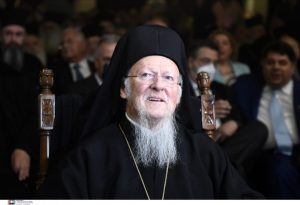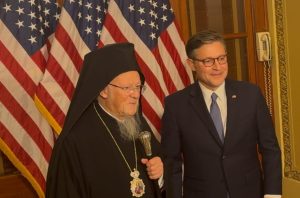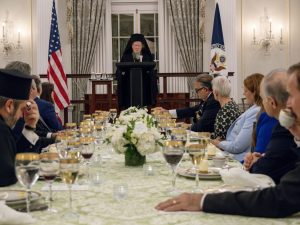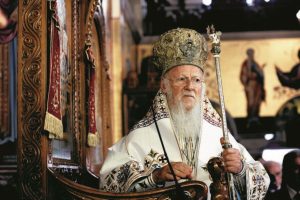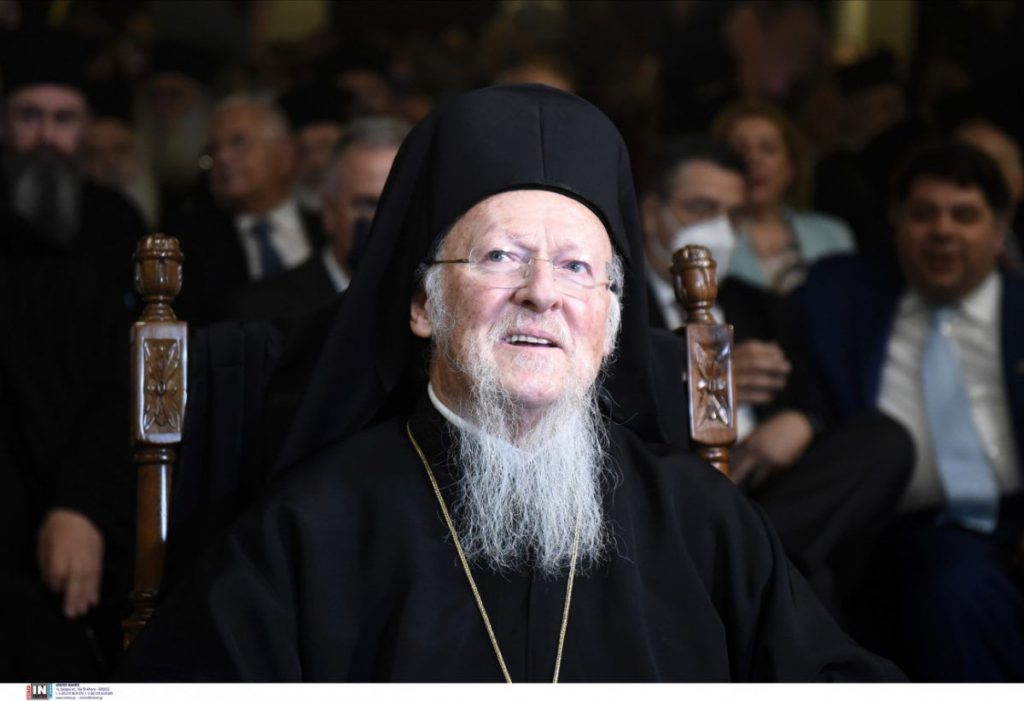
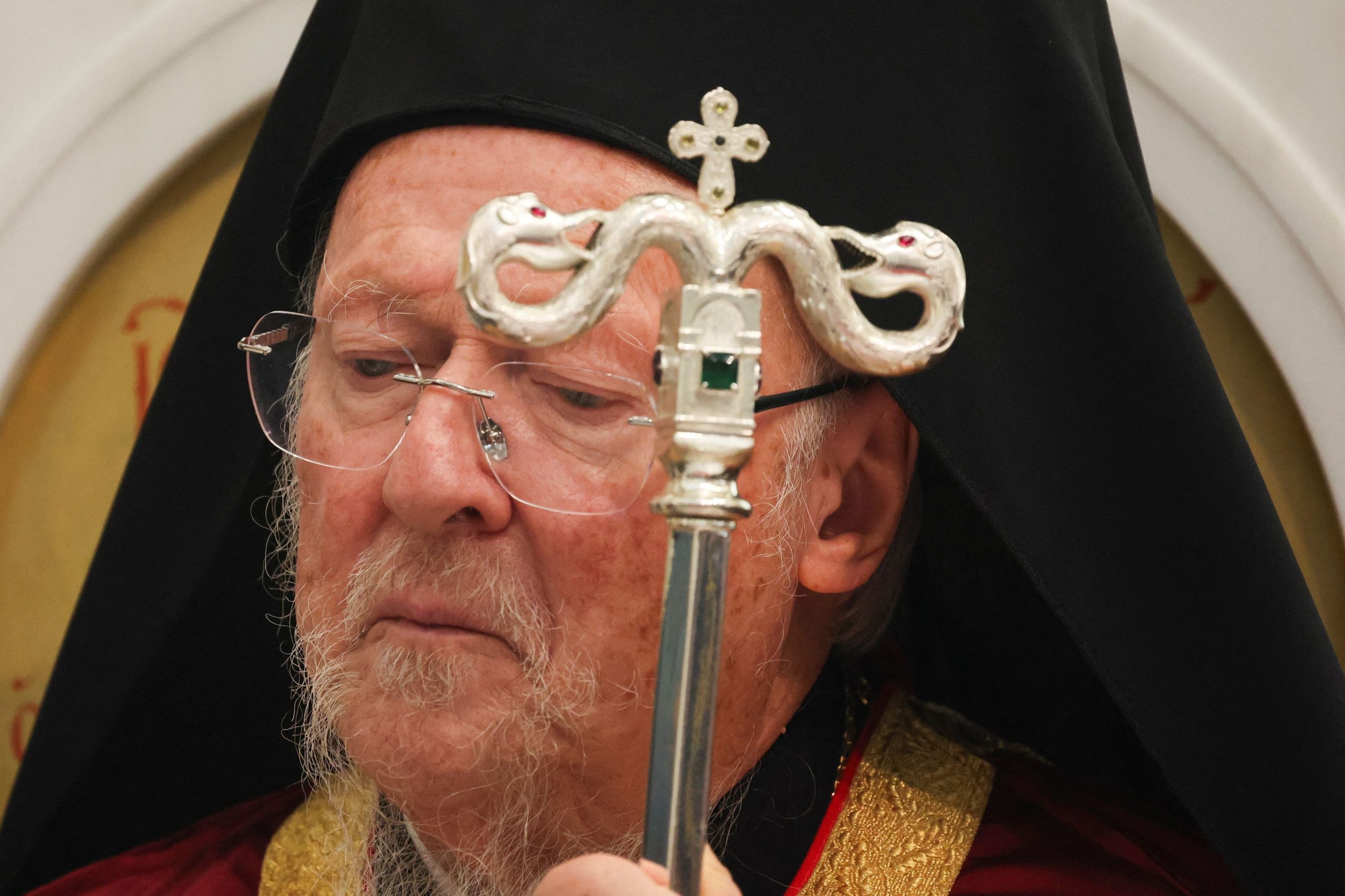
Ecumenical Patriarch Bartholomew, the spiritual leader of more than 300 million Orthodox Christians worldwide, used a speech in New York at the Council on Foreign Relations on Thursday to issue a stark warning against authoritarianism, nationalism, and the corrosive effects of social media, while urging a renewed reliance on faith as a stabilizing force in an increasingly fractured world.
Speaking at the influential foreign policy think tank, the Patriarch drew parallels between the 1700-year history of the Ecumenical Patriarchate and the century-long life of the Council. Both, he noted, are “non-state actors with global perspectives,” uniquely positioned to address international challenges.
Praise for the American Experiment
Bartholomew devoted much of his address to the American founding documents, framing them as a model of governance that the world ignores at its peril. The Declaration of Independence and the Constitution, he said, established safeguards against humanity’s “fallen nature” through a layered system of checks and balances.
Invoking the biblical story of Adam and Eve, he argued that the Founders, deeply shaped by Judeo-Christian thought, understood the dangers of unrestrained power. “Because we are flawed by nature,” he said, quoting Lord Acton, “it is a mistake for any human being to have absolute power.”
The Patriarch lamented what he called a “global trend away from the wisdom of America’s founders” and toward charismatic strongmen who undermine institutions. He avoided naming specific leaders, but his words echoed current debates about democratic backsliding in countries from Russia to Turkey.
Nationalism and the War in Ukraine
The Patriarch reserved some of his sharpest language for nationalism, which he described as “perhaps the most destructive force in human history.” He recalled the 1872 Council of Constantinople’s condemnation of phyletism, the organization of church life along ethnic lines, and warned that the temptation endures.
“The emphasis on national or ethnic heritage has had the effect of fragmenting our ecumenical family,” he said, pointing to Russia’s invasion of Ukraine as its most brutal example. He denounced the Moscow Patriarchate’s endorsement of the war, accusing it of serving “an outdated and outlandish imperial doctrine” of Rússkiy Mir.
Bartholomew defended his decision in 2019 to grant independence to the Orthodox Church of Ukraine, calling it a fulfillment of Ukrainians’ “longing for freedom of conscience” after decades of Soviet oppression.
Middle East and Global Divisions
The Patriarch also addressed the war in Gaza, condemning the October 7 Hamas attacks on Israel while expressing horror at the continuing civilian toll in Gaza. He drew attention to the precarious state of Christian minorities in the region, citing a July assault by Israeli settlers on the Palestinian Christian village of Taybeh.
Beyond geopolitics, Bartholomew said societies everywhere are being torn apart, by politics, by identity divisions, by economic inequality, and by the algorithms of social media. “We find ourselves, our families, our workplaces, and our communities deeply divided today,” he said.