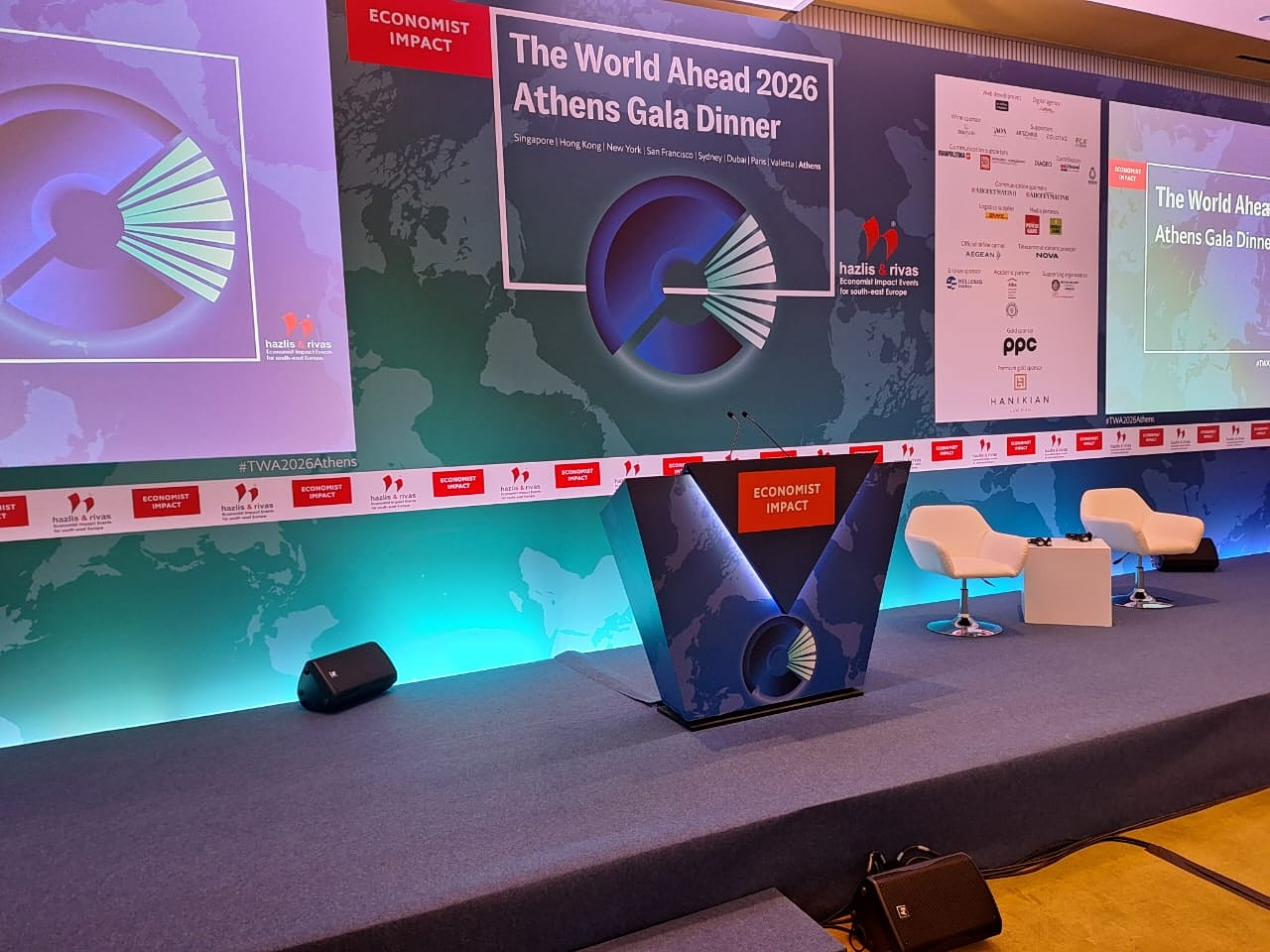
Energy, a “reset” banking sector and a resilient Greek economy buoyed by stepped up digitization of the public sector were the dominant themes at Friday’s Economist gala dinner in Athens, entitled “The World Ahead 2026”, with keynote speakers including the recently elected president of the Eurogroup, Greek Economy and Finance Minister Kyriakos Pierrakakis, the country’s “old hand” central banker, Yannis Stournaras, and the very prominent new US ambassador to the country, Kimberly Guilfoyle.
The entire event video here:
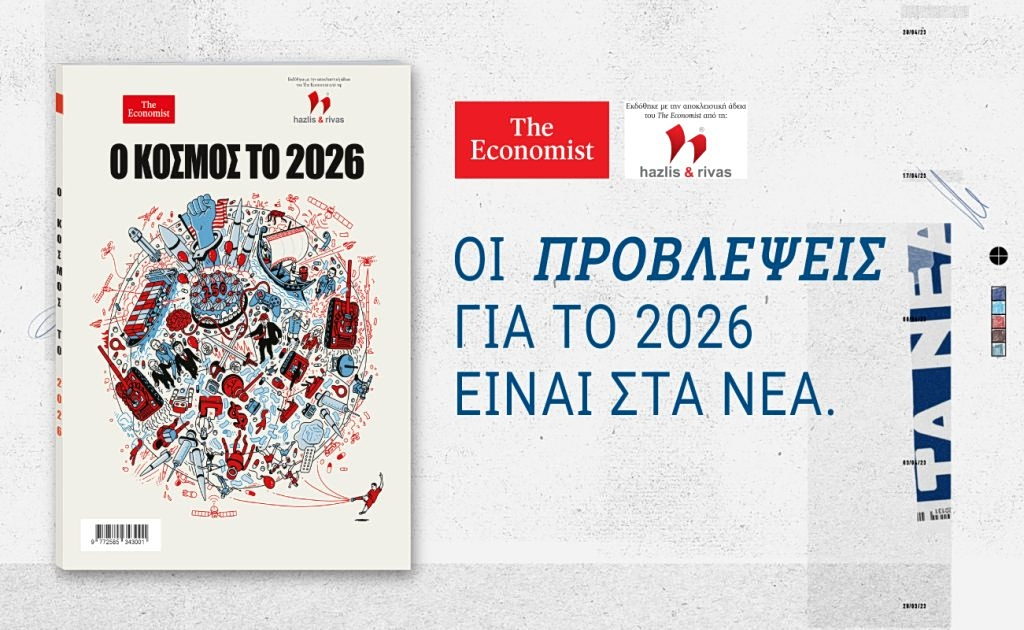
A special edition of The Economist’s “The World in 2026” will published exclusively in Greek by the weekend edition of “Ta Nea”, debuting on Saturday, Jan. 31.
The edition, which includes Economist editor Tom Standage’s “ten trends to watch in 2026″, maps the forces that are reshaping the planet and attempts to shed light on the developments that will determine our future – from Trump’s second term and a “China’s moment” to the “bill” Russia is being asked to pay, the edition focuses on the new geopolitical landscape at the advent of the new year.
Pierrakakis
In inaugurating the addresses, Kyriakos Pierrakakis first referred to the illusions, as he said, that exist within the EU, the changes needed for Europe to meet today’s challenges, and the key points for achieving this. As he said, speaking in his dual capacity as minister of national economy and president of the Eurogroup, issues such as climate, energy, demographics, and others are not separate issues but a single narrative that tests the resilience and speed of our institutions.
He also extensively referred to three areas in which a “tightrope” for Europe is evident: competitiveness, energy, and technology.
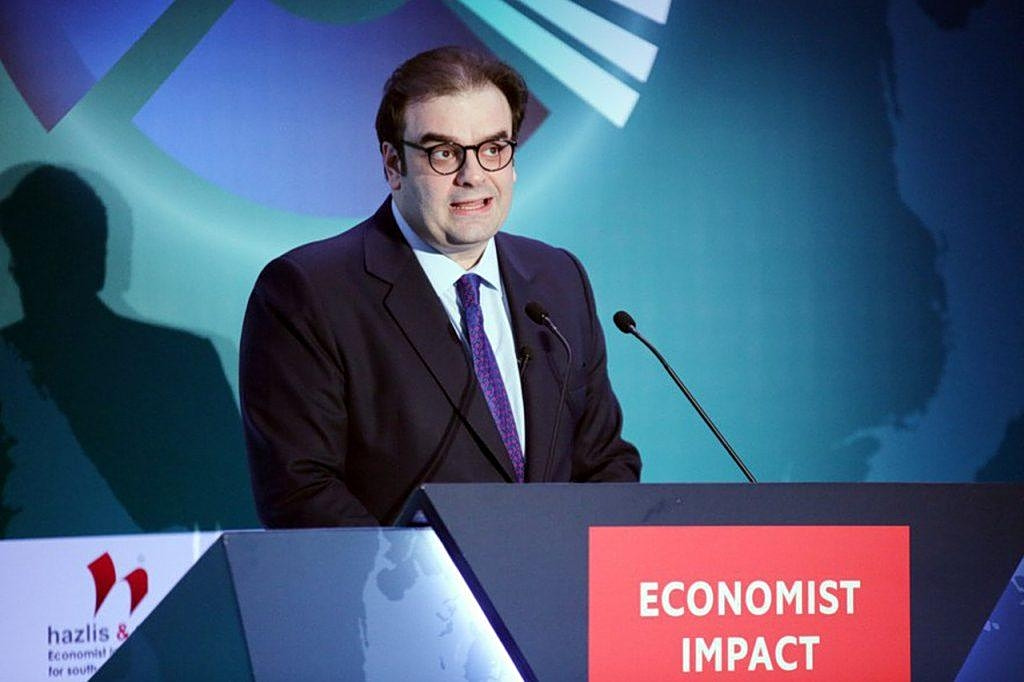
Greek National Economy & Finance Minister Kyriakos Pierrakakis.
Referring to energy, he stressed that Europe had known for years what its vulnerabilities were, namely, dependence, poor infrastructure, and lack of coordination.
As he said, we took whatever measures we could in the energy sector. However, the lesson is not to withdraw from global markets, but to engage with discipline, to diversify, to invest and inter-connect.
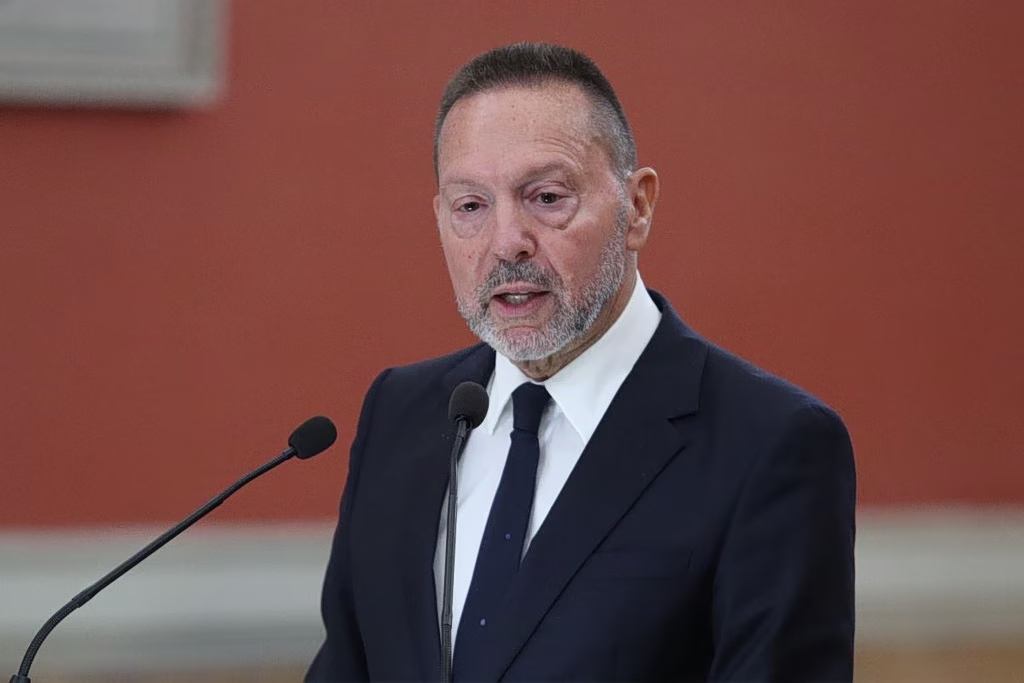
Stournaras
On his part, Bank of Greece (BoG) Gov. Yannis Stournaras said that despite the progress achieved and the healthy results of European and Greek banks, there is no room for complacency. He highlighted five risks for the banking system in the current year.
Referring to the once devastated Greek banking sector, Stournaras stressed that it is now in a much stronger position to support growth and absorb potential shocks.
Among other, he said enhanced resilience (confirmed by the results of the recent pan-European stress test), improved market access, and the recovery of the investment grade rating provide a solid foundation for 2026, which is particularly important in the current environment of high uncertainty.
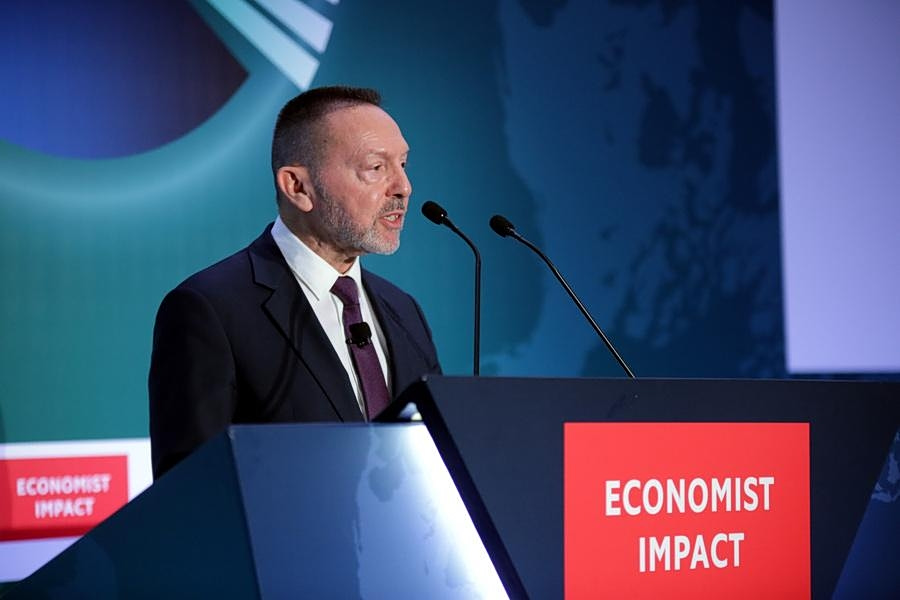
Bank of Greece (BoG) Gov. Yannis Stournaras.
Guilfoyle
US ambassador Kimberly Guilfoyle directly focused on energy and cooperation in the sector, citing the strategic role of the “vertical corridor” that will offload US LNG in Greece for pipeline transport further north, to Bulgaria, Romania, Moldova and Ukraine – thus highlighting Greece’s pivotal role in energy security in southeast Europe.
Guilfoyle began her speech by reviewing the past year, which she described as very important for Greece-US relations, with the alliance strengthened in critical areas such as trade, defense, and law enforcement. She also said she was particularly proud of the progress made on the issue of economic security. “As President Trump says, economic security is national security, and its driving force is energy.”
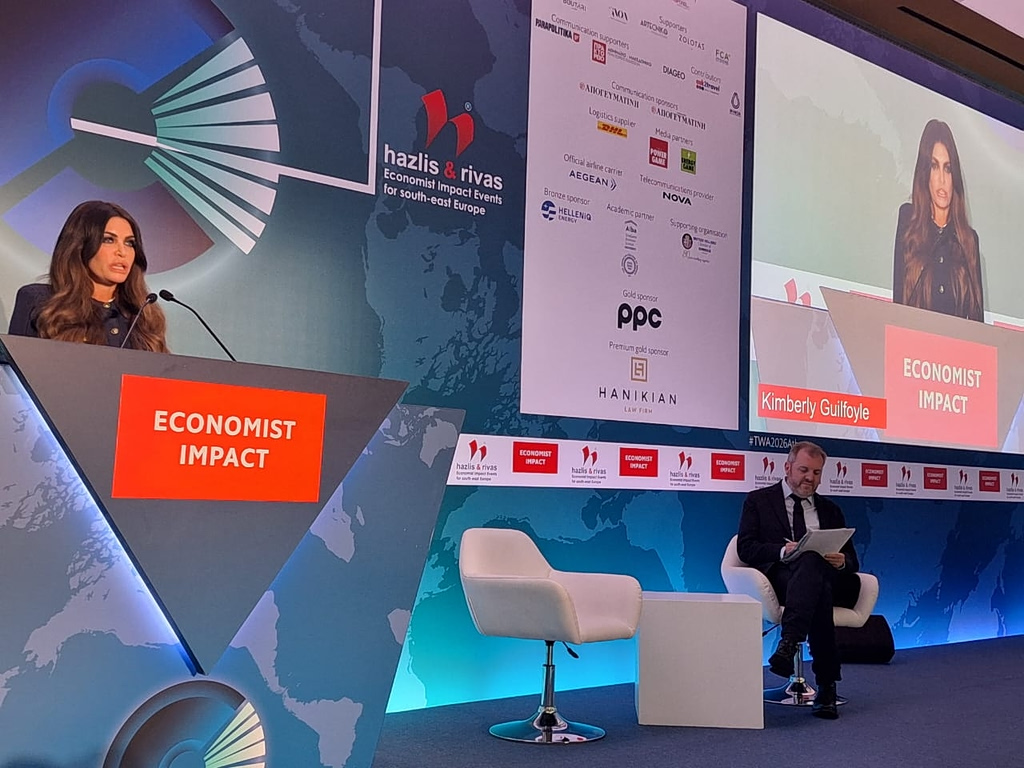
US ambassador Kimberly Guilfoyle at the podium of the Economist event on Friday, Jan. 30, 2026. Economist editor Tom Standage is seated, right.