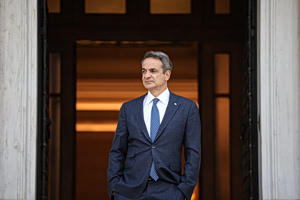
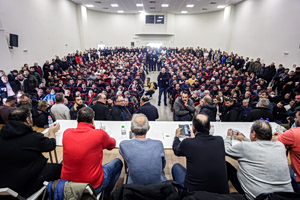
A delegation of farmers and stockbreeders arrived at a much-anticipated meeting at the Maximos Mansion on Tuesday for a meeting with Greek Prime Minister Kyriakos Mitsotakis and the leadership of the relevant agriculture ministry, more than 40 days after producers around the country began roadblocks and other mobilizations along highways.
The latest developments have protesting producers split mainly into two “camps”, namely, those that want to negotiate with the government over bigger subsidies to ameliorate rising production costs – among the other demands they’ve placed on the “table” – and those following a more hardline stance.
In his opening remarks, Mitsotakis referred to a “substantive and productive” discussion on problems in the farm sector, as well as expanding discussion from the current agenda to the future, i.e. how to modernize farming, stockbreeding, professional fisheries, fish-farming, beekeeping, and all related sectors.
At first glance, the center-right government appears positive to increasing the rebate on taxes applied to diesel oil and to lower the cost of electricity for producers.
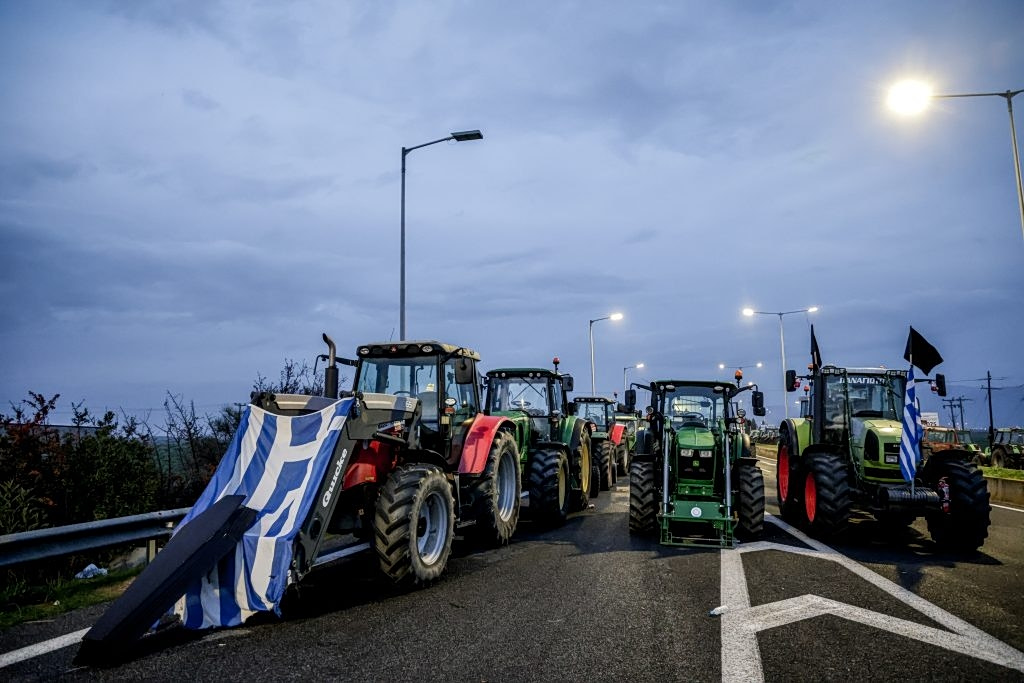
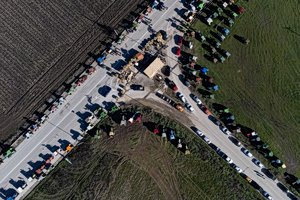
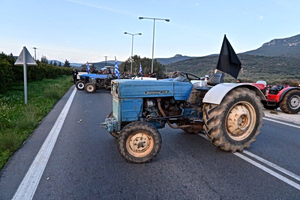
Nevertheless, while the meeting was ongoing, other groups of producers resumed roadblocks at major intersections in central Greece (Thessaly plain) and at a couple of borders crossings in northern Greece.
All total, 62 separate groups of producers were manning on-again, off-again roadblocks around the country.
According to sources from the government side, the individual issues discussed during the three-and-a-half hour meeting included: technical issues regarding property ownership (part of the national cadastre); transferring the work of a disgraced and now defunct agricultural subsidy agency (OPEKEPE) to the independent tax bureau (AADE); more incentives for new farmers; the so-called “green transition”; measure to boost productivity; a dialogue over the Union’s CAP policy; linking subsidies to production; production costs – electricity and fuel; support for non-agricultural activities under-developed areas; support for greenhouse production; better infrastructure in terms of irrigation and rural roads; climate change and water scarcity; the regime for foreign farm workers; changes in agriculture insurance; utilization state lands; the prices of pesticides, and the ongoing and punishing sheep and goat pox plaguing the country’s herds.