Prime Minister Kyriakos Mitsotakis has faced multiple intense national security challenges during his over six years in office-most prominently a major operation to fend off a huge flood of migrants when in a hybrid attack Turkey opened its side of the Evros Greek-Turkish border in February, 2020, and later the naval crisis in the Mediterranean in August of that year, when Ankara’s sending the seismic exploration ship Oruc Reis into Greece’s EEZ led to a near clash of Greek and Turkish frigates, which if not defused might have led to dire, unforeseen consequences.
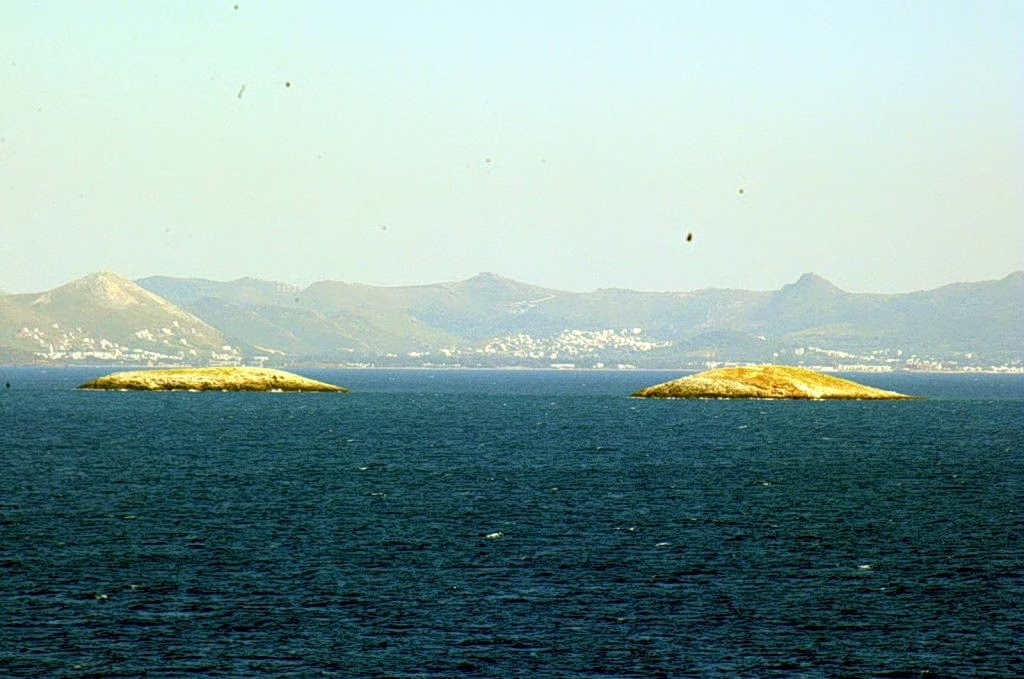
These were two significant crisis management successes which demonstrated that Greece is light years away from the Imia islets crisis, which occurred exactly 30 years ago, in January, 1996, and brought Greece and Turkey to the brink of war.
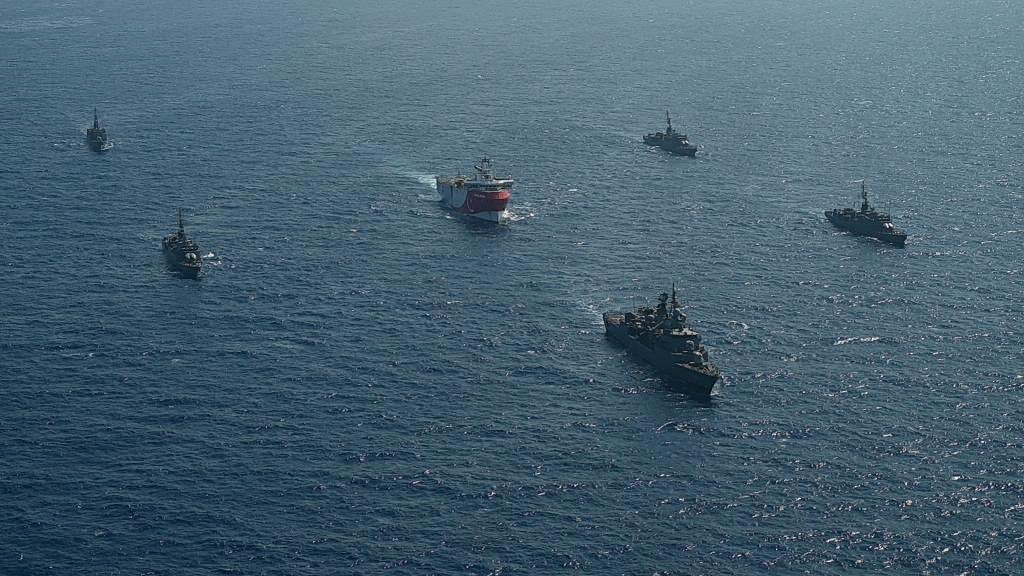
Turkish seismic research vessel Oruc Reis is escorted by Turkish Navy ships as it sets sail in the Mediterranean Sea, off Antalya, Turkey, August 10, 2020. Picture taken August 10, 2020. Turkish Defence Ministry/Handout via REUTERS ATTENTION EDITORS – THIS PICTURE WAS PROVIDED BY A THIRD PARTY. NO RESALES. NO ARCHIVE.
The highly dangerous lack of coordination and communication between the PM’s office, the ministries of defence and of foreign affairs, and the Chairman of the Joint Chiefs of Staff, will remain in Greek military annals as a prominent case study in how a lack of planning and coordination can have disastrous effects. Back then, a potential war between two NATO allies was averted through the intervention of then US President Bill Clinton, and the masterful diplomacy of his envoy, the late Richard Holbrooke.
The lessons were learned.
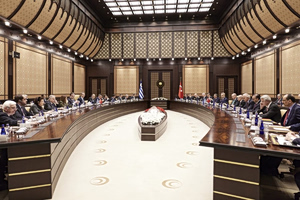
Today, the waters separating Greece and Turkey are calm, despite lingering disputes, which the two countries – as Mitsotakis and Turkish President Recep Tayyip Erdogan declared on 11 February, in Ankara – are determined to and have agreed to resolve on their own, through peaceful dialogue based on international law
Decades later, and in a far more complicated geopolitical milieu, his own experience has taught the Greek PM that the country’s defence requires a complex, highly coordinated, multi-level structure that can keep abreast of emerging challenges on a regular basis.
The Government Council for National Security (KYSEA) has for decades been, and remains, the country’s supreme national defence and security organ, but by and large it meets ad hoc, irregularly, to take major decisions such as the promotions of military top brass.
When in April, 2025, Mitsotakis decided to establish the General Secretariat for National Security (the aims of which have certain similarities to those of the US National Security Council) he summoned Dr. Thanos Dokos, the long-time general director of Greece’s premiere international affairs think tank ELIAMEP, (Hellenic Foundation for European and Foreign Policy), to head it up.
In a wide-ranging exclusive interview with TO BHMA International Edition, General Secretary Dokos lays out the objectives, strong coordinating role, and modus operandi of the institution he leads in ensuring effective management, on a day-to-day basis, of a host of both old and newfangled challenges to Greece’s national security.
When Prime Minister Mitsotakis asked you to head the new General Secretariat for National Security, what was the vision and objective of this institution that he expressed to you – and in which areas specifically have these objectives evolved and been implemented on your watch?
The Prime Minister is a strong believer in a holistic and comprehensive approach of security (whole of government/whole of society) according to which national security is a multi-level and multidimensional concept, encompassing various threats and challenges (interstate conflict, hybrid threats, homeland security challenges, cybersecurity, natural and man-made disasters, etc.).
Managing such a wide range of threats and challenges requires joint planning and coordination between multiple ministries and agencies.
Promoting such interagency cooperation and coordination and acting as an ‘honest broker’ is one of the key tasks and responsibilities assigned to the newly-created National Security Secretariat. The Evros crisis of February-March 2020, when tens of thousands of illegal migrants tried to force their way from Turkey to Greece through the land border in Thrace, is a case where interagency coordination and cooperation were absolutely critical for the successful management of the crisis.
Other important priorities for the Secretariat include the drafting of the National Security Strategy, which will then be approved by the Governmental Council on National Security (KYSEA), providing support on a daily basis to the Prime Minister and the KYSEA, preparing national strategies for managing hybrid threats and increasing resilience at the national level and, last but not least, training officials from across the public sector, regional and local administration, but also the private sector in the field of critical entities in an effort to develop a common security culture.
At this stage, the Secretariat can better be described as work in progress and an institution that is evolving, as it continuously incorporates lessons learned and best practices, as well as technological tools like AI for analysis and decision making.
Which are the most significant security challenges and threats that Greece faces today, and what role does the Council play in identifying them and addressing them? Is there a group within the Council that acts as a sort of policy think tank?
The main security challenges for Greece include Turkish revisionism, cybersecurity, hybrid threats, demographic challenges, climate change, migration flows and security of supply chains. The Secretariat works closely with the Long-Term Planning/Foresight and Communication and Information Secretariats of the Presidency of the Government, as well as with all relevant ministries and agencies to identify and address those challenges, both in the short and in the long term.
In order to monitor global and regional trends and security developments that might affect Greek security, the Secretariat regularly consults with think-tanks and the academic community in Greece and abroad, as well as former senior diplomats and military officers. There are also regular contacts and cooperation with counterpart agencies in various countries.
Information collection and processing in priority areas are part of the Secretariat’s daily activities, but its small size doesn’t allow for full coverage and in-depth analysis. To compensate for size, AI is increasingly being used for information processing and analysis purposes.
What structural components should Greece’s long-term National Security Policy include, and what should Athens’ strategy be vis a vis Turkish revisionism?
The key structural components of Greece’s National Security Policy include foresight and horizon scanning, efficient strategic planning, strong military capabilities (with a strong emphasis on new technologies) to deter opponents, increased situational awareness and effective crisis management mechanisms, strategic communications, increased resilience (including in the cyber domain) and strong alliances and partnerships.
On the extremely important question of Greek-Turkish relations, the main components of Greece’s strategy include an active diplomacy, which is strongly linked to a credible deterrence capability, and seeks to strengthen alliances and partnerships and increase Greek influence in regions of interest.
Our diplomatic strategy strongly emphasizes conflict resolution on the basis of international law and more specifically the International Law of the Sea Convention, and includes open channels of communication with Turkey and a positive agenda.
The Council is tasked with coordinating key ministries and organs responsible for guarding national security – the foreign ministry, the defence ministry, the citizen’s protection ministry, and presumably the national intelligence agency. What is the procedural process by which this is accomplished? Are there regular inter-ministerial meetings with your participation, and who sets the medium-to-long term planning agenda and how?
The Secretariat is staffed by personnel from all of the above ministries and agencies and that significantly facilitates daily cooperation and coordination.
There are both regular and ad hoc meetings and working groups at the level of secretary generals and equivalent, but also at various other levels. Additionally, as the head of the Secretariat is triple-hatted, being at the same time National Security Advisor to the Prime Minister and Secretary of the KYSEA, he often participates in inter-ministerial meetings at the senior level.
There are also standing committees, such as the Coordinating Committee on Cybersecurity, regularly bringing together all the main players in that field. Furthermore, training seminars and tabletop exercises facilitate contacts and cooperation with all ministries and agencies involved into matters of national security.
In the event of a serious geopolitical crisis – whether a bilateral, regional, or an international one that directly impacts on Greece – how does the role of the Secretariat for National Security dovetail with that of the KYSEA (Governmental Council on Foreign Affairs and Defence)? Since the competencies of each overlap, how are the distinct boundaries of responsibilities defined?
The KYSEA and the Secretariat for National Security are closely interlinked as the KYSEA is the country’s top strategic planning, decision making and crisis management body and the Secretariat constitutes its main supporting mechanism.
The Secretary General for National Security acts as the Secretary of KYSEA and the Secretariat informs and supports KYSEA in all its functions. It also monitors the implementation of KYSEA’s decisions. Therefore, there are no overlapping competencies, as the KYSEA makes policy and the Secretariat facilitates itsimplementation.
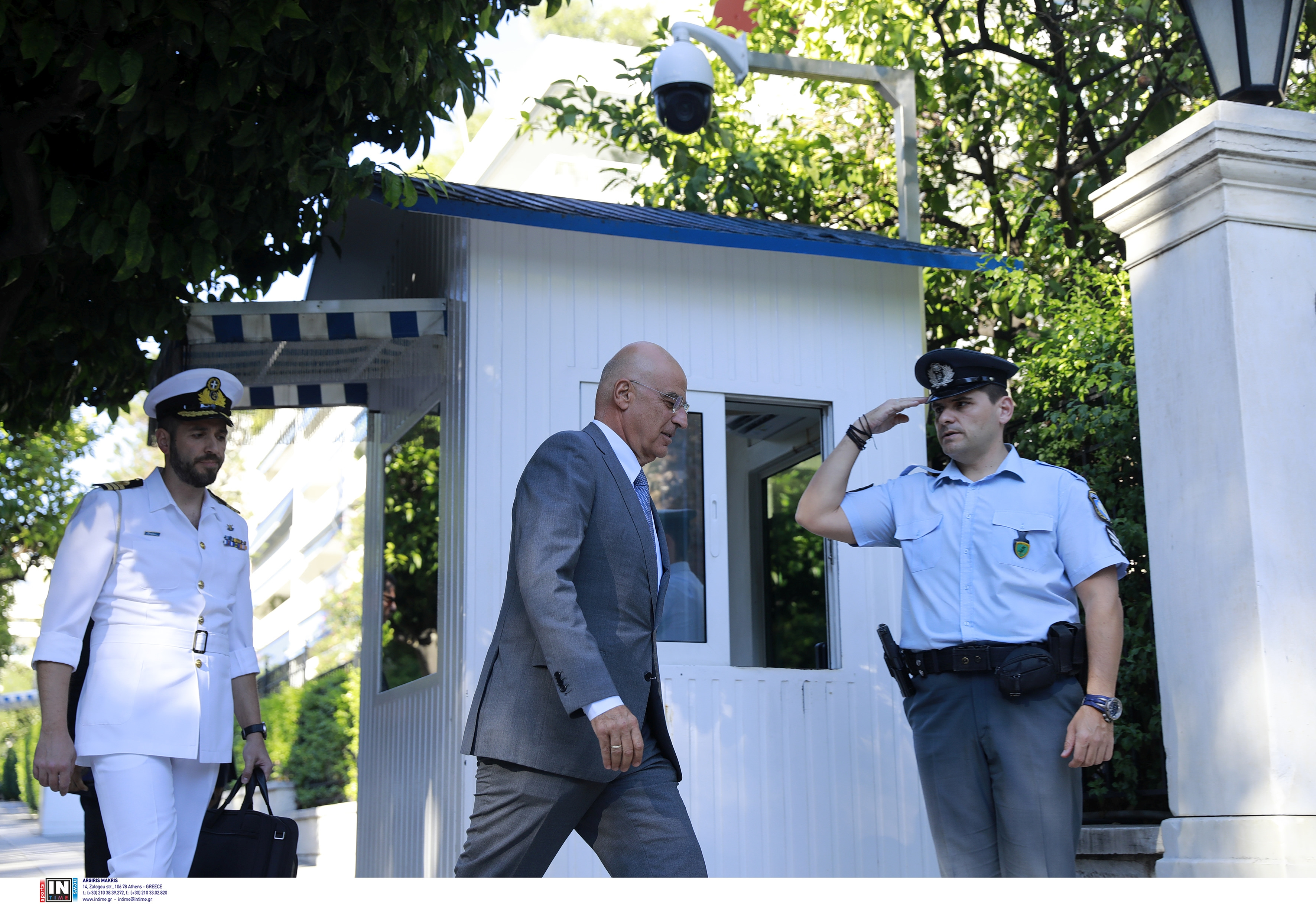
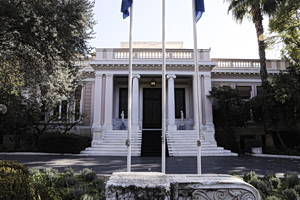
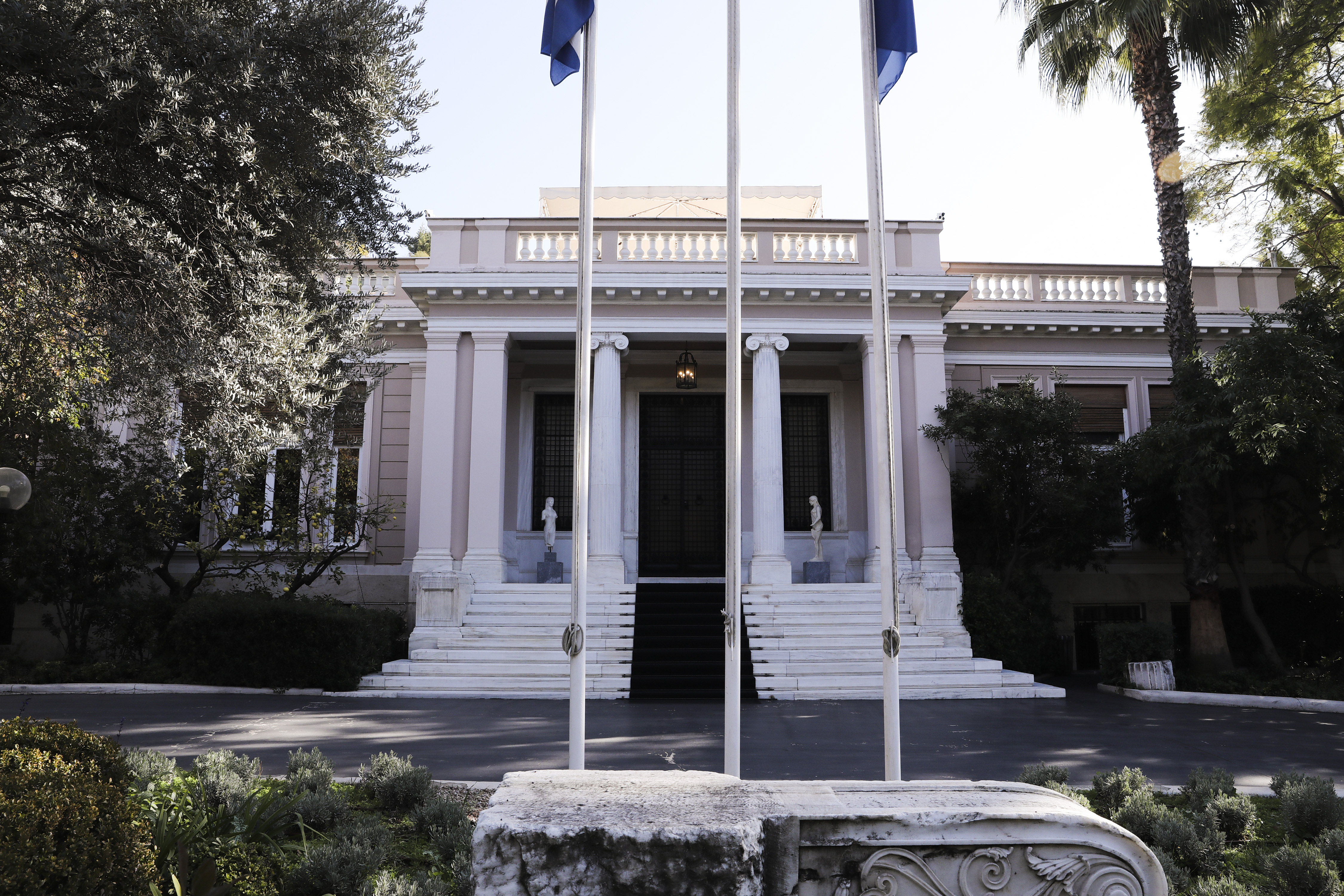
Defense Minister Nikos Dendias arrives at the Maximos Mansion in Athens for a meeting of the Government Council for National Security under Prime Minister Mitsotakis.
What are the similarities and differences – as per the objectives, functioning, and responsibilities – between the Greek and American national security councils?
There are obvious similarities as both institutions were designed to facilitate interagency cooperation and coordination, but there are also significant differences because of the size, responsibilities and institutional culture and mentality, as well as the geographical scope of the foreign and security policies of the two countries.
Out of the many models studied before establishing Greece’s National Security Secretariat, that of the United Kingdom, despite not insignificant differences, is perhaps more interesting for Greece.
It should be noted, however, that wholesale copying of another country’s model would make little sense as challenges, capabilities and institutional frameworks vary considerably between countries.
Our effort has been to borrow best practices whenever possible and incorporate them into a model designed to serve national needs.
Which particular forms of AI and in which areas could be useful in managing national security more effectively?
Artificial intelligence (AI) can be a most useful tool, provided it is used in combination with more traditional methods of processing and analyzing information and making decisions.
It is very important to keep the human factor in the decision-making cycle, as crisis management is more an art than a science, and human input remains an indispensable part of the process.