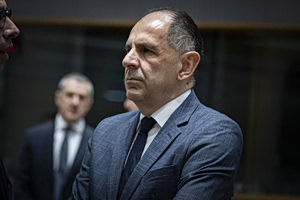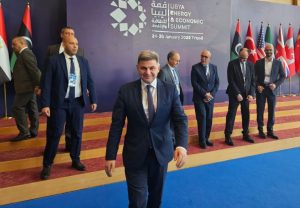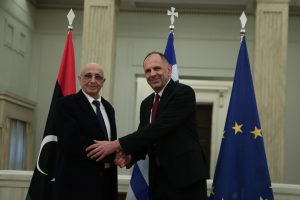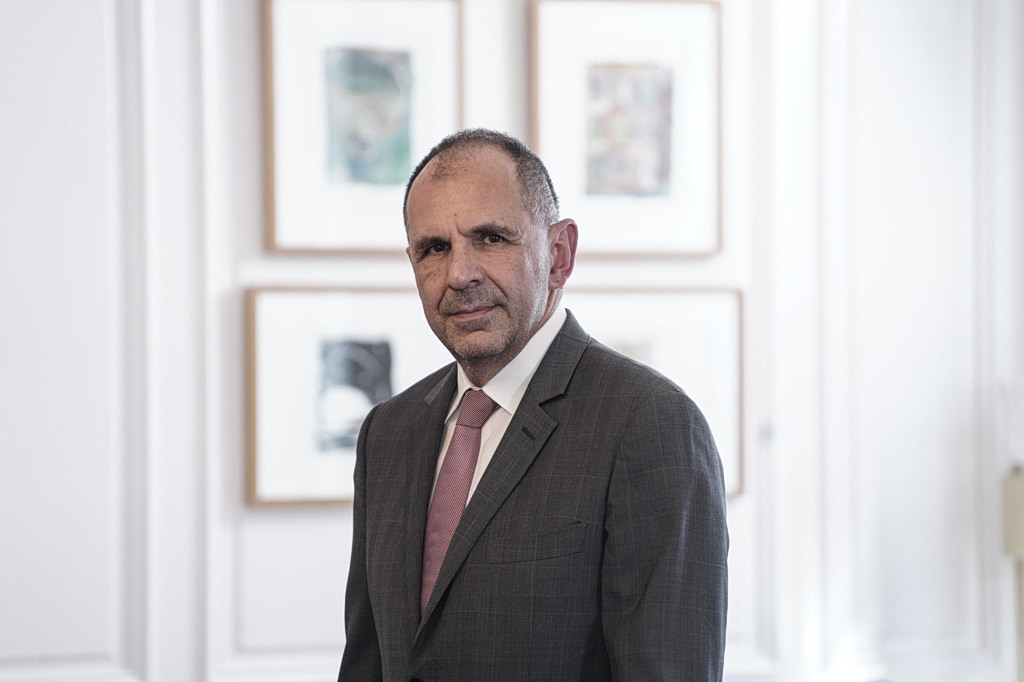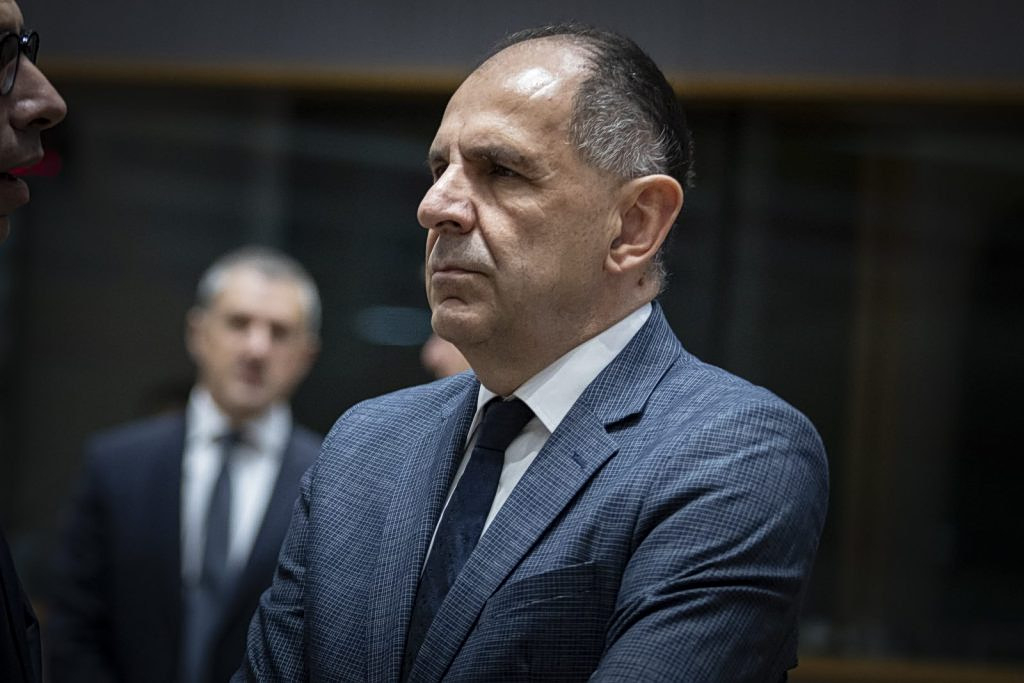
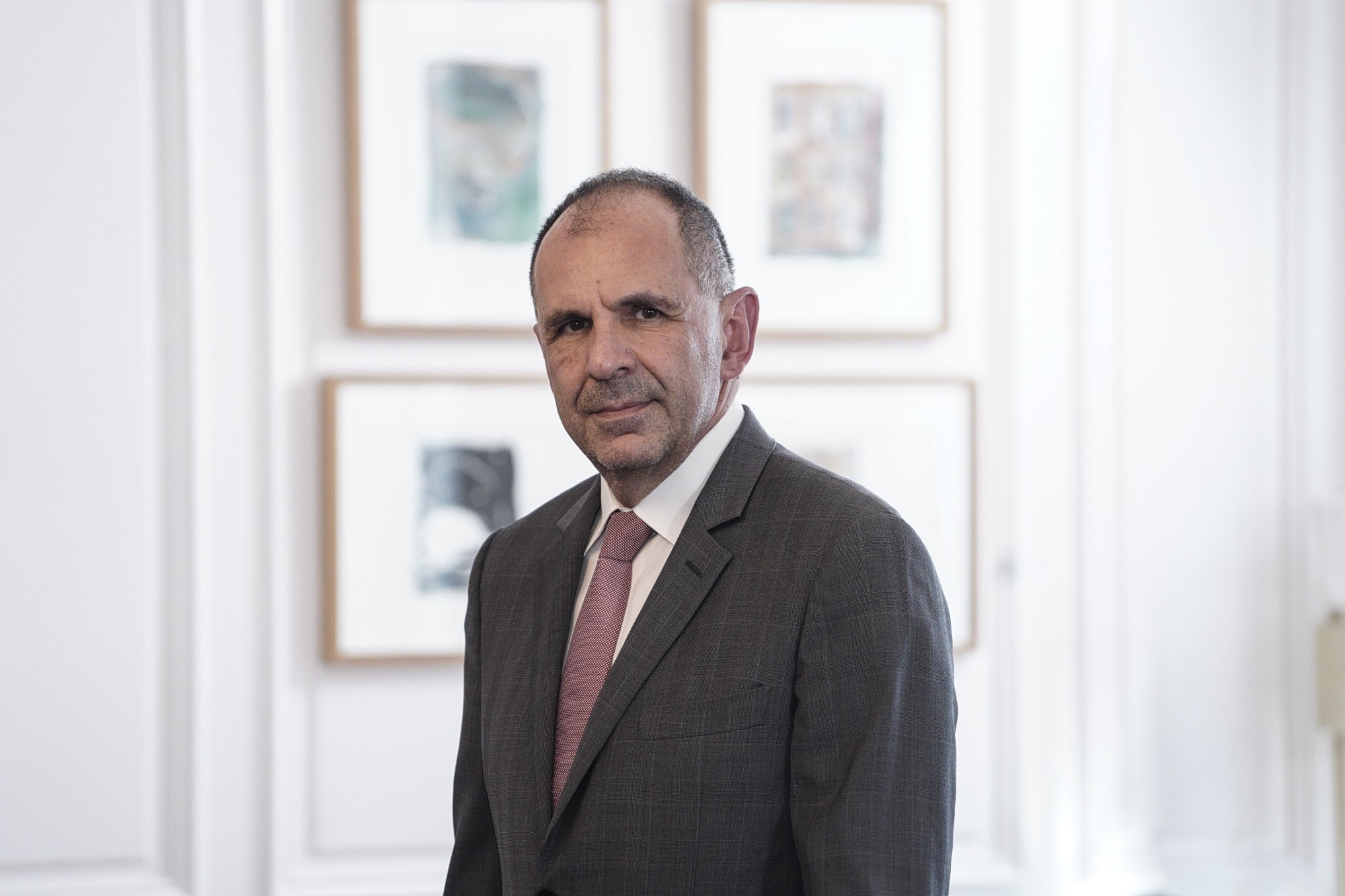
Greece’s foreign minister, George Gerapetritis, began a new round of talks in Libya on Saturday, meeting officials in Benghazi as part of Athens’ ongoing effort to reengage with the country’s rival power centers.
The visit comes eight months after his previous trip to eastern Libya in July 2025 and is part of a broader Greek strategy to maintain diplomatic channels with both sides in the conflict-scarred nation, where power is fragmented and often concentrated outside formal state institutions.
Engaging eastern Libya also means dealing with Khalifa Haftar, the dominant military figure in the country’s east, whose forces control key territory, infrastructure and migration routes despite his lack of a formal national leadership role. Previous attempts by European officials to secure direct access to Haftar have at times been unsuccessful, underscoring the challenges of navigating Libya’s complex political landscape.
Migration Takes Center Stage
Gerapetritis opened his visit with talks with Khalifa Haftar, the dominant military figure in eastern Libya, joined by his sons.
He also met with Khaled Haftar, chief of staff of the Libyan National Army, as part of his broader contacts with eastern Libyan leadership.
According to information from the discussions, both sides found common ground on migration, as Greece has seen increased arrivals from Libya in recent months. Officials in Benghazi signaled a willingness to help curb the flows, despite limited resources on the ground.
Talks focused on improving land border controls and strengthening cooperation on information-sharing, with Greece expected to contribute more actively in this area.
In public remarks following the meetings, Gerapetritis said cooperation on irregular migration is expected to deepen further through the exchange of expertise, as well as support in equipment and infrastructure. He noted that Libya’s geographic position — in a region affected by conflict and instability — makes managing migration flows particularly challenging.
Linking Migration to Infrastructure Support
Migration was also tied to broader infrastructure needs. The two sides agreed to raise the issue with the European Commission, with the aim of securing concrete monitoring and surveillance measures.
The discussion comes ahead of a planned visit by the relevant EU commissioner and three migration ministers, where specific steps are expected to be finalized.
Trade, Investment and Bilateral Relations
Gerapetritis described the overall tone of his meetings with eastern Libyan officials as “very positive,” highlighting growing bilateral ties.
He pointed to expanding trade relations and ongoing Greek investments in eastern Libya, stressing their importance for both sides. “Libya is Greece’s closest country in the Mediterranean,” he said, underscoring the value of strengthening economic cooperation.
The Greek minister also met with senior institutional figures, including the head of the parliamentary committee on foreign affairs and resources, as part of efforts to broaden engagement beyond the military leadership.
Clear Message on Maritime Boundaries
Maritime zones were also among the issues discussed.
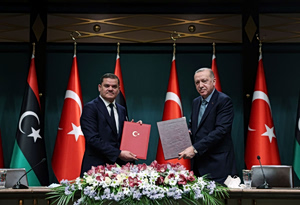
Gerapetritis reiterated Greece’s long-standing position — in line with international law and the Law of the Sea — that the Turkey-Libya memorandum is illegal, and stressed the need to prevent its ratification by Benghazi.
Greece also made clear that it would not want to see any change in eastern Libya’s stance on the memorandum.
At the same time, Gerapetritis said both sides highlighted the importance of reaching an agreement on maritime delimitation between Greece and Libya, particularly regarding the exclusive economic zone and the continental shelf.
Referring to the broader regional context, he added that “based on international law, it is important for neighboring countries — countries that share the Mediterranean — to be able to cooperate.”
He also noted that “especially in extremely difficult times, with wars ongoing in our region and a Middle East that is in turmoil, Greece and Libya must maintain and further strengthen this level of cooperation.”
Greece Highlights Its Diplomatic Role
Greek officials underscored the range of ways Athens can support Libya, including through EU funding tools and its role at the United Nations Security Council.
Greece also positioned itself as a credible intermediary with key international players, including the United States, Egypt and the wider Arab world.
Gerapetritis stressed that Athens would not accept being presented with faits accomplis, warning that any ratification of the disputed agreement would only deepen regional tensions.
He added that, at a time of heightened instability in the wider region and ongoing conflicts in the Middle East, closer cooperation between Greece and Libya is increasingly important.
Greek Presence in Benghazi
Gerapetritis also referred to the reopening of Greece’s consulate general in Benghazi, noting that Greece is one of only two countries maintaining such a diplomatic presence in the city.
He thanked the local Greek community for its role in rebuilding the consulate, making special mention of community leader Kanakis Mandalios for his contribution.
The consulate building was constructed in memory of Mandalios’ children, Filippos and Angela, who were killed in September 2023 in Derna while participating as volunteers in a Greek humanitarian mission following the devastation caused by Storm Daniel.