Greece is moving to radically upgrade how it monitors and secures its vast maritime domain, as the government accelerates plans for a new, state-of-the-art Command and Control system aimed at addressing mounting geopolitical and security pressures in the Aegean Sea and the Eastern Mediterranean.
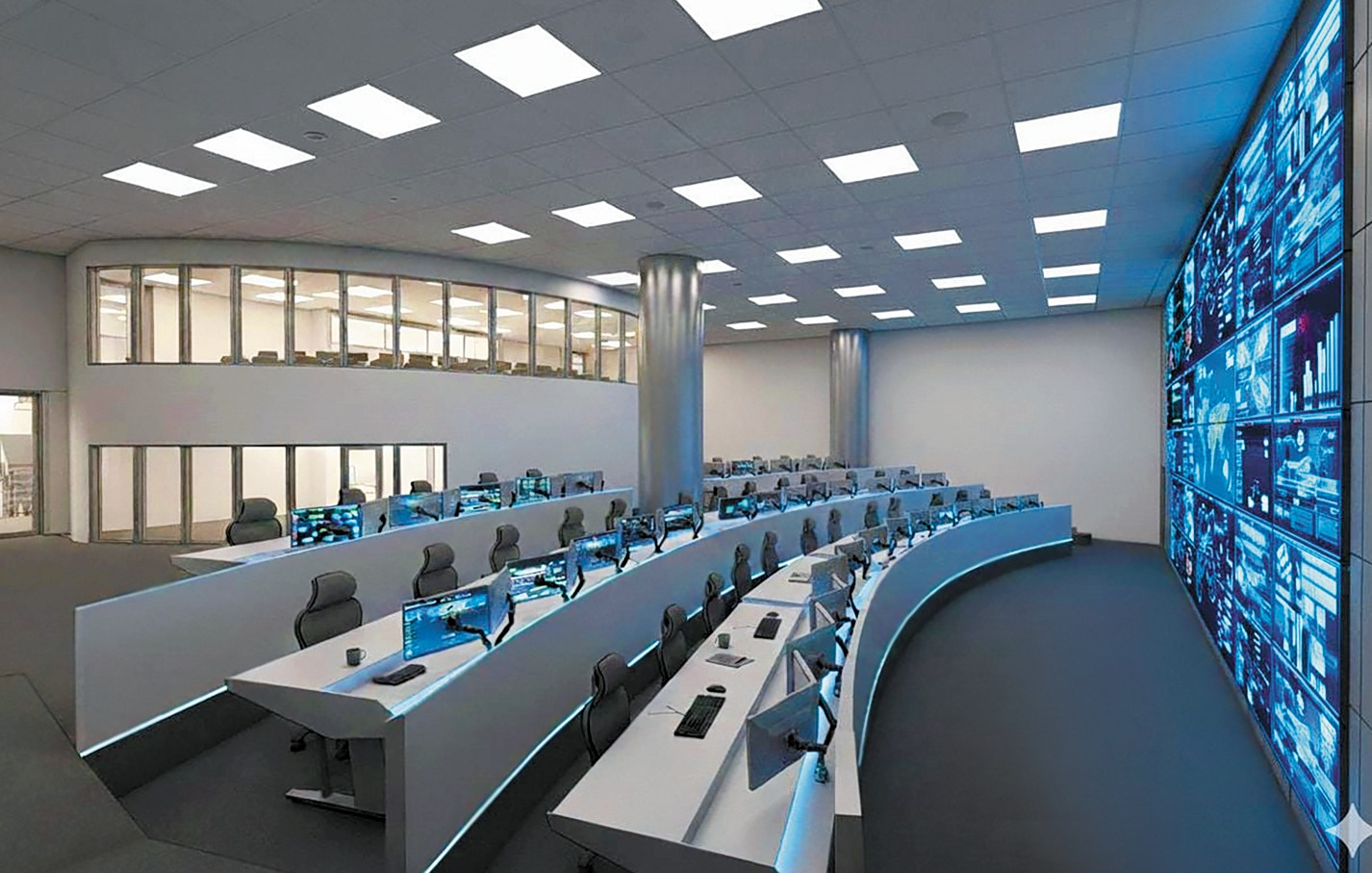
At the heart of the initiative is the creation of an ultra-modern Operations Center for the Hellenic Coast Guard, to be housed on Akti Vasileiadi in Piraeus, Greece’s main port. From this hub, officers will receive, assess, and act on real-time data streaming in from across Greek—and, in some cases, international—waters, enabling continuous live surveillance of their entire area of responsibility.
The project is being driven by the Ministry of Maritime Affairs and Insular Policy and is described by senior officials as a structural reform rather than a routine upgrade.
One Platform, All the Data
According to reporting by To Vima, one of Greece’s leading newspapers, the primary goal is to create a single, unified digital platform that integrates information currently scattered across multiple systems and agencies.
This fragmentation, officials say, has long undermined effectiveness. The new system aims to deliver a coherent, real-time operational picture covering a wide spectrum of missions: saving lives at sea, combating organized crime and illegal fishing, managing irregular migration, and coordinating search-and-rescue (SAR) operations.
SAR incidents carry particular geopolitical weight in Greek waters. Turkey’s coast guard has long been involved in such cases, and Ankara has repeatedly used them to raise—indirectly but pointedly—questions of sovereignty and maritime jurisdiction in the Aegean and the Eastern Mediterranean.
A senior source with direct knowledge of the project told To Vima that the Coast Guard’s expanding responsibilities can no longer be supported by existing structures.
“The Coast Guard is expected to patrol future marine protected areas, maintain constant surveillance to deter migration flows, oversee ferry traffic, and soon protect offshore drilling projects in the Ionian Sea, south of the Peloponnese, and west and south of Crete—as well as critical electricity interconnection infrastructure,” the source said.
Greece’s marine parks, which are expected to receive formal approval from the country’s top administrative court, the Council of State, in 2026, add another layer of operational complexity.
A National—Not Governmental—Project
Officials acknowledge that the current operations room of the Merchant Marine is no longer sufficient. The new Coast Guard Operations Center will also function as a hub linking the service with the Greek Armed Forces, Civil Protection authorities, the Ministry for Citizen Protection, and international partners such as Frontex, the EU’s border and coast guard agency.
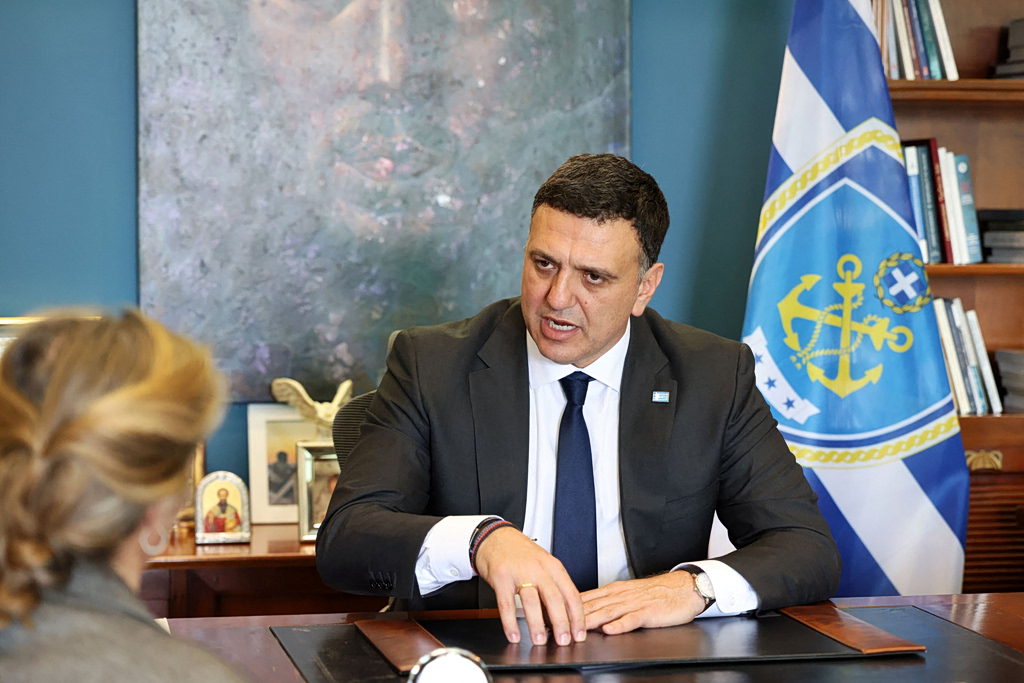
Maritime Affairs Minister Vassilis Kikilias plans to launch the tender for the project in mid-January. The goal is to select a contractor by spring, with the system fully operational before the end of 2026. Part of the funding will come from the EU’s Recovery and Resilience Facility (RRF).
The plan has already been presented to the Prime Minister’s Office. Prime Minister Kyriakos Mitsotakis has emphasized that the initiative constitutes a national duty rather than a partisan one.
Mr. Kikilias has also highlighted the importance of the “AEGIS II” defense and security procurement program, which includes advanced technologies such as artificial intelligence and new offshore patrol vessels for the Coast Guard. These assets will be coordinated centrally through the new Operations Center.
“This is how we will give the men and women of the Coast Guard the most powerful, cutting-edge tools to do their job with professionalism and responsibility,” Kikilias said. “It is how we will meet the challenges of a new era—policing our seas, marine parks, Exclusive Economic Zone, drilling sites, fisheries, and our maritime natural wealth.”
Migration Pressure from the South
Among the daily security challenges facing the Coast Guard, irregular migration has taken on new urgency. What officials now call the “southern corridor” has largely replaced routes from Turkey’s western coast.
In December alone, more than 3,000 people arrived on southern Crete from Libya—a surge of over 400% compared with 2024.
The wider regional picture is equally alarming. Egypt currently hosts more than five million migrants, while conditions in Sub-Saharan Africa—particularly Sudan, due to civil war, and Somalia, amid worsening climate impacts—continue to deteriorate. Greek officials warn that the migration issue risks becoming a ticking time bomb not only for Greece but for Europe as a whole.
New long-range offshore patrol vessels—known as “80-meter-class” ships—are expected to be deployed south of Crete. These vessels, along with other assets in the area, will remain in constant communication with the Operations Center, which will oversee maritime activity as far as the Libyan coast, enabling faster and more effective responses.
Satellites, Google, and the Sea
As To Vima revealed last September, Greece has also turned to cutting-edge satellite surveillance to strengthen maritime monitoring—particularly within its newly designated marine protected areas in the Ionian Sea and the southern Cyclades.
Athens has signed a Memorandum of Understanding between the Ministries of Environment, Agriculture, and Maritime Affairs and Global Fishing Watch (GFW), an organization affiliated with Google that uses satellite data to monitor global fishing activity.
The collaboration aims to ensure safety and legality within marine parks, with a particular focus on combating illegal fishing and environmental violations. GFW’s satellite network will operate alongside the Coast Guard’s existing Vessel Monitoring System (VMS), delivering a far larger and more precise stream of data.
Through this system, Greek authorities will have a comprehensive picture of fishing vessels operating within protected zones, including sensitive areas such as the Kinaros–Levitha island complex east of Amorgos.
These islands are claimed by Turkey under its controversial “grey zones” theory, which questions Greek sovereignty over certain Aegean islets. Incidents involving Turkish fishing boats entering Greek territorial waters are seen as potential flashpoints. Greek officials believe that enhanced surveillance will act as a deterrent by eliminating ambiguity and documenting violations in real time.
According to officials familiar with Turkish fishing patterns, once Google’s satellite monitoring is fully integrated, the Coast Guard will possess detailed records not only of illegal fishing activity but also of movements by the Turkish coast guard itself.
Training for a New Era
The Ministry of Maritime Affairs is already moving ahead with training. With funding from the A. C. Laskaridis Foundation, more than 100 Coast Guard officers are being trained to use GFW’s digital monitoring tools, which will be embedded within the Operations Center.
Completion of this training is a prerequisite for the Center’s launch and for incorporating satellite data into the new Command and Control system.
As government sources put it, “Greece must—and will—be able to fully safeguard its seas. It is a maritime nation, an emerging energy hub, and home to the world’s largest commercial shipping fleet.”