Greece is moving ahead with a major upgrade of its defense infrastructure and operational capabilities in the strategically important Dodecanese, including plans for a permanent base for V-BAT unmanned aircraft on Rhodes.
The process for the direct procurement of the materials needed to build fixed infrastructure at Maritsa Airport on Rhodes has already been approved. The facilities will support the permanent deployment, maintenance and operation of a specialized unit of V-BAT unmanned aerial vehicles.
Rhodes is expected to become the second Greek base for military drones after Skyros.
The move comes despite longstanding objections from Turkey, which continues to argue that the islands of the Eastern Aegean should be demilitarized. Athens maintains that it has the right to defend and protect its territory.
Permanent infrastructure for V-BAT drones
Until now, the V-BAT drones have operated mainly from temporary, improvised positions across Rhodes.
Their flexibility has been made possible by their vertical takeoff and landing capability, known as VTOL, which allows them to operate without a conventional runway.
However, the need for extended surveillance missions, real-time intelligence gathering and secure technical support has led to the decision to establish a permanent and fully organized support facility at the historic Maritsa airfield.
The new infrastructure is also intended to reinforce the military’s operational readiness on the island.
Because of the complexity of the project and the wide range of materials required, Greece’s Defense Ministry, referred to as the “Pentagon,” divided the contract among four different local contractors on Rhodes.
The arrangement is intended to speed up the delivery of the required materials and allow construction work to begin immediately.
Athens says dialogue with Turkey does not mean concessions
The decision comes amid renewed tensions in Greek-Turkish relations.
In a Facebook post Monday, Greek Prime Minister Kyriakos Mitsotakis said Greece’s position remained unchanged and that the country was acting in accordance with international law.
“Our position is clear and does not change: Greece acts on the basis of international law, exercises its rights and will not allow threats or illegal claims to determine its decisions,” Mitsotakis said.
He added that Greece continued to seek dialogue and good-neighborly relations with Turkey, but stressed: “Dialogue does not mean retreat.”
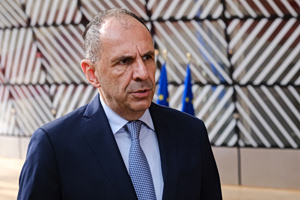
Foreign Minister George Gerapetritis also described the government’s approach in an interview with To Vima newspaper, saying Greece was preparing for all scenarios.
“Greece will continue to build its foreign policy in our region, not only toward Turkey but toward everyone, on the basis of international law and good-neighborly relations,” Gerapetritis said.
He added that Greece would pursue an active foreign policy while making no concessions on what it considers its national rights.
“The Greece of passive diplomatic inaction is definitively over,” he said.
Source: Ta Nea Print Edition