 Μake us preferred on Google
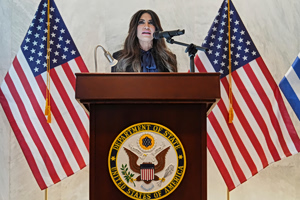
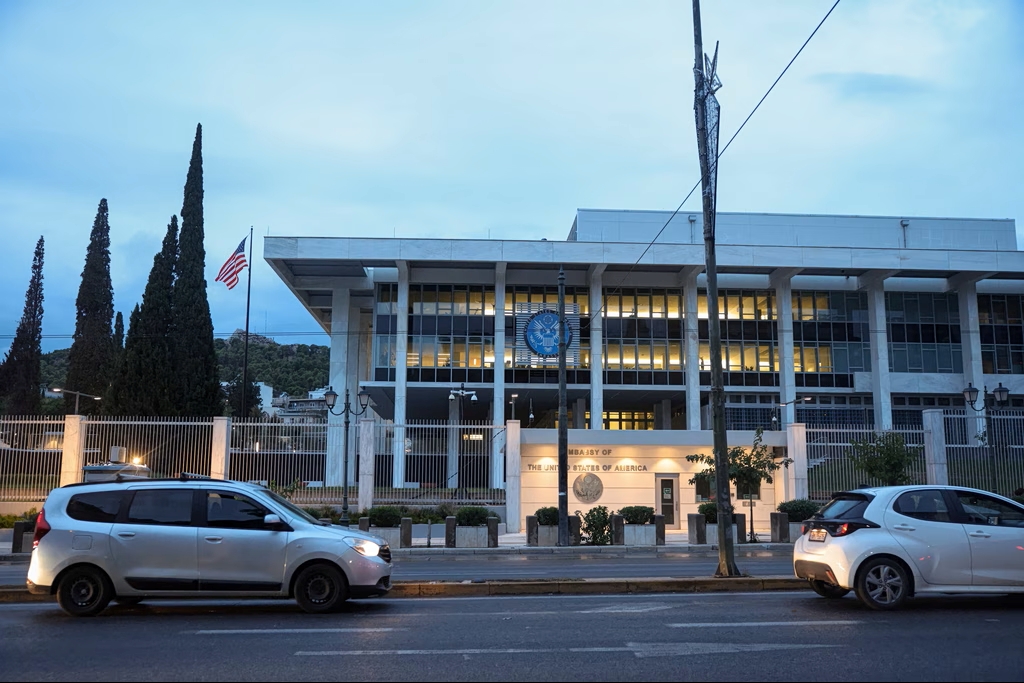
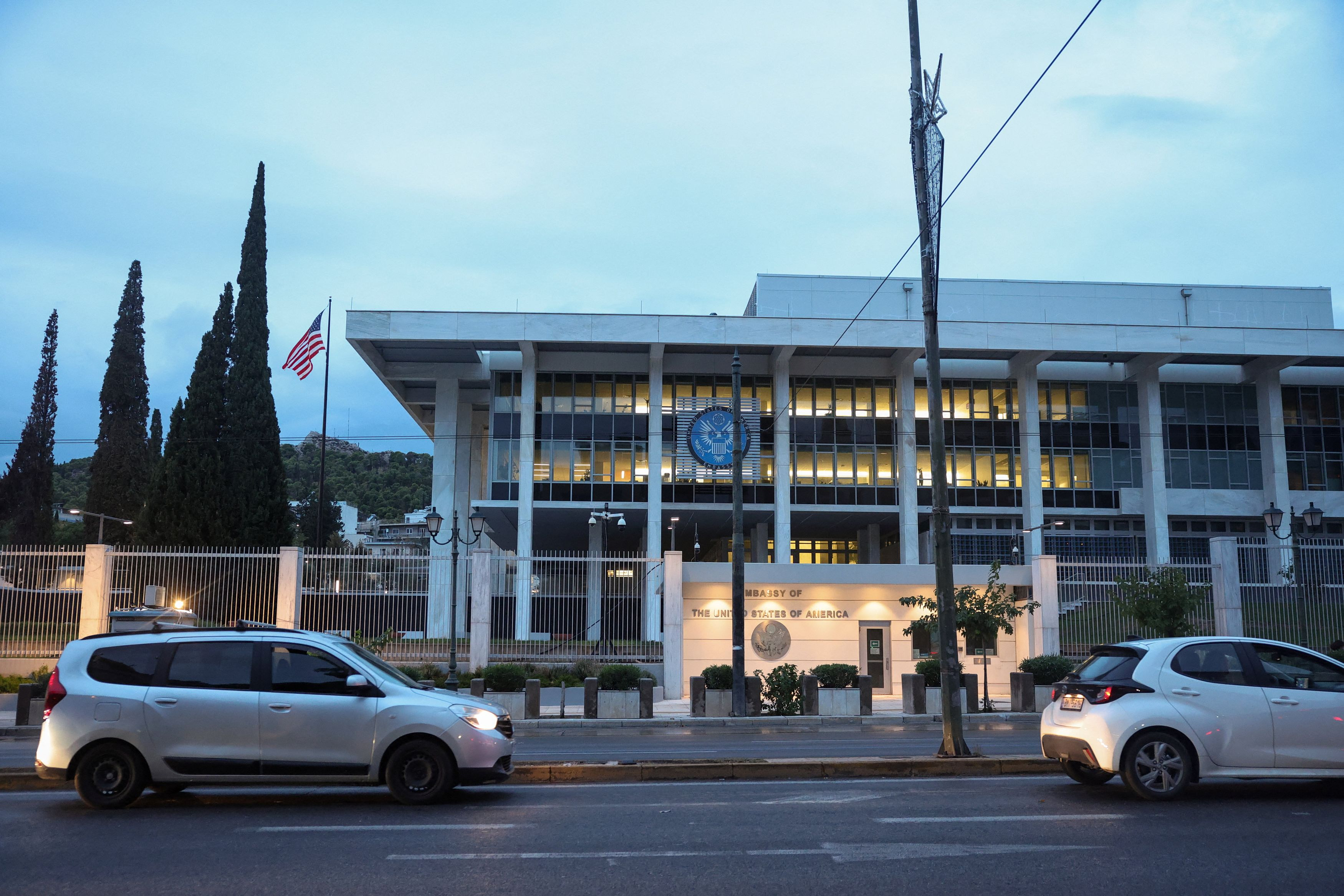
 Kimberly Guilfoyle’s departure leaves the U.S. Embassy in Athens without an ambassador, setting in motion a lengthy process in Washington to choose her permanent successor.
Until that happens, however, the embassy will continue operating under its second-ranking official.
Deputy Chief of Mission Josh Huck will immediately take over as chargé d’affaires ad interim, with the embassy formally notifying Greece’s Foreign Ministry of the change. He will remain in charge until a new U.S. ambassador is appointed.
Huck is a career diplomat who has previously served as deputy assistant secretary of state responsible for Southern Europe and the Caucasus and as director of the Office of Southern European Affairs, covering Greece, Cyprus, Malta and Turkey.
His overseas postings have included Shanghai, Tokyo, Sofia, Rangoon, Taipei and Hong Kong, and he speaks Chinese, Japanese, Burmese and Bulgarian.
But while Huck will run the embassy in the interim, the decision over who ultimately succeeds Guilfoyle belongs to the White House.
How the next ambassador will be chosen
The first stage begins with the White House Presidential Personnel Office and the State Department drawing up a list of potential candidates.
Prospective nominees then undergo extensive background checks involving not only the White House and State Department but also the FBI, the Internal Revenue Service and the Office of Government Ethics.
The eventual choice does not have to be a career diplomat.
The last career diplomat to serve as U.S. ambassador to Greece was Geoffrey Pyatt, who held the post from 2016 to 2022. His successor, George Tsunis, was a businessman.
Once the White House settles on a candidate, the name is communicated to Greece and the Greek government is formally asked to consent to the appointment, as provided for under the Vienna Convention on Diplomatic Relations.
That step is followed by a process in Washington that can prove considerably more consequential: Senate confirmation.
The Senate has the final say
Under the U.S. Constitution, the president submits the nomination to the Senate.
The Senate Foreign Relations Committee first examines the nominee’s background and then holds a public confirmation hearing. Committee members subsequently vote on whether to recommend the nomination to the full Senate.
The full Senate then votes on confirmation, which requires a simple majority.
If confirmed, the president formally commissions the new head of the diplomatic mission, followed by a swearing-in ceremony at the State Department.
The final step comes after the ambassador arrives in Greece. The new envoy presents diplomatic credentials to the president of the Hellenic Republic before formally assuming the full duties of the post.
How long could the process take?
Under ideal circumstances, the entire process takes between four and eight months.
This time, however, November’s U.S. midterm elections could complicate the timetable.
Thirty-five Senate seats are up for election. Republicans currently hold a 53-47 majority, and 22 of the seats being contested are held by Republicans.
With U.S. Vice President JD Vance serving as president of the Senate, Democrats would need to retain the 13 seats they are defending and win four of the 22 Republican-held seats to reach 51 and take control of the chamber.
If Democrats win the Senate, they could use delaying tactics against measures the White House wants to move through the chamber, including the confirmation of a new ambassador.
In theory, that gives the White House a window to complete the process before Jan. 3, when the new Congress is sworn in. In practice, the timetable would be extremely tight.
Even on an accelerated schedule, the initial selection stage cannot take less than a month because of the required background checks and the number of agencies involved. Even the administrative step of formally communicating the nominee’s name to Greek authorities — a routine procedure that has not encountered problems from Athens — requires at least two weeks.
The political calendar presents another obstacle. Senators are currently focused heavily on campaigning rather than their legislative duties.
If Democrats succeed in flipping the Senate, the period between the election and the Christmas recess is also expected to be crowded with legislation Republicans would seek to pass before relinquishing control. Confirmation hearings and votes for ambassadorial nominees may therefore struggle for space on the agenda.
There are currently 93 vacant ambassadorial posts out of a total of 196.
That means Huck could remain at the helm of the U.S. Embassy in Athens for several more months while Washington works through the process of selecting and confirming Guilfoyle’s successor.