 Μake us preferred on Google
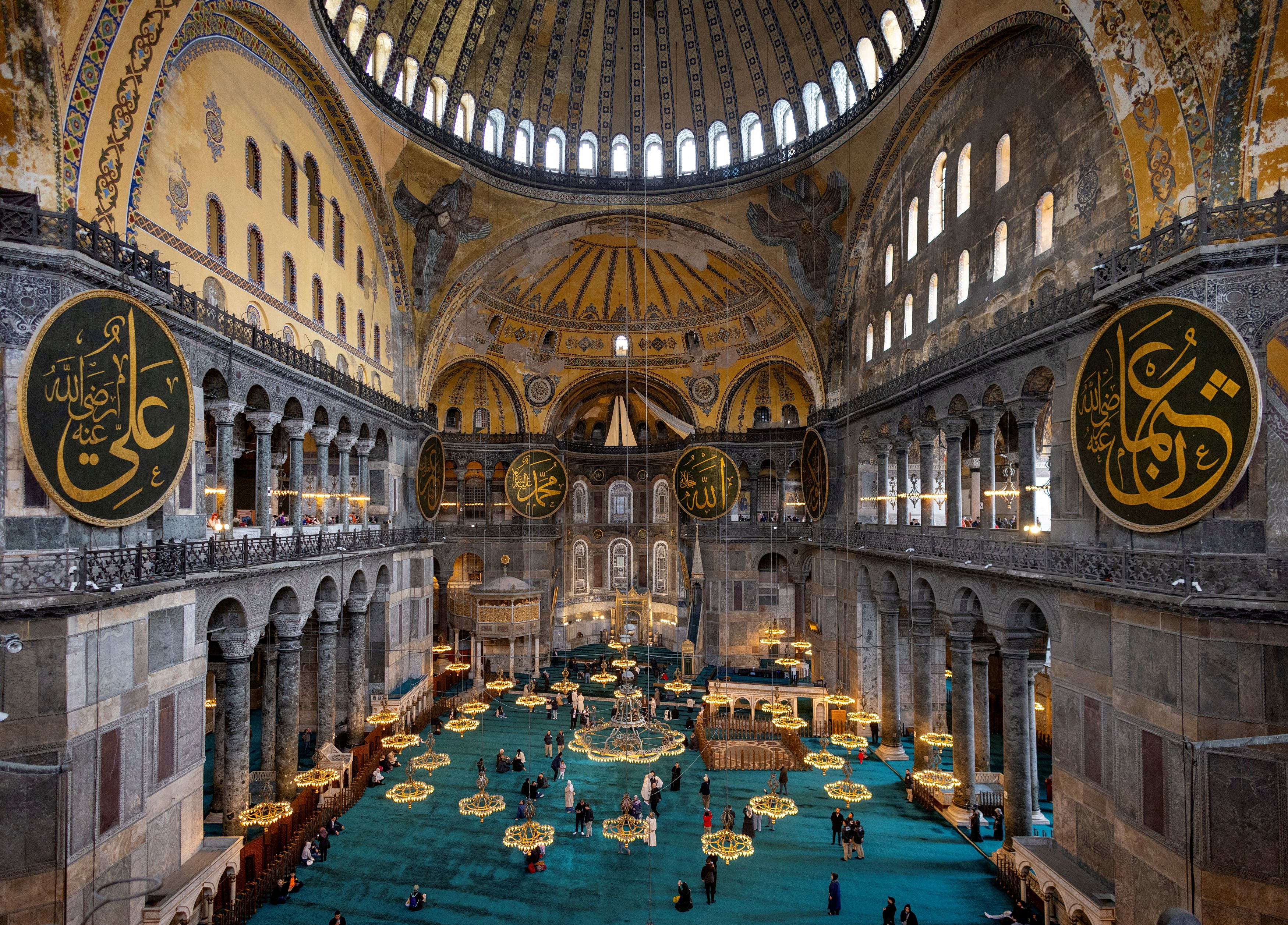
 For nearly a millennium, Hagia Sophia stood as one of the defining monuments of the Christian world, its vast dome seemingly suspended between heaven and earth. Today, its conversion back into an active mosque, restrictions on non-Muslim visitors and concerns over restoration work have renewed questions about the future of one of Istanbul’s most significant historic landmarks.
Following the Ottoman conquest of Constantinople, Hagia Sophia served as a mosque until 1934, when Mustafa Kemal Atatürk converted it into a museum, affirming its layered, universal identity. In 2020, the Turkish government returned the monument to active religious use, a decision that drew international criticism and raised concerns about Turkey’s commitments under the 1985 UNESCO World Heritage listing of Istanbul’s historic areas.
More recently, the transfer of the monument’s administration from Turkey’s Ministry of Culture to the country’s Directorate of Religious Affairs, restrictions affecting non-Muslim visitors and Ankara’s reluctance to consult relevant international bodies have intensified concerns in Greece and the wider international community.
Restoration work raises questions about transparency
Large-scale restoration projects at Hagia Sophia have prompted concerns about whether the work adequately respects the monument’s different historical and cultural layers.
Eleni Methodiou, an archaeologist and former vice president of UNESCO’s World Heritage Committee, told To BHMA that extensive restoration work has been underway for several years, but it remains unclear whether the studies guiding the interventions have respected the monument’s historical and cultural phases and followed the relevant conservation and restoration standards.
Methodiou cited the 2003 International Council on Monuments and Sites (ICOMOS) Charter, which states that interventions on historic monuments should be kept to the minimum necessary. She also emphasized that the compatibility of new materials with existing ones must be fully established to prevent undesirable long-term effects and minimize damage to a monument’s heritage values.
She also referred to the 2013 Burra Charter, issued by ICOMOS Australia, which states that conservation should consider all aspects of a place’s cultural significance without unjustifiably emphasizing one value at the expense of others.
These concerns informed a recommendation made by a joint UNESCO/ICOMOS mission to Istanbul in 2024: the extensive data collected about Hagia Sophia, including its digitized documentation, should be made freely accessible to experts and researchers.
Separate entrances and restricted access
Since January 2024, Turkey has operated a visitor system that effectively divides Hagia Sophia into two areas.
Muslim worshippers can enter the ground floor free of charge to pray. Foreign non-Muslim visitors, meanwhile, are directed to the upper gallery through a separate entrance described as resembling a garage door. Admission costs 25 euros.
Visitors using this route cannot access the main prayer hall or view certain mosaics, including the celebrated Virgin Mary mosaic known as the Platytera. These mosaics remain covered by fabric screens even outside prayer hours.
The arrangement has drawn criticism from heritage experts who argue that dividing visitors according to nationality and religion undermines the monument’s universal character.
Stephan Doempke, chief executive of World Heritage Watch, an independent international organization, told To BHMA that the system violates UNESCO principles by restricting interaction and dialogue among visitors.
He said Turkey had introduced the plan without consulting the parties involved and argued that it should be changed to allow everyone access to the entire monument, without discrimination.
“UNESCO must listen to experts, not politicians. World heritage is not a political bargaining chip,” Doempke said, also criticizing the reluctance of some countries to comply with international rules.
Concerns over physical damage and humidity
Questions have also been raised about the physical impact of restoration work and the daily influx of worshippers and tourists.
Media reports have documented damage to the Imperial Gate and marble floors, allegedly caused by crane trucks operating inside the monument. Experts have also warned about the possibility of moisture becoming trapped beneath the carpet covering the ground floor and behind fabric screens.
The concern is that the breath of thousands of worshippers gathered in the prayer area could contribute to moisture accumulation, potentially affecting sensitive historic materials.
“What we can see publicly is very worrying,” Doempke said. “It is particularly difficult to believe that the carpets on the floor are not causing damage to the monument.”
Ibrahim Canbulat, a prominent Turkish architect specializing in building restoration and a member of World Heritage Watch, also warned about the potential consequences of large crowds.
He said heavy visitor flows could contribute to fluctuations in the building’s internal microclimate, particularly in humidity and temperature. Continuous monitoring is therefore important to protect sensitive historic materials, including mosaics and plasterwork, he said.
Canbulat also noted that Hagia Sophia’s conversion into a mosque has acquired considerable political and symbolic significance in public debate, both in Turkey and internationally.
Experts question consistency with UNESCO listing
Methodiou argued that the monument’s current status raises questions about the rationale behind its inclusion on the UNESCO World Heritage List.
She noted that cathedrals, Orthodox churches, mosques and Buddhist temples that remain in religious use have all been listed as World Heritage sites under comparable criteria.
Hagia Sophia and the Chora Monastery, another major Byzantine monument in Istanbul, were included in the 1985 listing of the city’s historic areas as Byzantine monuments functioning as museums.
Their subsequent designation and use as mosques, Methodiou argued, are inconsistent with the stated rationale and criteria for their inclusion on the list and with the spirit of the World Heritage Convention.
She added that the international scientific community considers the issue unresolved and in need of further examination.
UNESCO to revisit Hagia Sophia’s status
The issue is expected to remain under international scrutiny. A new UNESCO/ICOMOS mission to Istanbul is scheduled for 2026, while the UNESCO World Heritage Committee is due to reconsider the matter at its next annual session, which will be held in Istanbul in 2027.
The upcoming reviews will provide another opportunity to examine the monument’s management, restoration practices and treatment of its cultural heritage values.