 Μake us preferred on Google
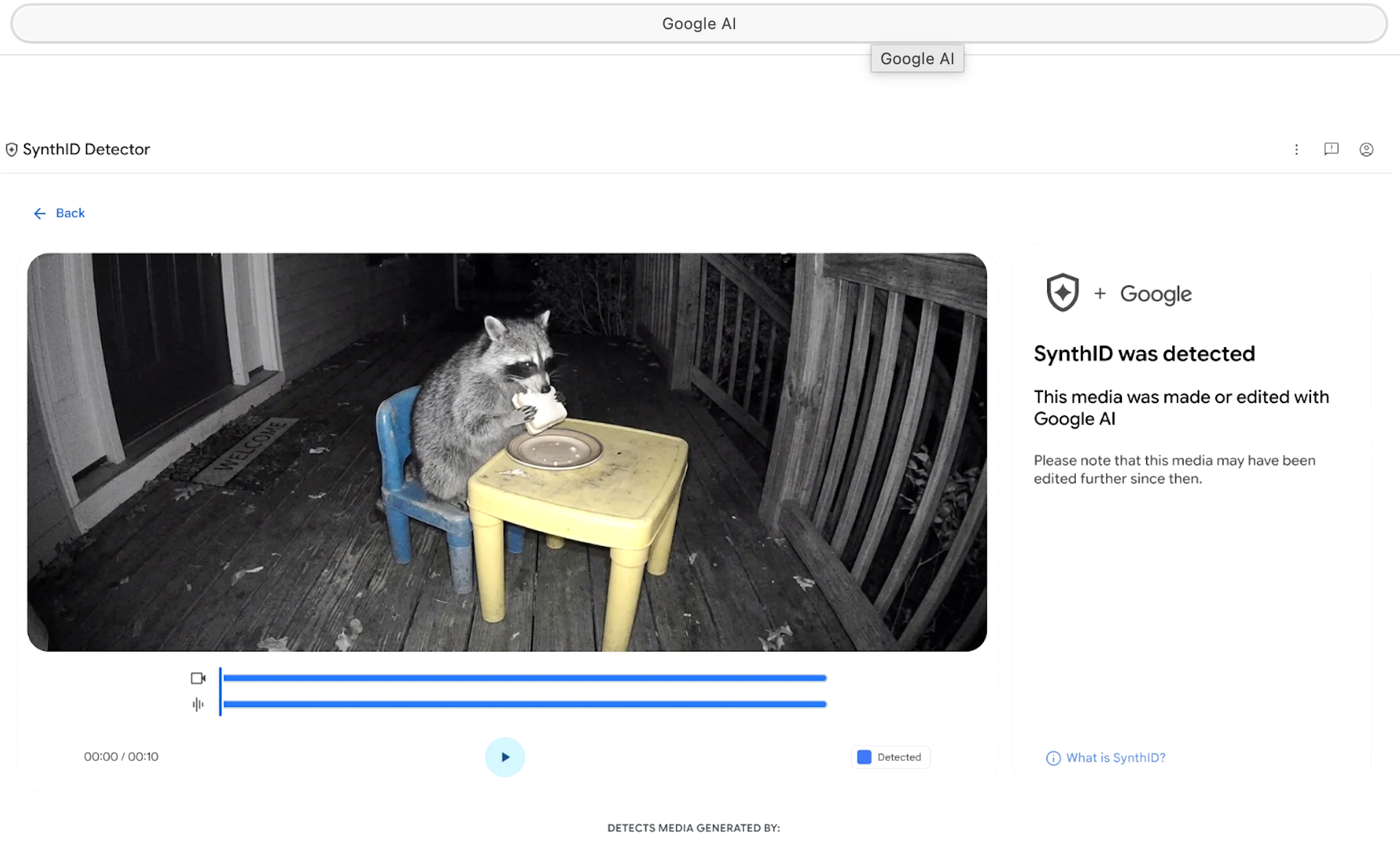
 As part of ongoing efforts to help people identify AI-generated content and make more informed decisions about what they see and hear online, Google announced that it had made its SynthID Detector tool available to users worldwide.
Initially launched in 2023, SynthID uses imperceptible digital watermarks to identify content generated or modified using supported artificial intelligence tools. The detector was later upgraded to help media professionals verify AI-generated material. It is now accessible to a wider audience.
Available in English, the tool allows users to upload images, videos and audio files to check for AI watermarks associated with Google’s AI systems and those of partner companies, including OpenAI, NVIDIA and Kakao. Support for Apple is also expected, according to the announcement. Technical expertise is not required.
Google says its SynthID technology has watermarked more than 180 billion images and videos as well as audio content equivalent to 240,000 years. The system embeds digital markers that are designed to remain detectable even when content undergoes certain modifications. Users can access the detector through a Google account, with the service also supporting sign-in through Apple and OpenAI accounts.
Meanwhile, in relevant news, a study released this week by PwC Greece suggests that employees are adapting rapidly to artificial intelligence in the workplace, while businesses are struggling to keep pace with their changing needs.
The findings indicate that employees are increasingly using AI and expressing confidence in their ability to develop new skills. However, access to training and professional development opportunities remains limited, while the benefits of AI adoption are not being distributed evenly.
Kyriakos Andreou, Partner and Senior Advisor for Strategy & Markets at PwC, said employees in Greece were adapting quickly to AI, in many cases faster than their employers. He added that although workers were increasingly embracing AI and believed they could acquire new skills, opportunities for training and professional development remained insufficient.
“Businesses need to keep pace with their employees’ efforts by providing them with the tools and opportunities to grow; otherwise, the risk of creating a two-speed workforce increases,” he said.