Turkey’s designation of two new “national marine parks” in the Aegean and eastern Mediterranean has triggered a fresh dispute with Greece, with Athens rejecting the move as unlawful and saying it cannot alter Greek sovereign rights.
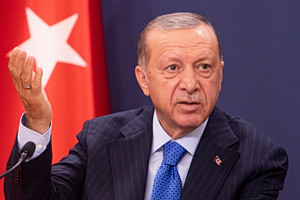
The parks were established through presidential decrees signed by Turkish President Recep Tayyip Erdoğan. One covers an area between the Greek islands of Samothrace and Lemnos, while the other lies between Rhodes and Kastellorizo.
Greece says the designated areas include not only international waters but also parts of what it considers its continental shelf.
Athens invokes international law
The Greek Foreign Ministry has rejected the Turkish initiative, arguing that the unilateral establishment of marine protected areas outside a country’s national jurisdiction produces no legal effect.
According to the Greek position, Turkey has no right to unilaterally designate international waters as areas under its protection. Athens also maintains that where the proposed parks extend into the Greek continental shelf, the Turkish action cannot affect rights deriving from international law.
The Greek government says the publication of the Turkish decrees creates no fait accompli and does not change the existing status of maritime zones.
Athens considers the choice of the two areas significant. In the northeastern Aegean, Greece says the Turkish delimitation falls within an area it considers part of its potential continental shelf.
Kastellorizo and the “Blue Homeland” strategy
The area between Rhodes and Kastellorizo is particularly sensitive for Greece, which sees the Turkish initiative as directly connected to Ankara’s “Blue Homeland” strategy.
Turkey has long argued that Greek islands should not have maritime rights beyond their territorial waters. Greece, by contrast, maintains that islands have maritime zones, including a continental shelf and an exclusive economic zone, in accordance with the rules of international law.
The dispute therefore gives the new Turkish marine park a geopolitical dimension beyond its stated environmental purpose.
Greece points to its own marine parks
The Greek government has also highlighted what it considers a key difference between the two countries’ initiatives.
Greece has established National Marine Parks in the Ionian and Aegean seas, arguing that they lie exclusively within Greek territorial waters and were created in accordance with the Law of the Sea.
New Democracy spokesperson Alexandra Sdoukou said Turkey’s attempt to designate its own maritime areas beyond its territorial waters does not mean the move produces legal effects.
She said Greece had taken its own measures on the basis of international law and linked Turkey’s reaction to what she described as Greece’s broader diplomatic and energy presence in the region.
Greek opposition parties criticize government
The Turkish move has also prompted reactions from Greece’s opposition parties.
The four European Parliament lawmakers from the Panhellenic Socialist Movement (PASOK) — Giannis Maniatis, Nikos Papandreou, Sakis Arnaoutoglou and Nikolaos Farantouris — submitted a written question to EU foreign policy chief and European Commission Vice President Kaja Kallas.
They described the designation of the two parks as a further escalation of Turkish actions and asked what measures the European Union intends to take to support Greece.
They also cited Turkey’s submission of related maps to UNESCO and other actions that they said challenge Greek sovereign rights in the Aegean and eastern Mediterranean.
The Communist Party of Greece (KKE), meanwhile, accused the government of underestimating the development by arguing that Turkey’s actions do not create a fait accompli.
The left-wing SYRIZA-Progressive Alliance also criticized the government, arguing that Greece lacks a coherent national strategy toward Turkey. Rena Dourou linked the Turkish initiative to the “Blue Homeland” strategy and said the policy of maintaining “calm waters” was insufficient to protect Greek sovereign rights.
The party also referred to the dispute over the planned Greece-Cyprus electricity cable in the area around Kasos as another example of what it considers the need for a clearer Greek strategy.
A new challenge for Greek-Turkish relations
The designation of the two marine parks adds another point of tension to Greek-Turkish relations by connecting environmental protection with longstanding disputes over maritime zones.
Athens has chosen to respond primarily by invoking international law, insisting that no unilateral Turkish action changes Greece’s rights. The dispute now also raises questions about the response of the European Union to a move involving the Aegean, the eastern Mediterranean and areas Greece considers part of its continental shelf.