 Μake us preferred on Google
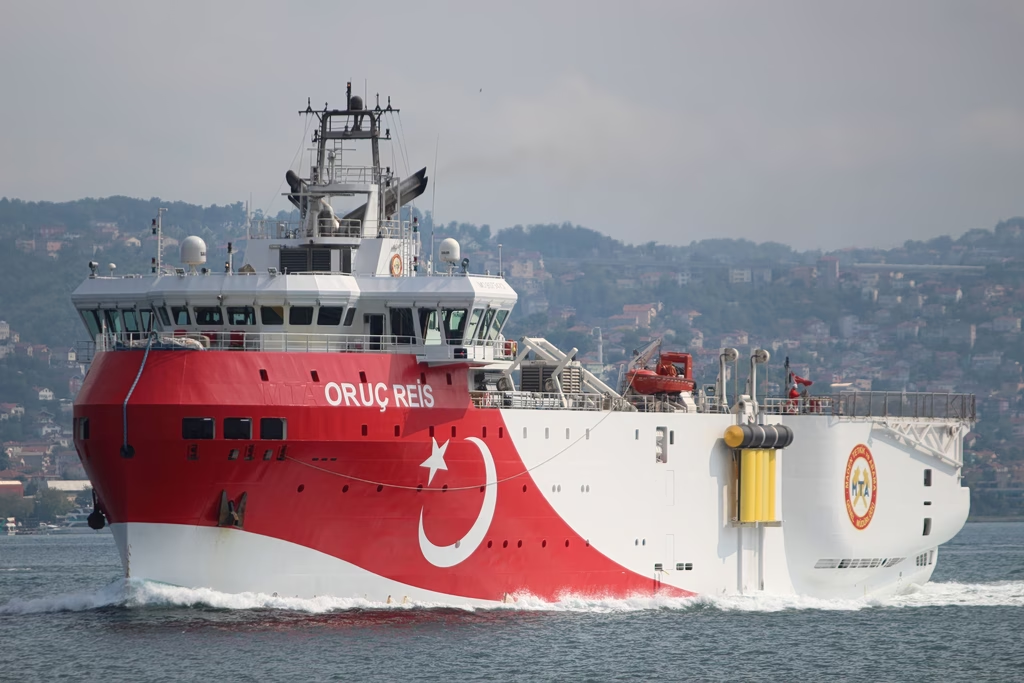
 Turkey has issued a new maritime navigation notice (Navtex) authorizing the research vessel Oruc Reis to conduct seismic surveys in the Eastern Mediterranean until August 30, as part of preparations for a planned natural gas pipeline connecting Turkey with the Turkish-controlled northern part of Cyprus.
The Navtex covers maritime areas where surveys will be carried out along the planned route of the 101-kilometer pipeline, which is expected to include both offshore and onshore sections.
Pipeline project follows Turkey-Northern Cyprus agreement
The surveys follow a memorandum of understanding signed on July 10 between Turkey and the self-declared “Turkish Republic of Northern Cyprus” (TRNC), under which technical studies and preparations for the pipeline project were launched.
According to Turkish statements cited in local media, the pipeline is designed to transport natural gas to Cyprus and could eventually serve as part of a wider energy corridor connecting Eastern Mediterranean resources to Turkey and, potentially, Europe.
NEWSLETTER TABLE TALK
Never miss a story.
Subscribe now.
The most important news & topics every week in your inbox.
Turkey’s Energy and Natural Resources Minister Alparslan Bayraktar said the planned system would consist of a 101-kilometer transmission line, including a 97-kilometer subsea section and a 4-kilometer land section. The pipeline would connect Anamur on Turkey’s Mediterranean coast with Teknecik, east of Kyrenia in northern Cyprus.
Energy security cited as key goal
Turkish media reported that the project aims to strengthen energy security in the Turkish-controlled part of Cyprus by replacing liquid fuels currently used for electricity generation with natural gas.
The project has also been presented as a possible future route for transporting natural gas from the Eastern Mediterranean or other regional sources toward European markets through Turkey.
Eastern Mediterranean remains a sensitive area
The announcement comes amid longstanding tensions over maritime rights and energy exploration in the Eastern Mediterranean.
In 2020, a series of competing Navtex announcements by Greece and Turkey over areas of the region led to a sharp escalation in bilateral tensions. At the time, Greece issued a maritime notice east of Crete, while Turkey responded with a counter-notice, arguing that the area included part of its continental shelf.
Turkey later continued issuing navigation notices linked to seismic exploration activities carried out by the Oruc Reis in the region.