 Μake us preferred on Google
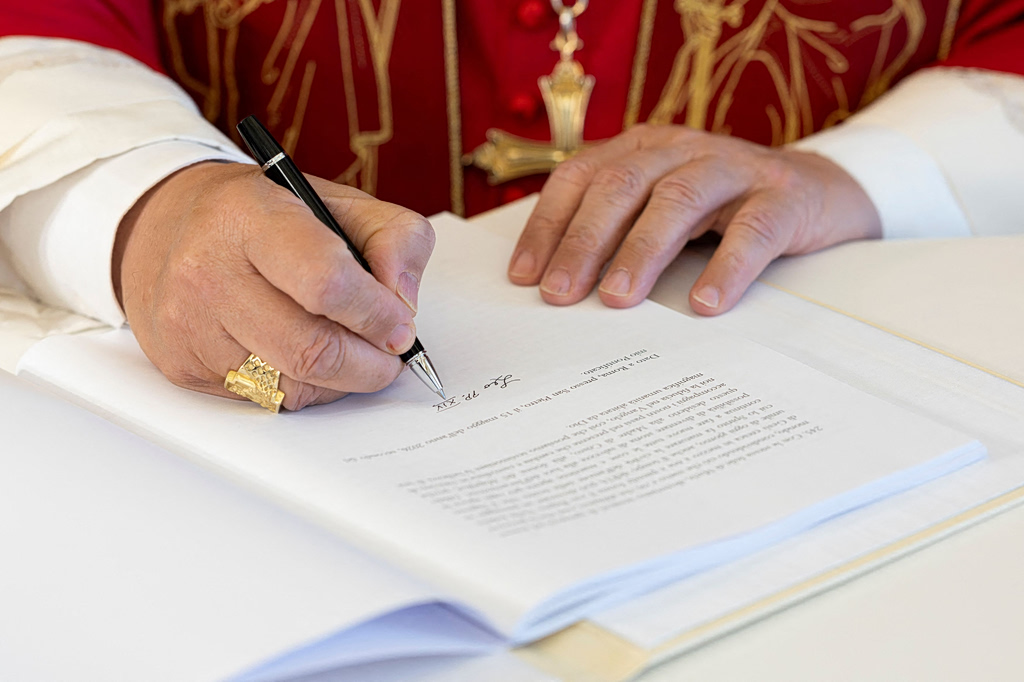
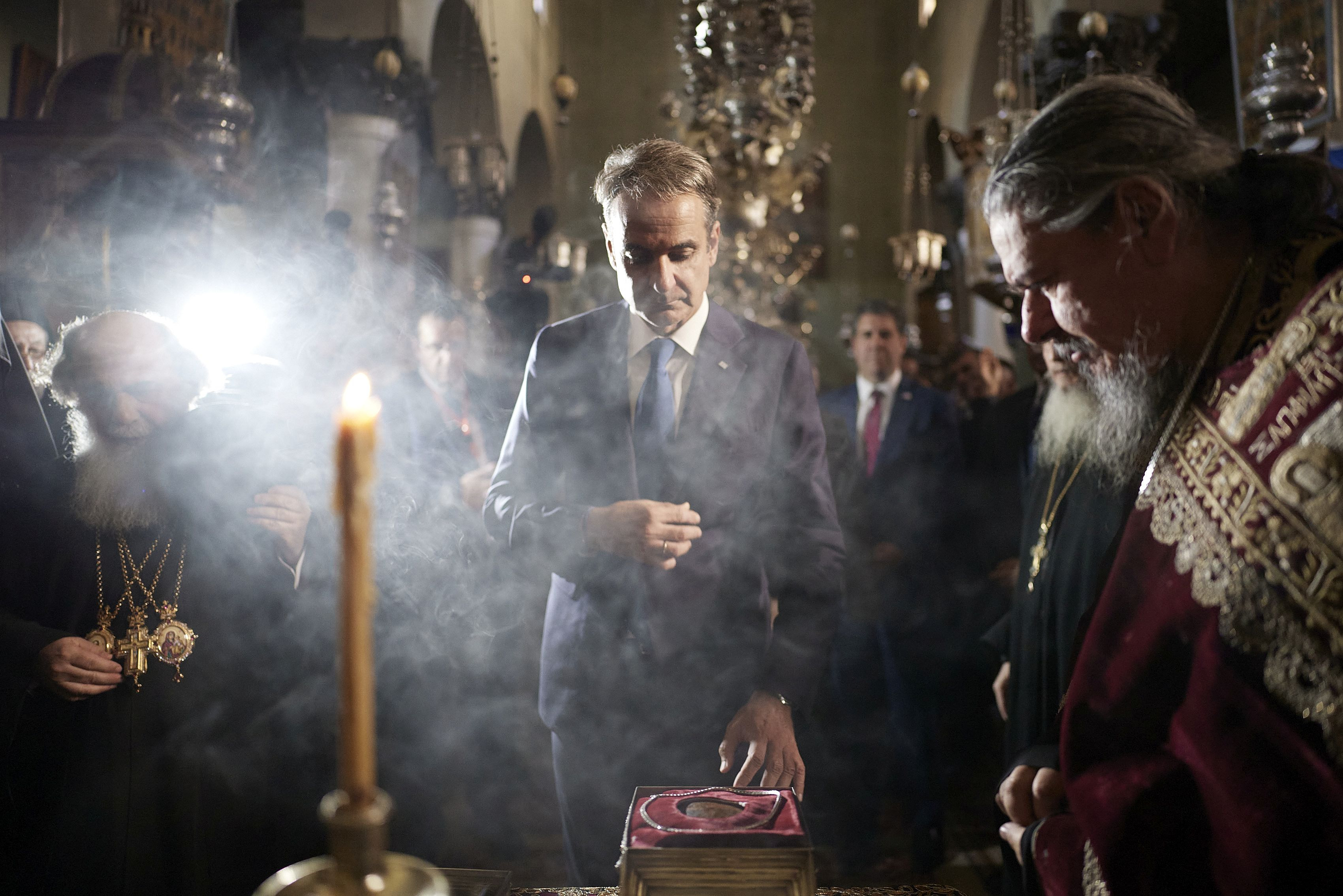
 The Greek government is moving to raise the salaries of the country’s most senior Orthodox clergy by as much as 95 percent, a change that would nearly double the pay of metropolitans and lift more than 100 hierarchs at the top of the Church of Greece into the upper tier of the public payroll.
The measure, contained in Article 56 of an omnibus bill drafted by the Ministry of National Economy and Finance and currently in public consultation, has drawn considerable criticism online. The political opposition, however, has remained silent, with two exceptions: PASOK lawmaker Stefanos Parastatidis and New Left leader Gabriel Sakellaridis.
A Single Salary, Pegged to the Top of the Public Sector
Under the provision, the traditional structure of clerical pay, made up of a basic salary, representation expenses and allowances for postgraduate or doctoral degrees, is abolished. In its place, the archbishop, metropolitans and titular metropolitans will receive a single monthly sum set at 90 percent of the public sector pay ceiling, the level reserved for a ministry’s general secretary.
With that ceiling at 5,191 euros, the new gross monthly salary for all three categories comes to 4,671.90 euros.
Archibishops, among the most senior figure in the Church of Greece, currently earns between 2,840 and 2,915 euros gross per month, depending on whether he receives a postgraduate or doctoral allowance. The new arrangement amounts to a raise of more than 60 percent.
The increase is even steeper for metropolitans, the senior bishops who head the church’s regional dioceses. Their current gross pay ranges from 2,400 to 2,475 euros a month. At 4,671.90 euros, the adjustment approaches 95 percent, an effective doubling of their salary that also erases the pay gap between them and the archbishop. Titular bishops and auxiliary bishops are covered by a separate provision setting their pay at 70 percent of the new figure, or roughly 3,270 euros gross per month.
The bill specifies that no other benefit will be paid on top of these amounts. Article 56 amends Article 145 of Law 4472/2017, which until now defined basic salaries, degree allowances and representation expenses separately.
The Church of Greece counts 81 active metropolitans in addition to the Archbishop of Athens and All Greece, while the official list of its hierarchy also includes eight titular metropolitans and 23 auxiliary bishops. The raises do not extend to ordinary parish priests, who remain on the unified public sector pay scale.
How the Government and the Church Justify the Raises
According to media reports, the change came at the unofficial request of metropolitans. Church sources have described the new system as a rationalization and an “institutional equalization” of senior clerical pay, arguing that the hierarchs’ net earnings were “inconsistent with the standing of the institution they serve.”
The same sources maintain that in many dioceses, metropolitans’ salaries are used to cover diocesan expenses, including utility bills, as well as the needs of struggling parishioners, since collection plate revenue has declined for years and smaller dioceses have minimal income.
Reports have also linked the raises to the pay of the muftis of Thrace, the three state-appointed Muslim religious leaders in northern Greece, who are paid by the Education Ministry at the rank of a director general and earn between 2,500 and 3,000 euros gross per month, slightly above what metropolitans have earned until now. Hierarchs were said to have drawn comparisons with those salaries, although church sources denied this.
‘In a Democracy, Symbolism Matters’
Parastatidis, who represents the northern prefecture of Kilkis, said in a social media post that the government “is now attempting to corrupt the hierarchs by doubling their salaries a few months before the elections,” adding that “the government’s logic is transactional and has nothing to do with supporting people of faith.”
He acknowledged that the fiscal cost is small. “The increase in the hierarchs’ pay is strongly symbolic in character and is obviously not a fiscal matter,” he wrote. “In a democracy, symbolism matters. The government’s decisions send messages about which values come first and which social priorities are recognized.”
“For seven years now,” he added, “we have watched the government support, through a profusion of provisions, not the many who work and struggle to make it through the month, but its chosen few.” He added that he is not against the clergy getting an increase in their salary, but the increase should be on par with what other public and private sector employees get, which is around 50 euros at best per year.
Sakellaridis, who called on the hierarchs to refuse the raises, was equally blunt. “Until now we knew there were golden boys in banks and large companies with state participation, to whom the Mitsotakis government has handed exorbitant raises in recent years. Now we have learned there will also be golden boys in the Church,” he wrote, calling the increases “provocative.”
The government, he said, is pushing them through “so that at the ballot box it will have the ‘Right Hand of the Lord’ on its side,” a play on words in Greek that pairs the biblical phrase with the political right.
If the provision is enacted as drafted, a metropolitan’s gross monthly salary of 4,671.90 euros would exceed the regular pay of a doctor heading a clinic in a public hospital, and even that of a coordinating director who heads a hospital’s entire medical service, before on call compensation is added to the physicians’ pay.