 Μake us preferred on Google
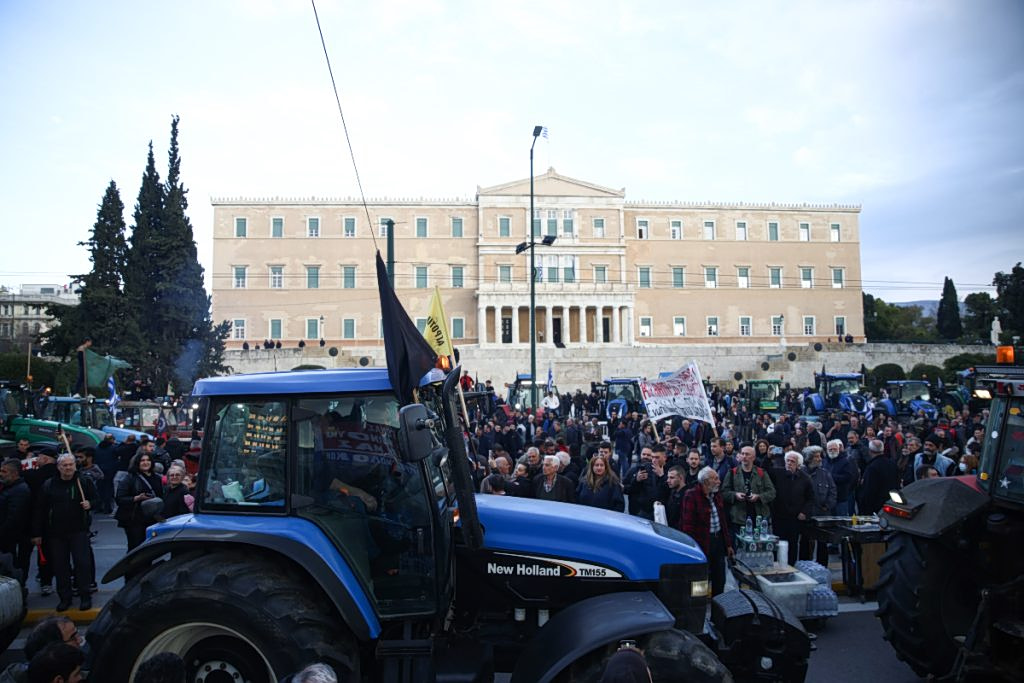
 Farmers and other primary sector producers are taking their protest straight to the heart of the Greek capital, bringing tractors to central Athens to voice their frustration with the government’s stance on their demands.
Representatives of Greece’s primary production sector — farmers, livestock breeders, fishers and beekeepers — are gathering outside the Greek Parliament at Syntagma Square. Using private cars, buses and tractors, they are traveling to Athens for a major rally scheduled for 4:00 p.m. on Friday, February 13.
Their decision follows a nationwide assembly held last week in Nikaia, where they resolved to “play their last card.” The phrase reflects their sense that this is a final escalation after what they describe as disappointment over a recent meeting with the prime minister at the government headquarters in Athens.
“No Substantive Answers”
As representatives of the sector told the newspaper To Vima, they received no concrete commitments.
“We got no substantive answers to what we put on the negotiation table. We were told our issues would be examined, but there were no specific proposals and no timetable.”
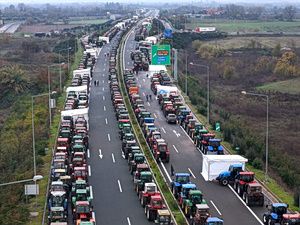
That, they say, was a key reason for changing the form of their mobilization — abandoning the highway blockades they had maintained and instead heading to the capital en masse.
The Panhellenic Committee of the Blockades — the main coordinating body of the farmers’ protests, named after the roadblocks they traditionally set up — has called on the public to show up at Syntagma Square in support. According to the committee, people in the primary sector are fighting daily to remain active in rural Greece.
Who Is Coming — and From Where
A small convoy of tractors from remote regions is expected to reach Athens, though long distances and high transport costs are discouraging larger numbers from farther away.
Higher participation is anticipated from parts of Central Greece.
Traffic Disruptions Across Athens
Greek authorities have announced extraordinary traffic measures due to the rallies and the movement of agricultural vehicles into the city.
Restrictions will be introduced gradually from the morning onward, both in central Athens and on major roads in the wider Attica region, depending on how conditions develop.
The biggest bottlenecks are expected at the main entry points to the capital, particularly on the highways connecting Athens with Corinth and Lamia, as tractors enter the city.
In the city center, congestion is forecast on key arteries such as Stadiou, Panepistimiou and Akademias streets. Traffic stoppages are planned around Syntagma Square and nearby avenues, including Amalias and Vasilissis Sofias.
A Call to the Public
The Panhellenic Committee of the Blockades is urging mass participation, stressing that protests are continuing after 55 days and nights on the roadblocks because, it argues, no real solutions have been offered to demands tied directly to producers’ survival.
The decision to hold a tractor rally in Athens was finalized at the nationwide meeting in Nikaia. Demonstrators have also signaled their intention to remain at Syntagma throughout the night.
The committee is calling on workers, professionals, pensioners and young people to stand with producers, arguing that the issue also concerns consumers. As they note, low prices paid to producers are not reflected in the final prices on supermarket shelves.
“Our survival is non-negotiable,” the announcement concludes.
Labor Unions Join In
Representatives of workers’ unions have responded positively to calls for a “common struggle,” linking the farmers’ mobilization to their opposition to a new labor bill they describe as anti-worker.
According to union representatives, the proposed legislation weakens Collective Labor Agreements and restricts fundamental labor rights. They are calling for its immediate withdrawal.
Within this framework, unions are also urging strong participation in Friday’s rally in Athens, noting that the protest is taking on broader dimensions due to the farmers’ presence in the capital.
“It is time to stand united — workers, farmers, the self-employed and professionals — and demand fair working conditions and respect for Collective Agreements,” they say.