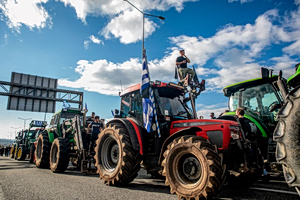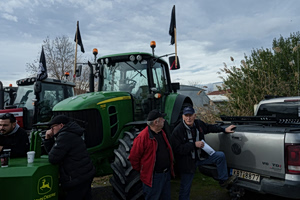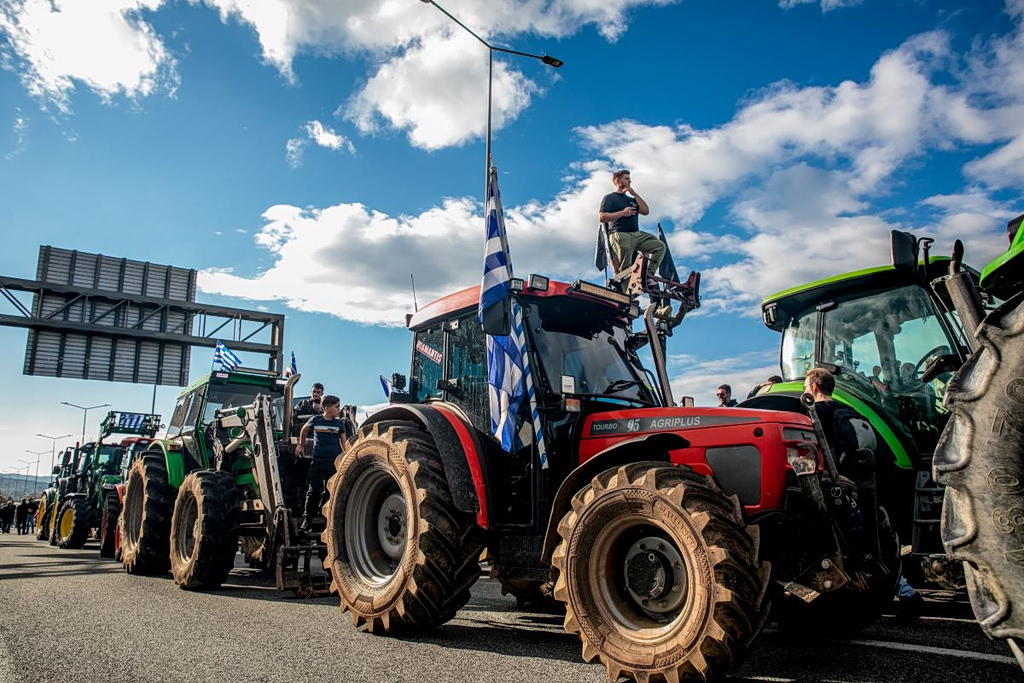
The Greek government is expected to announce detailed support measures for farmers on Wednesday, as tensions remain high and protests continue across the country. Officials signaled that the measures will be final, warning that no additional concessions will be offered if farmers continue to reject dialogue.
The announcement, expected around midday, will be made by a group of senior ministers, including those responsible for agriculture, finance, economic coordination, and digital governance. The exact timing had not been finalized as of late Tuesday night.
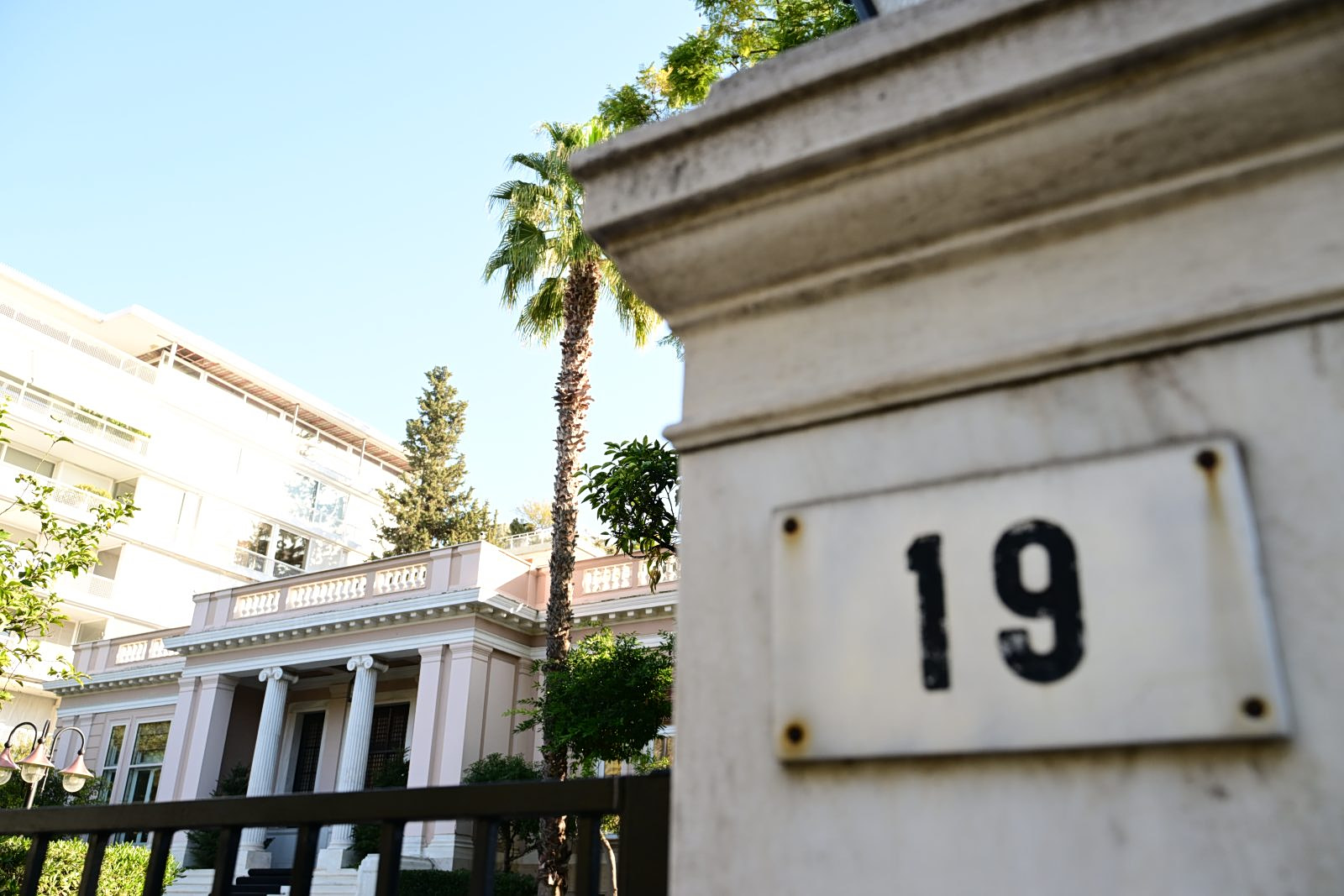
Government officials say they remain open to talks but acknowledge that their calls for dialogue have so far gone unanswered. At the same time, protests have intensified, prompting a tougher tone from the government. Speaking on behalf of the prime minister’s office, government spokesperson Pavlos Marinakis said patience has run out, stressing that the measures to be announced represent the government’s final offer.
Among the key issues raised by farmers is the cost of electricity. Officials say the national power provider is prepared to submit an improved proposal, building on an already favorable pricing scheme for agricultural users.
On fuel costs, the government says it has a ready plan to refund the excise tax on agricultural diesel directly at the pump. According to officials, the proposal aims to reduce delays and address inequalities that have affected farmers under the current system.
Regarding concerns over imported products being sold as domestic, the Ministry of Digital Governance is expected to present a plan to improve product traceability. Officials say the system would help ensure transparency in the supply chain and protect domestic producers.
The government has also addressed broader structural issues. Officials say a longstanding agricultural data system has effectively been resolved following an agreement with the European Commission, allowing land declarations to be submitted through sworn statements. On the controversial Mercosur trade agreement, which has sparked protests among farmers in several European countries, government sources said dialogue could continue but added that they do not believe the issue poses a direct problem at this stage.
Despite the announcements, farmers show no signs of backing down. In response, the government has left open the possibility of a “plan B.” Marinakis hinted that existing legal frameworks could be enforced if disruptions continue, stressing that no new legislation would be required. He warned that the country is approaching its limits, adding that the government does not want to reach that point but may be forced to act.
Officials also highlighted the level of financial support already provided to the agricultural sector. They said €3.82 billion was paid in subsidies and compensation in 2025, up from €3.38 billion in 2024, marking a 13% increase and the highest annual level to date. According to the government, 16 of the 27 demands raised by protesting farmers have already been accepted, four are under review with a positive outlook, and seven have been rejected due to fiscal constraints or European regulations.
Government sources say they recognize the difficulties farmers face, including recent animal disease outbreaks affecting livestock producers. However, they criticized some union leaders for refusing to engage with the prime minister and the democratically elected government. Officials argue that too much time has passed and insist the government cannot remain passive while major parts of the country remain blocked.