 Μake us preferred on Google
 “Unreliability – turmoil.” These are the two words that best capture, in the most concise way, U.S. foreign policy under the era of “Trump 2.0.” Unreliability, in terms of Washington’s stance toward Europeans and NATO, as the United States appears to disregard the principles of the liberal West. Turmoil, because instead of extinguishing crises—as the White House’s eccentric occupant has repeatedly promised—it is opening one front after another.
Greek–French alignment
Against this murky backdrop, and as the implementation of European defense autonomy among the EU’s 27 member states remains at an early stage, attention is turning to smaller, more flexible groupings—now commonly referred to as “coalitions of the willing.” At the same time, coordination among Europe’s most determined leaders is intensifying, while both bilateral and multilateral frameworks of cooperation are being strengthened.
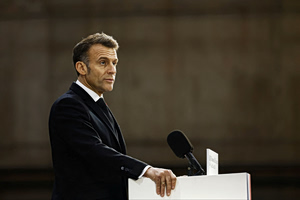
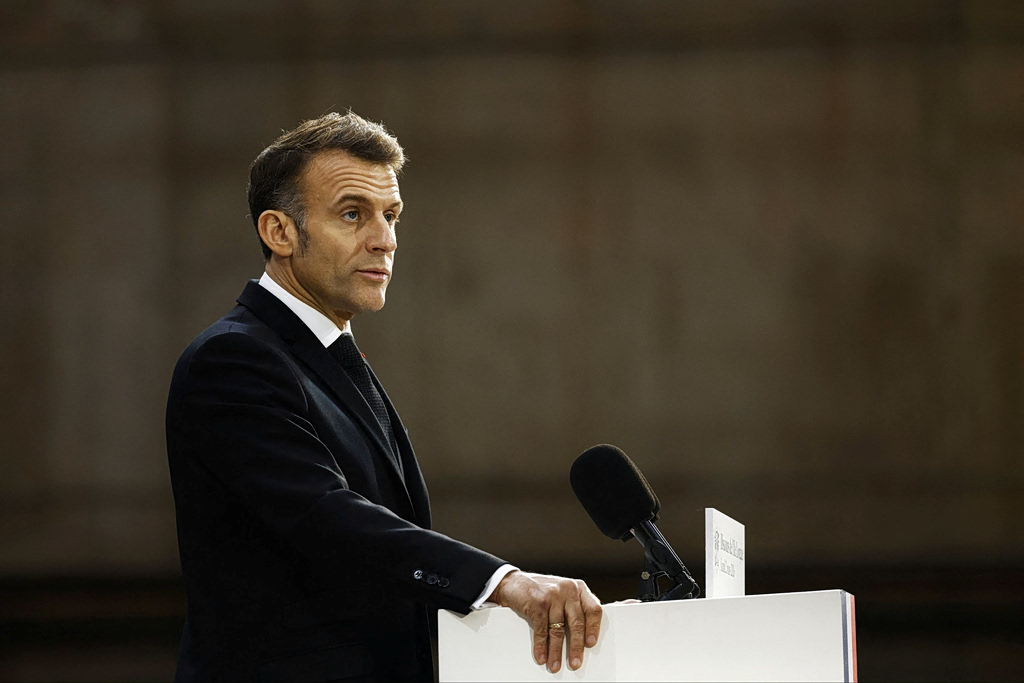
Athens and Paris have clearly grasped the challenges of this new reality. As a result, they are further deepening their strategic alignment in the Eastern Mediterranean—just a step away from the flames of the Middle East. French President Emmanuel Macron is expected to visit the Greek capital immediately after the Cyprus Summit (23–24 April), where the renewal of the bilateral defense agreement will be signed, including an enhanced mutual assistance clause in the event that either party comes under attack on its territory.
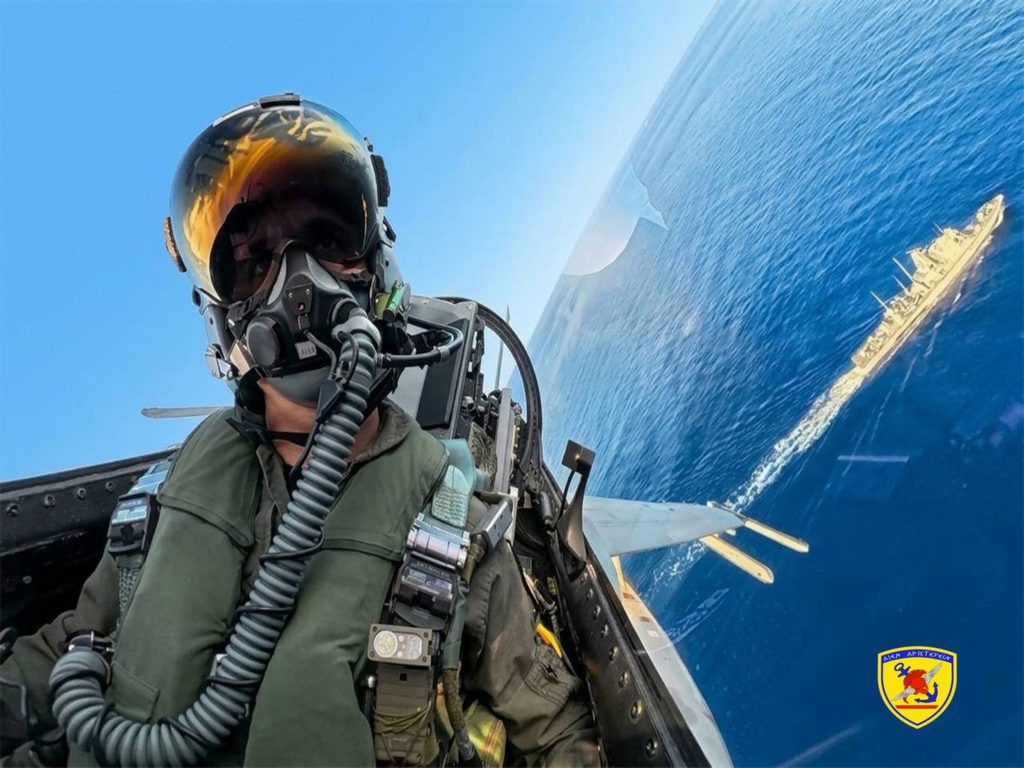
Within the government of Kyriakos Mitsotakis, there is a clear understanding that France—given its strategic interests at the crossroads of East and West—is Greece’s most reliable partner, both diplomatically and operationally. This was demonstrated during the tense summer of 2020, when Greece and Turkey came close to military confrontation near Kastellorizo, but also more recently, when the French aircraft carrier Charles de Gaulle, accompanied by other naval units, deployed off Cyprus to help safeguard the island—alongside Greek forces—amid concerns linked to Iranian threats.
In the context of what has been described as a third war in the Persian Gulf, Greece and France are positioning themselves not only as defenders of their own regional interests but also as security providers for third parties, while simultaneously playing a leading role in shaping European defense architecture.
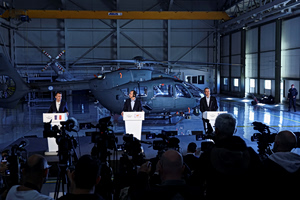
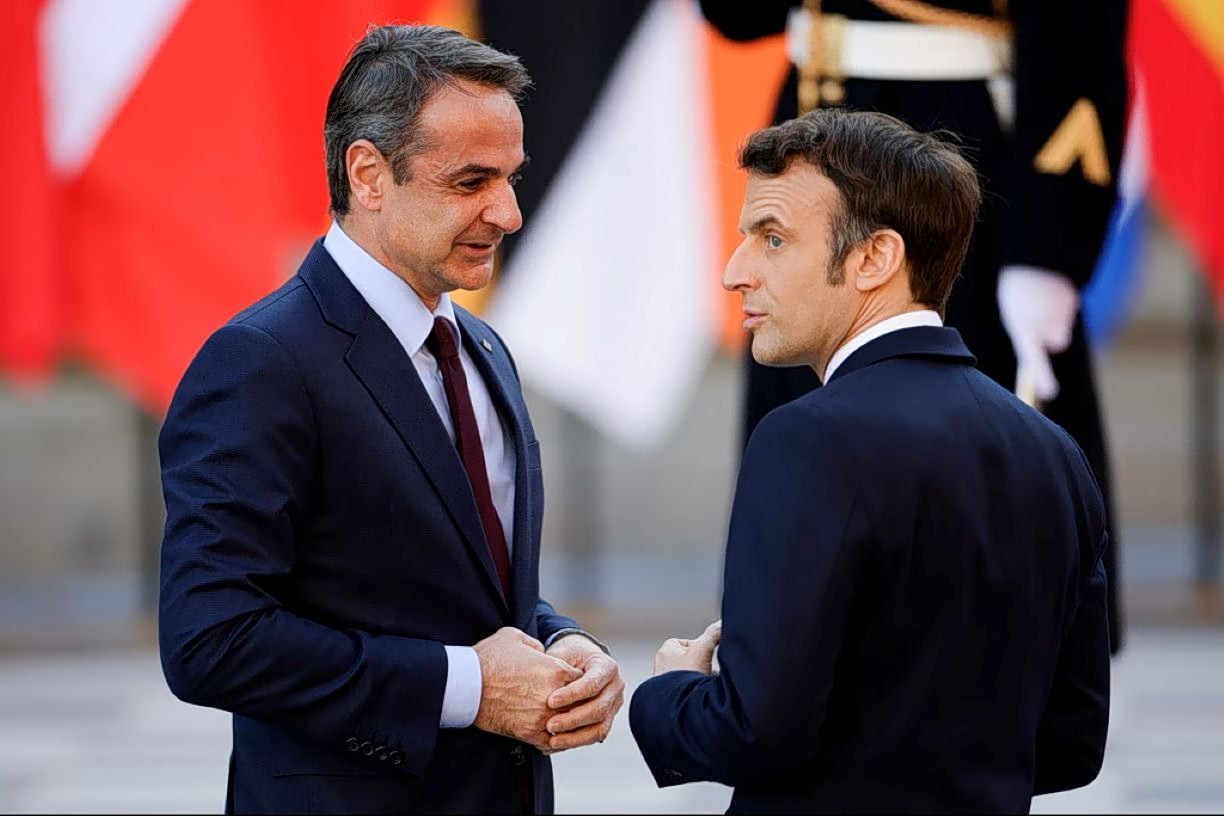
Athens and Paris also converge on how to address key EU challenges, from migration and energy independence to regional crises centered on Lebanon, Syria, and Libya. The shared strategic outlook of Mitsotakis and Macron is expected to be reflected in their public statements this coming Saturday.
The challenge in the Strait of Hormuz
While behind-the-scenes discussions continue on the creation of a smaller NATO-like structure—primarily focused on the Russian threat—the strongest European powers are also exploring the formation of a capable naval force that could, in the near future, guarantee the security of maritime navigation in the Strait of Hormuz.
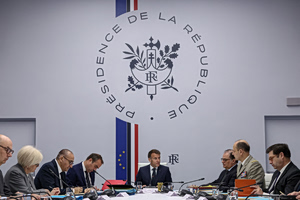
The United Kingdom and France are playing a leading role in this initiative, with Keir Starmer and Emmanuel Macron—both of whom have faced sharp criticism from Donald Trump following the disruption of traffic in Hormuz—meeting last Friday in Paris, where they convened a leaders’ video conference on the Strait, including Greek Prime Minister Mitsotakis.
As previously reported by To Vima, during a visit to Paphos, Macron reportedly pressed the Greek Prime Minister for Greece to participate in the planned operation. Athens has since set as an essential condition the full cessation of hostilities involving Iran. According to diplomatic sources, “the discussion may have taken shape, but it is still at a very early stage.”
A senior official close to Maximos Mansion told To Vima that “in principle, we support a mission with the participation of as many forces as possible, under the auspices of the European Union or the United Nations.”
It is worth recalling that efforts to secure a UN Security Council mandate for the Hormuz initiative ultimately failed due to objections from Russia and China. It remains to be seen whether a European mandate will materialize, as was the case with Operation ASPIDES, in which a Greek frigate has already participated since early 2024. The issue is expected to feature prominently in the Mitsotakis–Macron meeting, with the French president expected to publicly outline his position.
War as an accelerant
In parallel, the EU-27 will gather next Thursday in Ayia Napa, just a few kilometers from occupied Famagusta—the last divided European state under Turkish occupation. In a reversal of historical symbolism, the territory of the Republic of Cyprus, long imbued with geopolitical significance, has recently served as the staging ground for a “coalition of the willing” model. Alongside Greek and French contingents, Italy, the Netherlands, the United Kingdom, and Germany also participated—the latter deploying a warship diverted from a UN peacekeeping mission.
According to Cypriot President Nikos Christodoulides, Athens and Nicosia effectively activated—at least partially—Article 42(7) of the EU Treaty on mutual defense assistance in the event of an attack on a member state.
Are such flexible formations the future of European defense? “By necessity, collective defense among the 27 and more flexible coalitions of willing states—those whose interests are directly affected in each case—will coexist, without undermining the general obligation of European solidarity,” an experienced diplomatic source told To Vima, outlining Athens’ position ahead of the summit.
“Defense autonomy is a priority of the Cypriot presidency of the EU,” a Cypriot official noted, “but President Christodoulides will again raise the issue of Article 42(7), as beyond developments in the Middle East, what concerns us most is the ongoing Turkish threat.” The reference comes amid tensions between Greece and Cyprus and Ankara, also linked to deepening strategic cooperation with Israel.
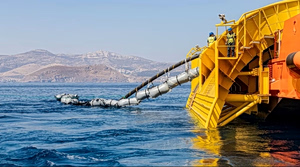
Although the informal summit will not issue formal conclusions, efforts will focus on shaping a political framework based on the April 2024 conclusions, with Cyprus pushing for explicit references to EU energy security—especially in light of Turkey’s intervention that contributed to the suspension of the Greece–Cyprus electricity interconnection project.
A government official in Athens stressed: “We could not remain absent from the discussion on Article 42(7),” while seeking to frame the issue more broadly in terms of regional instability rather than solely Turkish pressure.
From Ayia Napa, Prime Minister Mitsotakis is expected once again to sound the alarm: just as Europeans move to protect their eastern flank, they must do the same for the Union’s southern borders.