 Μake us preferred on Google
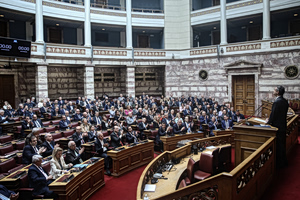
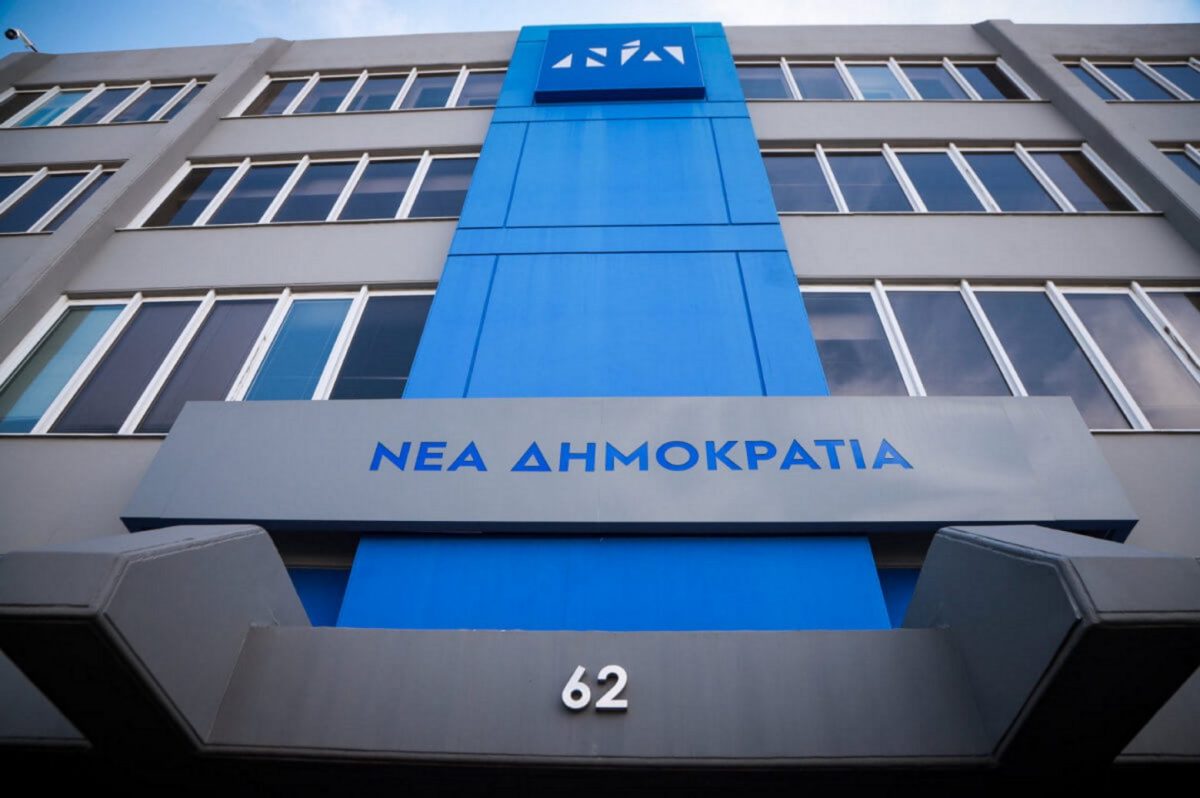
 Five members of the Greek parliament from the ruling New Democracy party have published an open letter calling on Prime Minister Kyriakos Mitsotakis to fundamentally rethink how his government operates — a rare and striking act of dissent that has laid bare divisions within Greece’s dominant center-right political force.
The letter, published in newspaper TA NEA, was signed by lawmakers representing constituencies across the Greek regions: Athanasios Zempilis (Evia), Andreas Katsaniotis (Achaia), Xenofon Baraliakos (Pieria), Giannis Oikonomou (Fthiotida) and Ioannis Pappas (Dodecanese). All five represent districts outside the capital, a detail that underscores their core argument.
What Is the Executive State and Why Does It Matter?
At the heart of the letter is a critique of the “executive state” — a governing model enshrined in Law 4622/2019, the very first major piece of legislation passed by New Democracy after it swept to power with an outright parliamentary majority in the 2019 elections.
The model was designed to make government faster, more coordinated and more accountable, shifting strategic decision-making toward a tight inner circle around the prime minister. Supporters argued it was a necessary modernization of Greece’s historically cumbersome public administration. At the time, it was praised as a bold reform.
Six-plus years later, the five MPs say the balance has tipped too far. “It has, along the way, caused an excessive concentration of power in small circles,” they write. “It transferred ever more weight to the center, strengthened the tight nucleus around the top of the government, and curtailed the autonomy of ministries — and especially of the parliamentary group — relative to the measure of their institutional duties.”
A Scandal as Catalyst
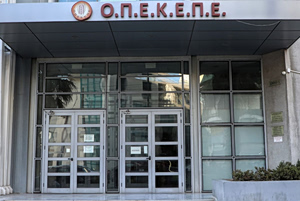
The open letter did not emerge in a vacuum. The MPs point to a series of recent political shocks as the backdrop: the reopening of a corruption investigation into OPEKEPE — Greece’s agricultural payments agency — by the European Public Prosecutor’s Office (EPPO), which sent new case files to the Greek parliament in early April; a string of ministerial and deputy ministerial resignations related to the most recent tranche of OPEKEPE case files; and the subsequent vote to lift the parliamentary immunity of New Democracy lawmakers in connection with the probe.
The letter also takes aim at what the MPs describe as a troubling pattern: when things go well, credit flows upward to the executive center; when scandals emerge, blame is pushed downward, onto elected MPs.
“The executive state claims absolute control and takes credit for successes, but when serious structural problems appear, responsibility is diffused downward and especially onto MPs,” they write. “This practice does not exist in any leadership manual.”
The Role of Non-Elected Officials
The letter also touches on a growing tension within the party over the use of technocratic, non-elected ministers — experts brought in from outside parliament to run government portfolios. Proponents argue such figures are free from the pressures of constituency politics and clientelism. The MPs push back.
“It is at the very least unfair,” they write, “to stigmatize those whom citizens elect to represent them, within a system that everyone criticizes, while allowing unelected officials to wield disproportionate power.”
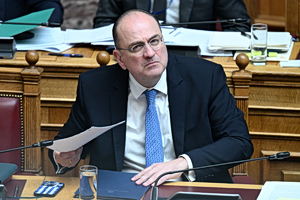
The letter singles out no individual by name, but political observers in Athens have widely noted that the criticism falls squarely on figures such as Akis Skertsos, the minister of state who has served continuously in the prime minister’s inner circle since 2019.
MPs as More Than Messengers
The letter’s broader demand is for a redefined role for elected lawmakers — one that moves away from what the MPs describe as a degrading reduction of parliamentarians to “request managers” and intermediaries for constituents navigating bureaucracy.
The MPs argue that the answer to misgovernance and corruption is not further centralization and the sidelining of elected lawmakers. An MP, they write, is “a bearer of popular mandate, an overseer of executive power and an authentic voice of the regions’ demands they represent. Yet is increasingly being branded as corrupt and reduced to rubber stamping decisions already made elsewhere, informed after the fact, expected to fall in line pre-emptively and confined to an ever-shrinking political role”. That trajectory, they warn, will make things worse, not better.
The MPs also warn against what they see as the steady marginalization of Greece’s regions. The problem, they argue, goes beyond cabinet appointments or budget allocations. It is about whether people outside Athens have any real say in decisions that affect them — whether the knowledge and experience of local economies and communities actually shapes policy, or is simply fed into a central machine as data to be processed.
A Warning, With Loyalty Intact
The letter is carefully calibrated to avoid the appearance of a full rupture. The MPs reaffirm their support for Mitsotakis — “society remains convinced that only New Democracy and Prime Minister Kyriakos Mitsotakis can ensure stability and prosperity” — and frame their critique as a call for reform from within, not rebellion.
Their timing is nonetheless pointed. The letter appeared 10 days before a scheduled meeting of the New Democracy parliamentary group on May 7, effectively ensuring the debate could not be avoided.
“Greece does not need a state where a few decide for everyone, without being directly accountable to the people,” they write. “It needs a state that is well-coordinated without being overbearing, and that governs without losing touch with its citizens.”
Whether Mitsotakis and his inner circle are listening is another matter.