 Μake us preferred on Google
 “There is no longer a community seeking common solutions.”
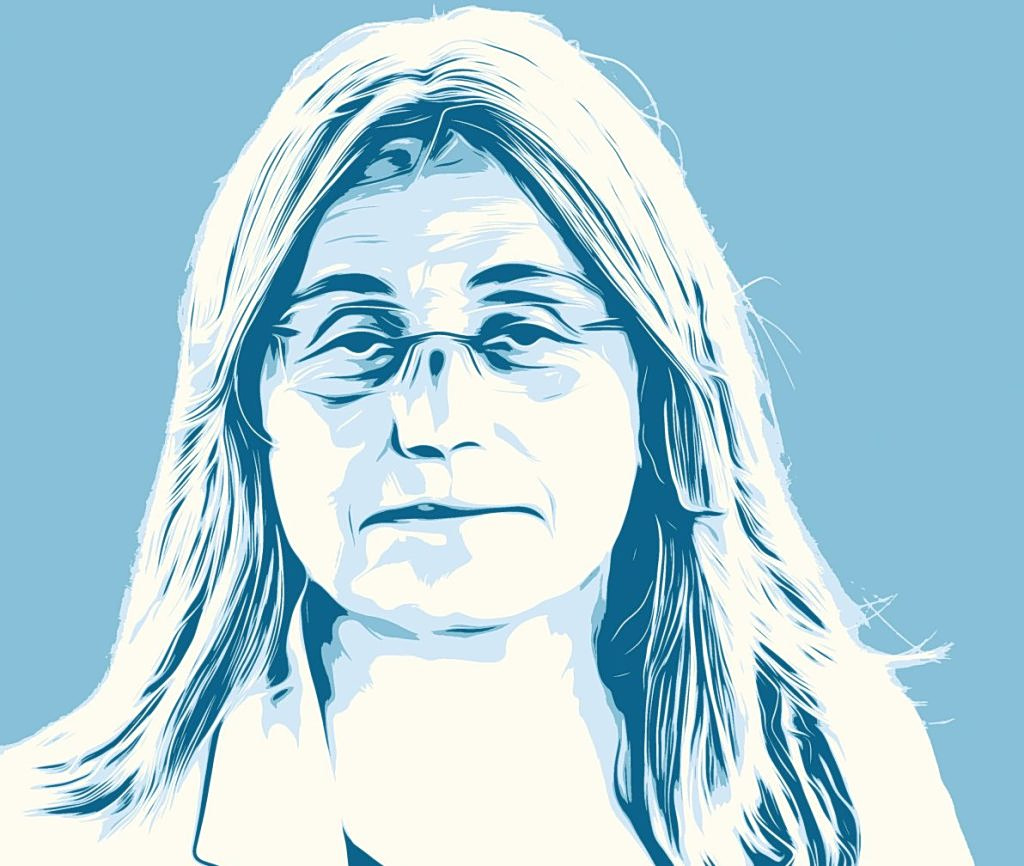
That is the stark reality described by Katia Papagianni, Director of Policy and Mediation Support at the Centre for Humanitarian Dialogue (HD), a Geneva-based organization specializing in conflict mediation and recipient of the Carnegie Wateler Peace Prize.
In this interview, she discusses the ethical dilemmas of peace mediation, the rise of private diplomacy, and the growing dominance of transactional politics in international relations.
How do you intervene—only when invited, or on your own initiative?
“In some cases, non-state actors contact us and ask us to open a channel of communication either with another non-state actor or with a government. In other cases, governments approach us. There are also situations where we may already be working in a neighboring country, identify a need, and then informally approach the parties to a conflict.
In the past, it was very common for the United Nations, the African Union, or other regional organizations to invite us to become involved to a limited extent, which could later evolve into more substantial engagement.”
Do you always respond, or do you first assess the cause? For example, if the U.S. invited you to Venezuela to help design a transitional government, would you go?
“It depends. If another mediator is already involved and has the consent of the parties, we would not consider stepping in, in order to avoid ‘forum shopping’ or ‘poaching’ by some parties to the conflict, who may seek to divide the international or mediation community.
However, if there is an accepted mediator and we are asked to support them, we would of course do so.
Another criterion is whether we can offer something meaningful. If you are not well informed, you can easily be manipulated.
And of course, the nature of the request matters—as you said—as well as what the parties are willing to discuss. For example, in recent years there was agreement between Ukraine and Russia to discuss certain issues. These talks eventually led, for instance, to the Black Sea Grain Initiative in the summer of 2022.
But if one side clearly states that it is not interested, then no—there is no space for us.”
How often do you face ethical dilemmas in your work?
“There are very many ethical dilemmas. For example, we are currently working in Myanmar, and it is extremely difficult to imagine the country’s future without the military regime, which has effectively governed for decades.
More and more parts of the country are now involved in the conflict. The majority of ethnic populations, as well as the Bamar majority themselves, have taken up arms against the regime—something that was not the case in the past.
So the question becomes: how do you think about the transition or the future of this country?”
What answer does mediation offer?
“In every case we deal with, mediation operates in the gray zone between what is feasible to agree on at a given moment—so as to reduce civilian suffering—and what could shape a better overall future.
Mediation is both a pragmatic and an ambitious process.
Is there a way to find a solution acceptable both to armed non-state groups and to the military, one that brings more stability than the widespread violence we see today?
In most cases, you end up with difficult compromises.
For example, most agreements in the 1990s and 2000s were power-sharing agreements. The parties to a conflict would agree on a solution that allowed them to remain in power—even though they themselves had often triggered the conflict.
The vision was that, over time, elections would take place and conditions for civilians would improve, both in terms of humanitarian indicators and human rights.”
What determines whether a conflict can move toward a sustainable, long-term solution?
“If a conflict is taking place in a region that does not support a solution, but instead intervenes through proxy warfare—what we now call an internationalized conflict—then it is very difficult to find a sustainable solution.
A ‘friendly’ environment—a neighborhood that does not actively intervene, does not fuel the conflict, does not sell weapons, and does not systematically support one side or the other, or at least does not determine the course of the conflict—is today the most important factor.
That is why we see progress in conflicts such as subnational conflicts in Senegal, and continued progress in the implementation of the agreement in the Philippines.
These conflicts have not been absorbed into the geopolitical vortex we are experiencing today.
All other regions are suffering from a high degree of internationalization: we see it across West Africa, in the Middle East, in Somalia, and in Sudan.”
In Sudan today, where ceasefires and violations happen simultaneously, what can a mediator actually offer?
“It is very difficult to feel that you are making a contribution when the situation is deteriorating, as in Sudan.
Can you achieve a ceasefire in a neighborhood of a city, or at the provincial level? Can you work with humanitarian actors to facilitate access to areas controlled either by non-state armed groups or by the military?
We often have different contacts and relationships with armed and political actors who control territory.
Can you support critical infrastructure? In Ukraine, for example, there has been much discussion about Zaporizhzhia. Similarly in Sudan, there is significant discussion about dams.
At the same time, a mediator will always look for opportunities that carry the potential to lead negotiations toward long-term solutions.”
You have also worked with the United Nations. Do conflict parties respond differently to an NGO like HD?
“Each mediation actor brings different advantages and disadvantages to a peace process, and in our experience, cooperation among different actors is more likely to succeed.
As for HD, if we ask parties to meet in a very discreet location, informally, in a meeting we organize, they are not committing to anything.
They are not attending a meeting of the European Union or the United Nations, nor one hosted by a state. They can even deny that they attended.
At the same time, they trust us because of our reputation—they know that nothing will leak.
And although on television you see people fighting in the most inhumane ways, in reality they often meet and explore ways to immediately de-escalate violence and consider the possibility of long-term solutions.”
We see fewer comprehensive peace agreements today, with mediation often limited to humanitarian aid. Even the Gaza–Israel ceasefire remains uncertain. Why?
“Yes, this is a trend we have observed for about a decade.
It is happening because there is no unified international community with a shared approach and common vision.
We also see geopolitical competition translating into regional, sub-regional, and national levels.
So you have global competition, then regional competition, and interventions in individual conflicts.
As a result, solutions become impossible, because there is a projection of power and influence by middle powers and, of course, by major powers.
At the same time, there is no longer a community seeking common solutions.”
How do you deal with missed opportunities or parties unwilling to compromise, as in Ukraine?
“In Ukraine we have been present since 2014, so we are not there because we expect an agreement anytime soon.
Mediation is a long-term process that requires commitment, trust-building, and deep understanding of the issues, so that when opportunities arise, the parties—with the support of the mediator—are able to fully capitalize on them.
We are the voice of dialogue, because someone must be that voice, especially today.
In the case of the Philippines, we were on the ground for ten years before the parties were ready. When the moment came, we were able to support them and eventually reach an agreement in 2014.
Mediation is not imposition. It is not military intervention. And it is certainly not bombing people into submission.”
How is your safety ensured during a war?
“We have very strict security protocols when we travel: how often we must be in contact with headquarters, what kind of phones and electronic equipment we carry, and so on.
But the risk is always present.
In some cases, if we judge the risk to be too high, we ask participants to travel خارج their country to meet us.
We have also seen mediators being targeted, as happened in the bombing in Doha in September 2025 by Israel.”
Peace agreements require neutral enforcement mechanisms. Do these still function today?
“In the 1990s and much of the 2000s, we saw the United Nations deploy many peacekeeping operations, and there was broad agreement in political science that without security guarantees, it is very difficult for parties to commit to implementing an agreement.
What we observe today is that peacekeeping operations are gradually weakening.
In the future, we will likely need to create special peacekeeping forces or security arrangements to protect the parties after a peace process.
We may also need to revitalize the United Nations, but I suspect the first scenario is more likely.
We will probably see sui generis agreements with countries willing to contribute troops, accepted by the conflict parties, forming peacekeeping forces for specific contexts.”
What is the role of international institutions today? Is their influence declining?
“Yes, it has been declining over the past 15 years.
The United Nations is now absent from many conflict resolution efforts. It is still present in places like Yemen and Libya, but in most cases you do not hear about it.
Instead, we see ad hoc collaborations—often involving governments, NGOs like HD, and international organizations—that manage to support parties in moving toward peace processes.
Multilateralism has weakened and has been replaced by what we call transactionalism.”
Is global politics shifting toward power-based logic?
“As citizens, we cannot accept that—it goes against everything we have tried to build since World War II.
There was a system of international law, principles, and rules, even though these were often violated and full compliance was never achieved.
Today, however, that system has weakened further.
The erosion of international law is a major problem, because it provided both a framework for mediation work and a vision of where we were heading.”
With Europe focusing more on military strength than collective security, how does this affect mediation?
“The European Union and European states have traditionally supported dialogue and mediation, both financially and politically.
Today, however, resources are shifting toward security.
While this is understandable given the current geopolitical environment, we observe that political will has decreased.
Some countries remain active, but overall Europe is retreating—and this is problematic, because it was one of the key global voices for dialogue.
In its place, we see the rise of mediators from middle powers such as Qatar, the United Arab Emirates, Turkey, and China—with different social visions.
There is a sense that something fundamental has changed.”
Can you recall a case where choosing the right diplomatic approach was particularly difficult?
“Mediators are often called to make difficult decisions: whom to involve and when, what to propose and when, when to step back, and how to do all this while maintaining the trust of the parties.
In 2012–2013, I worked in Yemen with the United Nations to support political actors in preparing for the National Dialogue Conference.
The question of who would participate—and therefore influence the outcome—was critical.
Our contribution was to encourage the inclusion of diverse perspectives and interests, while also trying to ensure the process remained effective.
How large could the conference be and still function?
There was no right answer. The parties ultimately reached an agreement after several months of negotiations.”
What makes a good mediator?
“A good mediator is patient, creative, and persistent—someone who does not let their ego dominate.
They truly listen and do not impose solutions, even if they have one in mind.
They aim to engage the parties, propose new ideas, and identify entry points that can bring them closer together.
They recognize the difficulties ahead, but strive to transform reality in a way that benefits civilian populations.
That is why I am inspired every day by my colleagues. They work in some of the harshest conditions in the world, yet remain creative and driven by the possibility of contributing to peace.”