Supporters of PASOK, Greece’s main opposition party, are sending a clear message to their leadership: pursue unity across the center-left, but draw an unmistakable line against cooperation with the country’s ruling New Democracy party.
That is the central finding of a nationwide survey conducted by Opinion Poll for the news website DNews.gr, based on responses from 1,000 PASOK voters. The findings come at a time of broader realignment talks across Greece’s fragmented center and center-left, but also of visible introspection within PASOK itself, as the party engages in a highly public and at times fraught debate over its identity, leadership style and future alliances – an existential reckoning that has increasingly spilled into the open.
Nearly seven in 10 respondents of the poll, namely 68.9%, said that initiating dialogue among center-left forces would be a positive development for Greece’s political life. Many see such a move as a necessary step toward building a credible counterweight to the ruling New Democracy party, that still tops the polls even after almost 7 years at the helm.
Even more telling, 70.3% said they believe concrete steps toward convergence and political reorganization are realistic in the near future. The finding suggests a shift in mood. In previous polls, the desire for unity was often tempered by doubts over whether it could actually be achieved.
Greece’s center-left space remains fractured. Alongside PASOK, are SYRIZA, the left-wing party that governed from 2015 to 2019 and lies fragmented and in tatters; New Left, a more recent political formation that has emerged from MPs that left Syriza; and the potential new party that seems to be in the works by former Prime Minister Alexis Tsipras.
Within PASOK, many supporters appear to view the party’s upcoming congress as a potential turning point. A majority, 60.6 %, said the gathering could serve as a new starting point, strengthening the party’s presence and improving its electoral prospects. Still, 35.4% expressed reservations, signaling that the party base expects substantive decisions rather than rhetorical appeals.
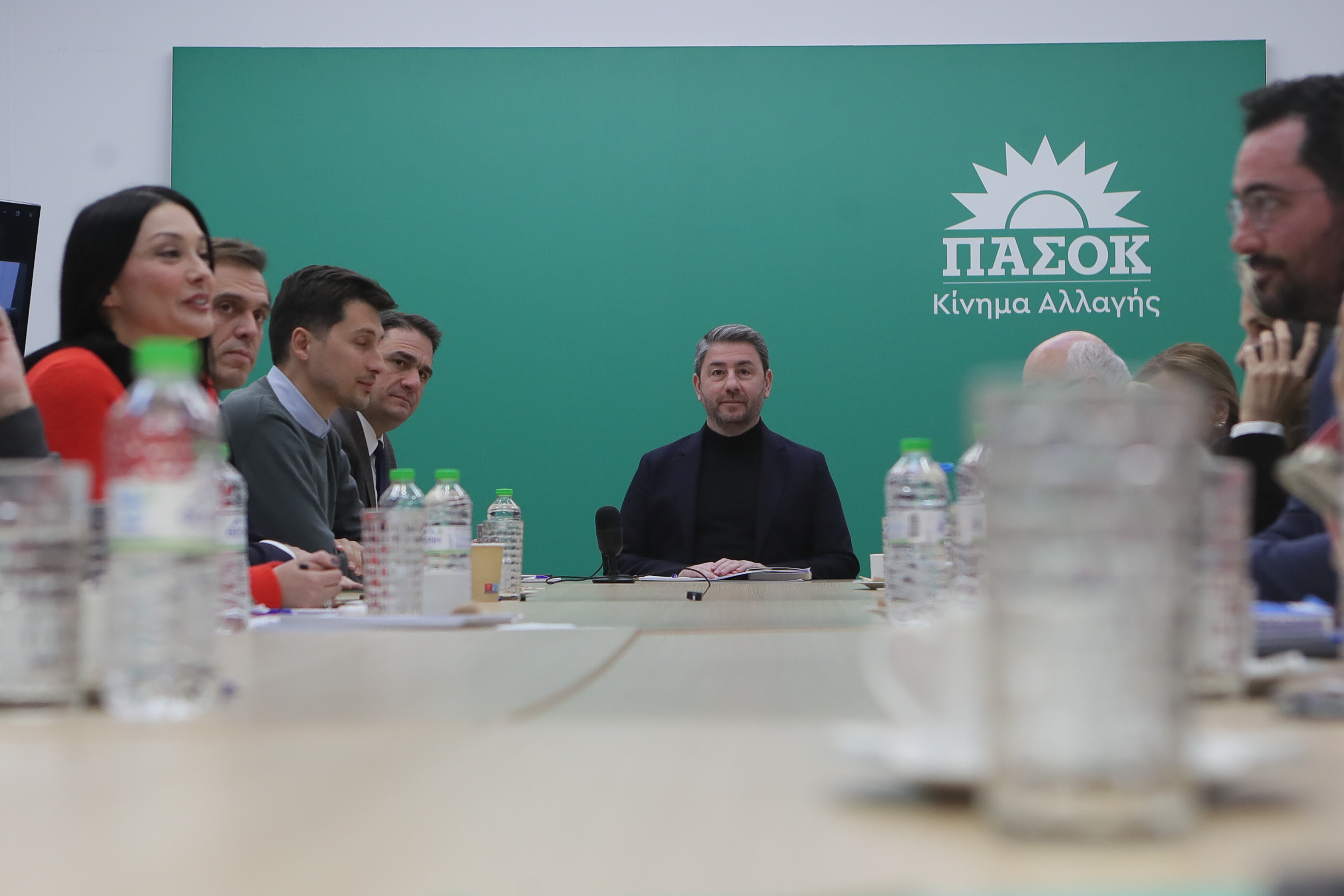
PASOK leader Nikos Androulakis has revived calls for what he has described as a “broadening congress,” inviting democratic and progressive forces to take part in shaping a renewed political project. The survey suggests that this strategy finds considerable support among voters, though not without conditions.
Those conditions are most evident in attitudes toward New Democracy. Despite categorical denials from PASOK’s leadership that it would consider cooperation with the ruling party, 29.7 % of respondents said they believe a postelection alliance could be possible if New Democracy fails to secure an outright majority.
A clear majority, 66.7%, rejected that prospect. Moreover, 60.3% said the party congress should adopt an explicit resolution ruling out any governing partnership with New Democracy, a clear sign of how central the issue has become to PASOK’s internal debate.
The broader discussion over convergence is not without tension. Some party officials favor building bridges across the progressive spectrum without imposing strict preconditions. Others insist on clear ideological and political terms, particularly when it comes to potential cooperation with figures from the New Left, such as Alexis Haritsis, or initiatives linked to Mr. Tsipras.
For now, the political terrain remains fluid. But the survey suggests that PASOK’s voters are seeking clarity: a renewed effort at center-left unity, anchored in firm red lines and free of ambiguity about the party’s stance toward the conservative government.