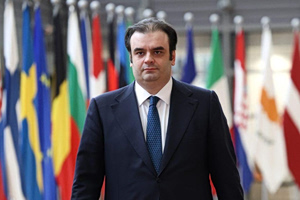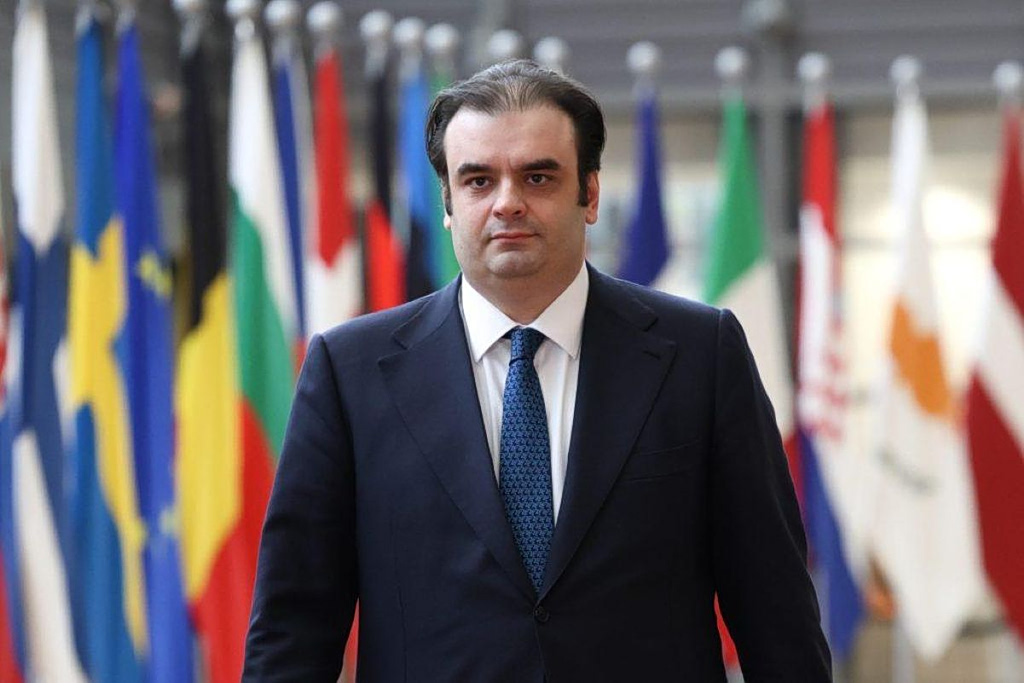

Eurogroup President Kyriakos Pierrakakis, Greece’s finance minister, on Friday emphasized the need for European governments to act with “balance and responsibility” in response to the economic impact of the Middle East crisis, while maintaining that support measures should be “targeted, temporary, and prioritize the most vulnerable households and businesses.”
“Our choices must reflect balance and responsibility,” Pierrakakis said after a Eurogroup teleconference of the Eurozone’s finance ministers, adding that the measures being taken during this period must be targeted, fair, and effective, with priority given to the most vulnerable households and businesses.
As he pointed out, interventions should be implemented immediately but also remain temporary, in order to address the crisis without creating new, bigger problems in the future.
Pierrakakis stated that the direction on how to respond has already been set by the European Council of March 19, and that this discussion continued today at the Eurogroup, with the aim of shaping the right policies to support citizens and businesses.
Remarks by Pierrakakis following the Eurogroup meeting of 27 March 2026:
We should have been in Nicosia today, but developments in the Middle East led to this meeting being held via teleconference. We express our solidarity and support for the Cypriot people and the Cypriot government, and we look forward to being there very soon.
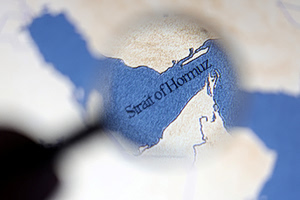
The first issue discussed by the Eurogroup was the situation in the Middle East and its economic impact on Europe. This is a concerning crisis affecting energy, trade, prices, and overall global economic stability. For us, this means heightened vigilance, coordination, and readiness to support our societies. Today’s discussion also included Dr. Fatih Birol, Executive Director of the International Energy Agency, who briefed us on recent developments and outlooks for energy markets.
One month after the outbreak of the conflict, its effects are already beginning to pass through to the real economy. Businesses are seeing it in their operating costs, and households are seeing it in their energy bills. This creates inflationary pressures and significant risks of lower growth across Europe. The key issue is the duration and intensity of the crisis, as these will determine the scale of the economic impact. Uncertainty remains high. Europe must stay alert and ready to respond where needed. Our shared hope is for de-escalation and to avoid major and lasting disruptions to energy infrastructure and global energy markets.
The direction for how we should respond has already been set by the European Council of 19 March, and today we continued that discussion in the Eurogroup, aiming to shape the right policies to support citizens and businesses.
Europe today is better prepared than it was in 2022 during the previous energy crisis. It has reduced its energy dependence, strengthened its energy infrastructure, diversified its energy sources, and, above all, gained experience in managing such crises. This means we can now respond more quickly, more cohesively, and more effectively.
At the same time, we must act with seriousness and responsibility, remaining consistent with the commitments we have undertaken. Because ultimately, this is what allows us to support our citizens in difficult times. Sound fiscal management gives a country the capacity to protect society and to invest in its future. It is what makes an economy more resilient in the face of crises.
Our choices must reflect balance and responsibility. Measures taken during this period should be targeted, fair, and effective, with priority given to the most vulnerable households and businesses. They must be implemented swiftly, but also remain temporary, so as to address the crisis without creating new, larger problems in the future.
At the same time, we must not lose sight of the bigger picture. Europe’s energy transition and energy independence constitutes strategic objectives, and no short-term crisis should divert us from them. On the contrary, this crisis highlights the importance of investing even more in clean energy, infrastructure, and Europe’s energy autonomy.
The Eurogroup plays, and will continue to play, a key role in coordinating economic policies in this direction.
Europe is called upon to play a dual role: to protect citizens today and to build a more resilient and competitive economy for tomorrow.
In this context, a key growth tool is the savings and investments union. It is the means by which Europe can channel European savings into investments within the European economy, finance businesses, innovation, the green transition, and eventually strengthen its competitiveness.
We were briefed by the finance ministers of the six largest economies of the European Union on initiatives in this direction, while the Cyprus Presidency presented the progress of legislative work on integrating European capital markets and strengthening European supervision. There is a strong level of engagement and commitment to developing Europe’s capital markets, and this is a positive signal for the European economy and investment in the years ahead.
We concluded our meeting by discussing international economic developments ahead of the IMF and G7 meetings. We are living in a period of profound change in the global economy, with geopolitical tensions, shifts in trade, exchange rates, and global economic balances. It is clear that in a changing world, the responsibility for global economic stability cannot rest on one region alone. It requires adjustment and responsibility from all major economies.
Europe is present. And as the world becomes more unstable, Europe must become stronger. This is the objective of our discussions and coordination within the Eurogroup.”