 Μake us preferred on Google
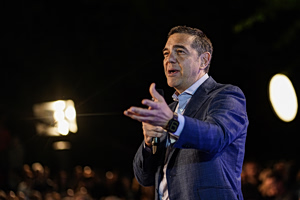
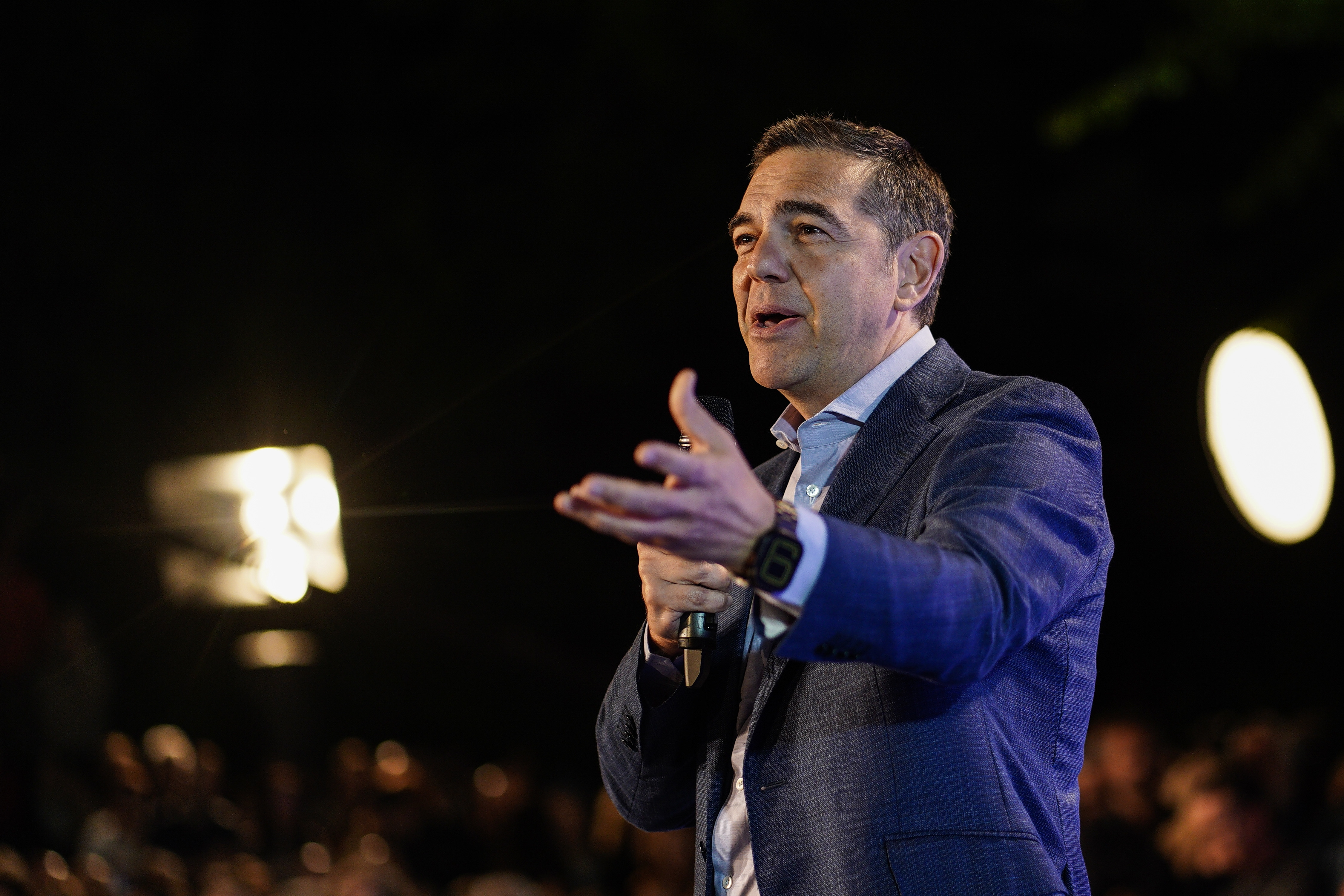
 Alexis Tsipras is set to present a sweeping economic program Wednesday evening as he attempts to reframe the political debate ahead of the Thessaloniki International Fair, the annual gathering where Greek political leaders traditionally lay out their economic policy agendas.
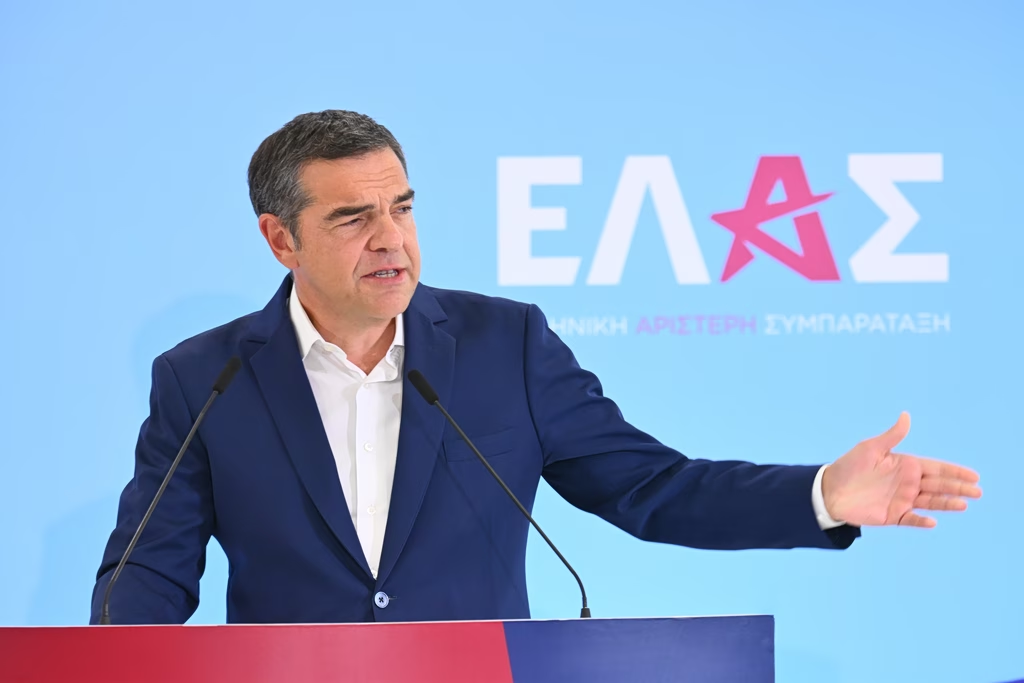
Speaking at the Porto Palace hotel days before TIF formally opens on Saturday — where he is scheduled to deliver a second address on Sept. 9 — the leader of the Greek Left Alliance (EL.A.S.), will outline what the party calls its National Reconstruction Plan. The proposal spans a four-year horizon from 2027 to 2030 and carries a total price tag of €7.39 billion. The central slogan framing the plan is a triple promise: “We produce more, we distrubute more fairly, we live better.”
A “different” growth model
At the heart of the proposal is a deliberate pivot away from the economic approach of Prime Minister Kyriakos Mitsotakis and his center-right government. Where Mitsotakis has emphasized market-friendly reforms and foreign investment, Tsipras is pitching what he describes as productive reconstruction, decentralization, fairer distribution of wealth and stronger social protections.
Crucially, the former PM will also attempt to address the question that has dogged political leaders for years: how do you pay for it? The party’s position is that every new spending commitment must be matched by a specific, permanent revenue source.
The proposed plan projects €7.39 billion in total gross spending over four years, offset by €1.92 billion in new permanent revenues, for a net cost of €5.47 billion against what the party says is €5.60 billion in available fiscal space.
The central financing vehicle would be a new body called the National Convergence Fund. On the tax side, the plan calls for redistributing the burden in favor of salaried workers and the self-employed, two groups that have long shouldered a disproportionate share of Greece’s tax load. It also aims to introduce a new levy the party has dubbed the “Patriotic Levy.”
Notably, projected revenues from the Patriotic Levy have not been factored into the fiscal space underpinning the rest of the plan. The reasoning, according to party officials is strategic. By keeping the levy off the main balance sheet, the Tsipras camp argues it creates additional fiscal space for interventions beyond the already costed measures. The guiding principle, according to EL.A.S. officials, is blunt: “No promise without costing, no expenditure without results.”
The starting gun for a broader contest
Senior EL.A.S figures say tonight’s presenteation in Thessaloniki is not simply the rollout of an economic program. It is intended as the starting point for a broader political proposition about what Greece should look like over the next decade, one that shifts the conversation from what a party promises to what it can actually deliver, what it costs and who picks up the bill.