



 Μake us preferred on Google
 In an early step toward creating organisms with synthetic genomes, researchers in the United States have unveiled viruses designed by artificial intelligence that can infect a bacterium and produce copies of themselves.
The study, published in the journal Science, could potentially open the way to designing viruses that kill drug-resistant bacteria, a promising approach when antibiotics fail.
Synthetic viruses could also be used as vectors for gene therapies or as a biological tool against agricultural pathogens, among other applications.
Still, the study raises concerns about the potential misuse of AI to create viruses that could serve as bioweapons.
Researchers at Johns Hopkins University, in an accompanying commentary, wrote that while the development holds promise for life-science applications, it also raises urgent biosafety and biosecurity questions.
They warned that the ability to synthesize viral genomes using generative AI now exists, but the governance framework needed to manage that capability safely does not.
Bacteriophage
The team at Stanford and the Arc Institute research organization used the Evo model, which works like the large language models trained on internet material to learn to generate text, images, or video.
In this case, the model was trained on the genetic sequences of two million bacteriophages, or simply phages, a category of viruses that infect only bacteria.
Evo used the genome of phage Phi X 174 as its base, a phage carrying just 11 genes that infects the gut bacterium Escherichia coli.
The model was instructed to generate new viruses capable of infecting strains of the bacterium that had developed resistance to the original virus. It produced thousands of new genomes, some sharing up to 40% of ΦX174’s genes, while others had entirely new sequences and different organization.
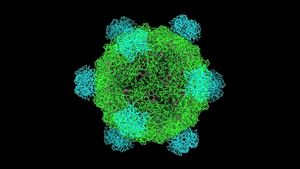
Model of the Phi X 174 virus, that was used as the basis of the experiment (Wikimedia Commons)
The team then used chemical methods to synthesize DNA molecules matching the sequences of 16 promising viruses, which they introduced into various E. coli strains, the way the natural virus would.
Testing showed that all of them were able to infect the bacterium and hijack its machinery to replicate. In some cases, the synthetic viruses were able to defeat E. coli strains that ΦX174 itself cannot infect, the researchers reported.
It remains unclear, however, whether genome-synthesis technology will soon extend to more complex organisms.
The genetic sequence of ΦX174, for example, is 1,000 times smaller than the E. coli genome and 600,000 times smaller than human DNA, which has a different structure and multiple layers of regulation and interaction. Viruses aren’t even considered living organisms, since they need host cells to reproduce.
There is also the matter of biosecurity, amid warnings that AI could be used to design bioweapons. The so-called “dual-use dilemma” comes up often in research and remains a persistent source of concern, without easy answers.
The researchers acknowledge these concerns and note that the model was trained only on viruses that don’t infect humans or other eukaryotic organisms.
They say the new approach could be used to safely design viruses that address diseases and public health issues, such as the major problem of antimicrobial resistance.
However, the scientists who wrote the accompanying commentary caution that research labs should avoid experimenting with synthetic viruses that infect not bacteria but eukaryotic organisms such as humans.
Such synthetic genomes, they write, could encode new pathogens capable of infecting humans, animals, or plants in ways that cannot be addressed with existing protective measures.