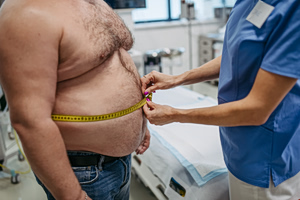
Carrying extra weight changes the mix of proteins circulating in the blood, but researchers have long known that where that weight sits on the body matters too. The trouble is, standard measurements like waist and hip size don’t cleanly separate belly fat from overall body size. To get around that, researchers turned to shape-based measures that adjust for overall body size: a waist-focused index that factors out general obesity, a waist-to-hip ratio, and a hip-focused index.
Using data from more than 4,000 participants in the EPIC cohort, a long-running European health study, the team measured over 7,000 different blood proteins and looked at how each one lined up with body mass index (BMI) versus these more targeted shape measures.
Of roughly 2,250 proteins linked to BMI, about one in five turned out to be independently tied to abdominal fat as well, moving in the same direction as BMI in most cases. A separate, smaller set of proteins, about three dozen, tracked with hip size instead, and these mostly moved in the opposite direction from BMI. The standard shape measurements behaved much like BMI itself, meaning they didn’t capture much beyond overall weight. Among the proteins most strongly tied to abdominal fat were adiponectin (lower levels) and a growth hormone receptor protein (higher levels), while hip size stood out for its ties to two other proteins. BMI’s own strongest associations were with leptin and a fatty-acid-binding protein.
Looking at the genes behind these proteins, the ones linked to abdominal fat pointed toward liver activity and processes tied to tissue remodeling, toxin processing, and blood clotting. Genes linked to BMI overall, by contrast, pointed toward fat tissue itself.
The findings suggest that abdominal fat and hip size each leave a distinct chemical signature in the blood, different from the one associated with overall weight, hinting at different underlying biology. That distinction could eventually help guide treatments aimed specifically at where the body stores fat, not just how much of it there is.
This article is a summary based on: Christakoudi, S., Viallon, V., Smith-Byrne, K. et al. “Plasma proteomes of obesity and allometric body shapes in the EPIC cohort.” Scientific Reports (2026). Published under CC BY 4.0. Read the original study: https://doi.org/10.1038/s41598-026-64282-5