The Christmas holidays are not just sprinkled with the sugar of shortbread cookies and dipped in the honey of melomakarona. They are also immersed in chocolate in all its forms: in a steaming cup of cocoa, in chocolate tarts, cakes, truffles, and chocolates. So what could be better than a study appearing just before Christmas… a hymn to chocolate—specifically dark chocolate?
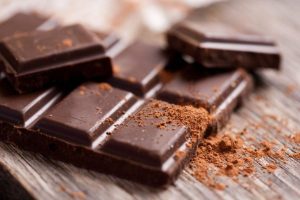
This study, conducted by experts at King’s College London and published in the scientific journal Aging, showed that a compound in cocoa found at higher levels in dark chocolate (due to its higher cocoa content) acts as an elixir against biological aging.
The compound is theobromine, a natural alkaloid mainly found in cocoa beans and in much smaller amounts in tea and coffee. Its taste is bitter, and its effects are similar to caffeine—it provides stimulation and energy, but in a milder, longer-lasting way, with fewer side effects. Its name comes from the scientific name of the cocoa tree—Theobroma cacao—which essentially means “food of the gods” (from the Greek words for “god” and “food”).
Theobromine now lives up to its name in the new study, which compared blood levels of the compound in volunteers with markers of biological aging.
Specifically, researchers examined over 1,500 participants from two studies—the British TwinsUK (509 people) and the German KORA (1,160 people)—and found that those with the highest blood levels of theobromine had a biological age younger than their chronological age. In particular, the rate of aging in participants with the highest theobromine levels was up to 1.5 years slower compared to those with the lowest levels.
As the study’s lead author, Professor Jordana Bell, Epigenomics at the Department of Twin Research and Genetic Epidemiology at King’s College London, told Vima-Science:
“Our study identified a connection between a ‘key’ component of dark chocolate and the slowing of the aging process. This finding helps us understand how foods we consume regularly—even daily—can contribute to a healthier, longer life.”
Professor Bell explained that the idea for studying theobromine in aging (until now it had only been linked to heart benefits) likely began with the fondness of a visiting researcher at the department, Dr. Rami Saad, for chocolate. “Dr. Saad wanted to investigate, based on previous studies showing cocoa benefits for health, how cocoa and its individual compounds might relate to markers of biological aging. Why cocoa? Probably because he has… a weakness for it.”
Targeting DNA
Dr. Saad and the research team used two types of tests to evaluate participants’ biological age. One test analyzed chemical changes in DNA that indicate the rate of human aging. The second focused on telomere length—the protective caps at the ends of chromosomes. Shorter telomeres correspond to faster aging and age-related diseases.
Notably, as Dr. Bell informed us, the team also examined whether other cocoa or coffee metabolites were linked to slower aging. “We discovered that the positive effect was specific to theobromine, which appears to interact with cellular mechanisms controlling gene activity, shaping health and, consequently, longevity. While the exact mechanisms remain to be revealed in future studies, our research shows that our food influences how our genes ‘switch on and off,’ in other words, how they function. This is why what we choose to eat is so important.”
The research team’s next step, according to Professor Bell, is to confirm whether only theobromine has these anti-aging properties or if it enhances the potential anti-aging effects of other compounds in chocolate. “For example, polyphenols, abundant in chocolate, have been shown to be beneficial for health. We want to see if theobromine enhances their effects, resulting in an anti-aging ‘cocktail.’”
Moderation is Key
And after all this scientific excitement, we arrive at the practical, pressing question of a million-dollar chocolate connoisseurs: how much chocolate should we consume to slow the effects of time on our bodies? Professor Bell cautions:
“It is important to emphasize that starting to eat large amounts of dark chocolate is not automatically beneficial, as chocolate also contains sugar and fat. In our study, we focused on analyzing theobromine levels in participants’ blood and their correlation with biological aging. We did not study how much chocolate needs to be consumed to achieve anti-aging benefits, so we cannot provide specific dietary recommendations at this stage. However, I can give personal advice: I will continue to enjoy small amounts of dark chocolate regularly.”