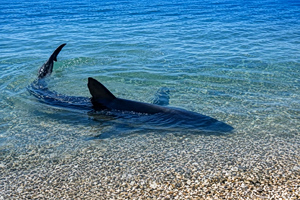
Greece is renowned for its crystal-clear seas and picturesque coastline, attracting millions of visitors every year. The country’s waters are widely considered among the safest in the world for swimming, particularly when compared with destinations where shark attacks are a more common concern.
Yet historical records show that sharks, including great white sharks, have been present in Greek waters for centuries, and a number of fatal encounters have been documented.
According to the report, 33 shark species have been identified in Greek seas, among them the great white shark, the largest predatory species of its kind. Most sharks are considered harmless to humans and rarely approach shallow coastal areas. Nevertheless, sightings of large sharks have occasionally been reported in recent years, including off the coast of Evia, near a marina in southern Athens, and around the island of Corfu.
Historical Shark Attacks in Greece
The earliest recorded shark attack in Greece dates back to 1847 on the island of Corfu. A 19-year-old British soldier, William Mills, was killed while swimming near the island’s fortress. The incident was reported in a local newspaper of the time and later inspired the poet Dionysios Solomos to write The Shark (Porfyras) in 1849.
More fatal attacks were recorded in the early 20th century. In 1903, two sponge divers lost their lives in separate shark attacks off the coast of Crete.
Following World War II, another tragedy occurred in 1948 near the port of Piraeus, where a swimmer, Dimitris Parasakis, was reportedly attacked by a large shark while in the water. The incident sparked widespread fear, and weeks later a 4.5-meter shark was caught near Aegina, although no evidence linked it to the attack.
The Corfu Tragedy
One of Greece’s most well-known shark attack cases occurred on August 17, 1951, when 16-year-old Vanta Pierri was killed by a great white shark while swimming in Corfu. The incident shocked the local community and remains one of the country’s most infamous shark-related tragedies.
Another fatal attack was recorded in 1963 in the Pagasetic Gulf, where Austrian author Helga Pögl was killed while swimming near a small islet. The event generated widespread concern across central Greece and fueled fears of shark activity in the region.
Reports of a large shark near the Halkidiki peninsula later that year led some residents to speculate that it was the same animal involved in the fatal attack, though this was never confirmed.
Rare but Documented Encounters
Shark sightings and encounters continued to be reported in the following decades, particularly as recreational diving became more popular. However, not all suspected shark-related deaths were ultimately attributed to sharks. In one case in 1983, a fisherman initially believed to have been attacked by a shark was later found, through forensic examination, to have died after being struck by a boat propeller.
According to the report, 15 confirmed shark attacks have been recorded in Greek waters over the past 180 years, six of which were fatal.
Despite these incidents, shark attacks in Greece remain exceptionally rare. The country’s beaches and coastal waters continue to rank among the safest destinations in the world for swimming and recreational activities.