 Μake us preferred on Google
 Greece’s counter-terrorism police unit is now racing to identify those responsible for three coordinated pre-dawn firebomb attacks targeting the homes of local members of the governing New Democracy (ND) party in Thessaloniki, one of which left a woman dead and four others injured.
The attacks, carried out with improvised incendiary devices made from camping gas canisters, prompted the counter-terrorism unit to take over the investigation after authorities concluded the incidents were coordinated and politically motivated.
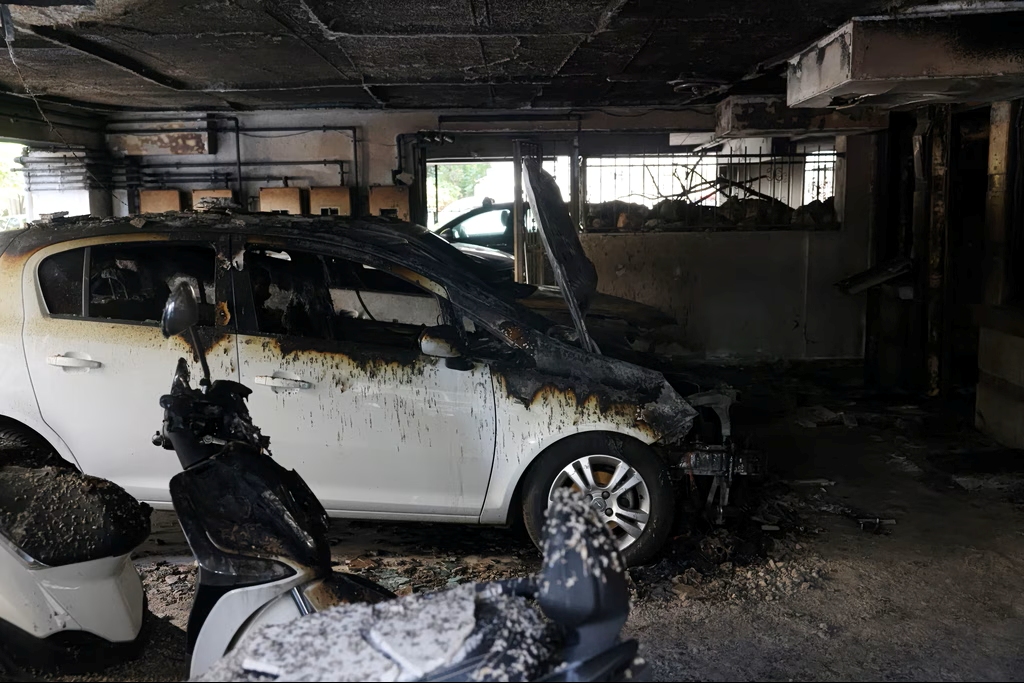
The most serious attack occurred at the apartment building of ND candidate Afroditi Nestora, where her mother, Vagia Nestora, died from severe burns after flames engulfed vehicles parked beneath the building. Afroditi Nestora was among four people hospitalized with burns and smoke inhalation.
CCTV footage under examination
Investigators are searching for at least three suspects believed to have arrived on two motorcycles. According to police, two of the suspects placed the incendiary devices while a third acted as a lookout. Authorities are also examining whether a fourth individual drove the second motorcycle used by the group.
Security camera footage reportedly provides a clear view of the suspects as they fled the two attack locations, which are approximately 200 meters apart. Police are collecting additional surveillance recordings and witness testimony in an effort to reconstruct the suspects’ movements before and after the attacks.
Authorities said Nestora and her mother rushed from their apartment after discovering the fire, descending to the parking area where two vehicles and part of the building had already been engulfed in flames. Investigators believe combustible material at the scene intensified the blaze, causing the fatal injuries.
Investigation focuses on extremist links
According to police sources, investigators are examining possible links to so-called anti-state and anti-establishment extremist urban groups active in and around the campus of the Aristotle University of Thessaloniki. Authorities are assessing whether those involved have previously participated in building occupations (squats), violent demonstrations or attacks against police.
Police also believe those responsible may avoid issuing a public claim of responsibility because the fatal outcome significantly raises the legal and political consequences of the attack while reducing the group’s incentive to leave a digital trail that could aid investigators.
The coordinated attacks have drawn widespread political condemnation and renewed scrutiny of extremist violence in Greece.
Greek Prime Minister Kyriakos Mitsotakis visited the injured in hospital on Wednesday, describing the attacks as an act of “blind violence” and pledging that those responsible would be brought to justice.